Bukit Panjang LRT
Introduction to Bukit Panjang LRT
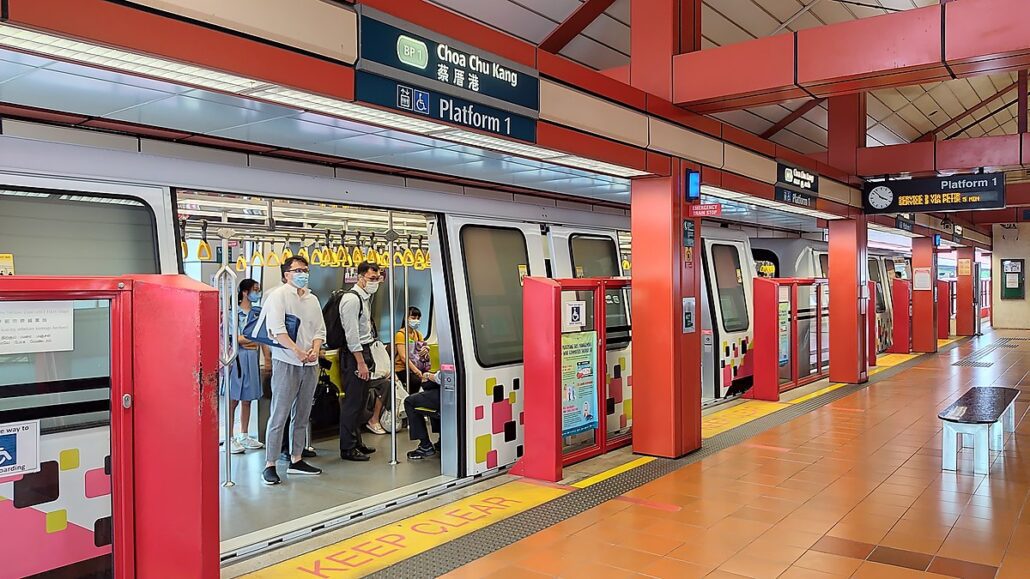
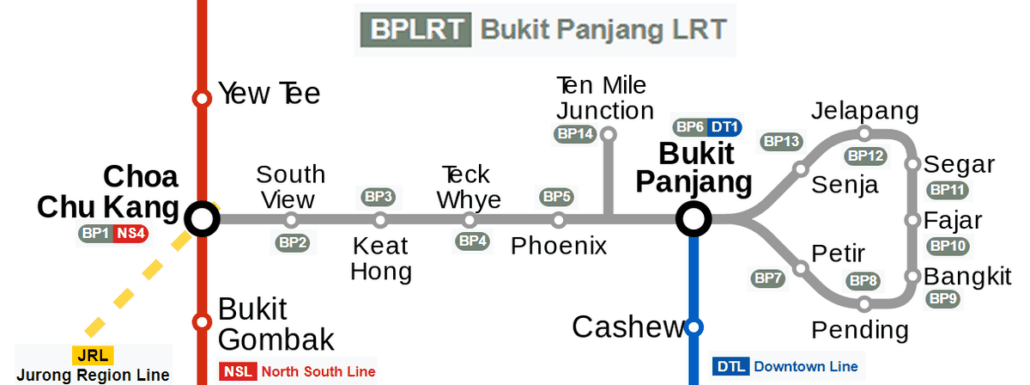

Last updated . Facts checked against LTA announcements.
The Bukit Panjang LRT was conceived in the early 1990s as a feeder system to complement the growing Singapore MRT network. It opened on 6 November 1999, making it one of Singapore’s earliest light rail lines. The line was designed to bring passengers from residential estates to MRT interchanges, filling a gap that buses alone could not easily cover.
The Bukit Panjang LRT loops through a series of residential neighbourhoods in the north-west, connecting Choa Chu Kang to Bukit Panjang and the estates in between. The LRT format, with its smaller, automated trains, suits these quieter suburban streets well. Passengers can reach shopping centres, schools, parks and community facilities without needing to walk long distances or change to a bus.
Each station serves a distinct part of the neighbourhood. Here are some of the key stops:
The Bukit Panjang LRT runs on fully automated, computer-controlled trains with no driver on board. The vehicles run on dedicated, purpose-built tracks separate from road traffic. The signalling system manages train movements automatically, keeping services running safely and consistently throughout the day.
The Bukit Panjang LRT runs every few minutes during peak hours, with slightly longer gaps off-peak. Service runs from early morning to late night, covering most of your daily travel needs.
You can pay with an EZ-Link or SimplyGo card, a contactless bank card, or a mobile wallet. A Singapore Tourist Pass is also available if you are visiting. Fares are distance-based and consistent with the rest of the MRT and LRT network.
The Bukit Panjang LRT connects directly to the MRT at Bukit Panjang (Downtown Line) and at Choa Chu Kang (North South Line). Bus services operate alongside the LRT at several stops, giving you more options for onward travel across the west and beyond.
Trains are air-conditioned and stations are sheltered, which makes a real difference in Singapore’s heat. Signage is clear throughout, and stations are designed to be accessible for passengers with mobility needs.
SMRT, which operates the Bukit Panjang LRT, maintains safety through regular maintenance schedules, surveillance systems, and emergency communication equipment at stations. Routine checks and drills are carried out to keep the system running reliably.
Running on electricity and operating as a feeder to the wider rail network, the Bukit Panjang LRT helps reduce the number of cars and motorcycles on local roads. This brings down both congestion and emissions in the Bukit Panjang and Choa Chu Kang area.
The Bukit Panjang LRT has had a history of reliability issues, including service disruptions and technical faults. In recent years, works have been carried out to replace ageing infrastructure and upgrade the system. Improvements are ongoing, and service has become more stable as a result.
The Bukit Panjang LRT has made a real difference to everyday life in the area. It gives residents a direct link to the MRT network without needing a bus or car, which cuts down commute times and makes getting around the west considerably easier.
LTA continues to review the network and has explored ways to improve reliability and capacity on the Bukit Panjang LRT over the years. Any confirmed extensions or upgrades will be reflected here as details are announced.
The Bukit Panjang LRT is a useful part of the western MRT network, connecting residents in Bukit Panjang and Choa Chu Kang to jobs, schools and amenities across Singapore. It is worth understanding how the loop and service B routes work before you travel, so you can pick the right train for your stop.
The Bukit Panjang LRT has 13 stations, running from Choa Chu Kang (BP1) to Senja (BP13). The line loops through residential neighbourhoods in the north-west, so some stations are served by one or both of the two service routes depending on direction.
No. The Bukit Panjang LRT connects with the Downtown Line at Bukit Panjang (BP6 and DT1) and with the North South Line at Choa Chu Kang (BP1 and NS4). It has no direct link to the Thomson-East Coast Line.
SMRT operates the Bukit Panjang LRT. SMRT also runs the North South Line, East West Line, Circle Line and Thomson-East Coast Line, so the same operator covers most of the lines you would transfer to from this LRT.
The Bukit Panjang LRT runs two looping services, and not every station is served by both routes, so it is worth checking which service stops at your station before you board. Checking the route map at the platform will tell you which loop your train follows.
The Bukit Panjang LRT opened on 6 November 1999, making it one of Singapore's earliest light rail lines. It was built as a feeder system to bring residents in Bukit Panjang and Choa Chu Kang to the wider MRT network.
Want the whole route on one page? Open the Bukit Panjang LRT map to see every station and interchange along the line.