
Last updated . Facts checked against LTA announcements.
Singapore’s MRT is clean, reliable, and covers most of the island. But timing matters. Miss the last train by two minutes and an affordable commute can turn into a much pricier taxi ride home.
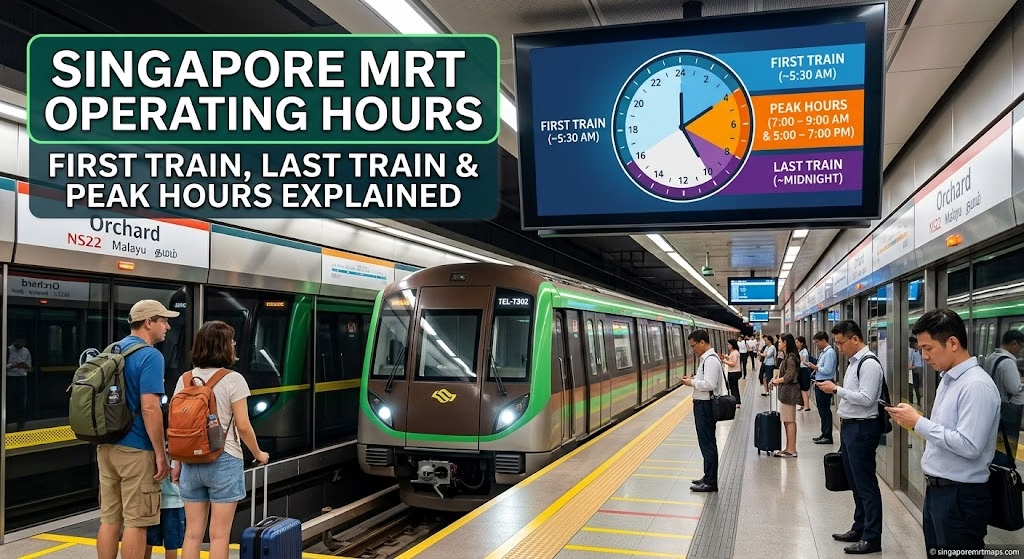
So, what are the Singapore MRT operating hours in 2026? Trains generally run from around 5:30 AM to midnight daily. First trains depart terminal stations between about 5:25 AM and 5:35 AM on Mondays to Saturdays, and slightly later, between about 5:50 AM and 6:00 AM, on Sundays and public holidays. Last trains typically leave terminal stations around 11:30 PM, completing their final runs by about 12:30 AM. On weekdays, trains are busiest from 7:00 AM to 9:00 AM and again from 5:00 PM to 7:00 PM.
Below you will find a line-by-line breakdown of timings, peak-hour tips, and practical advice for getting the most out of the network.
MRT First and Last Train Times by Line (2026)
Times below are for first and last trains from each line’s terminal stations, Monday to Saturday. On Sundays and public holidays, first trains start about 20 to 30 minutes later, around 5:50 AM to 6:00 AM. If you are boarding at a station in the middle of a line, expect the first train to arrive later and the last train to pass through earlier than the terminal times shown.
| MRT Line & Color | Terminal Station | First Train (Mon-Sat) | Last Train (Daily) |
|---|---|---|---|
| North-South Line (Red) | Jurong East | 5:26 AM | 11:45 PM |
| North-South Line (Red) | Marina South Pier | 5:33 AM | 11:40 PM |
| East-West Line (Green) | Pasir Ris | 5:28 AM | 11:23 PM |
| East-West Line (Green) | Tuas Link | 5:19 AM | 11:11 PM |
| North East Line (Purple) | HarbourFront | 5:50 AM | 11:55 PM |
| North East Line (Purple) | Punggol | 5:42 AM | 11:28 PM |
| Circle Line (Yellow) | Dhoby Ghaut | 5:37 AM | 11:50 PM |
| Downtown Line (Blue) | Bukit Panjang | 5:30 AM | 11:35 PM |
| Thomson-East Coast (Brown) | Woodlands North | 5:36 AM | 11:27 PM |
Times are approximate and can change. Check the LTA MyTransport.SG app or the station information screens for live timings on the day.
Quick Takeaways
-
Early risers: Weekday trains start around 5:30 AM, but weekend trains start closer to 6:00 AM. If you have an early Sunday flight out of Changi Airport, check your station’s specific first-train time in advance.
-
The midnight cut-off: Do not rely on trains after 11:30 PM. Aim to be inside the station by 11:15 PM to give yourself a safe margin for any final connections.
-
Avoid the crush: Weekday morning peak, particularly 7:30 AM to 8:30 AM, is very crowded, especially at major interchanges such as Jurong East and Bishan.
-
How to pay: You can tap in using a contactless Visa or Mastercard, a mobile wallet, or an EZ-Link or SimplyGo card. Visitors can also look into the Singapore Tourist Pass for unlimited travel over a set number of days.
Getting around Singapore? Find any station on the interactive MRT map, or save the PDF map to use offline.
Understanding Singapore MRT Operating Hours
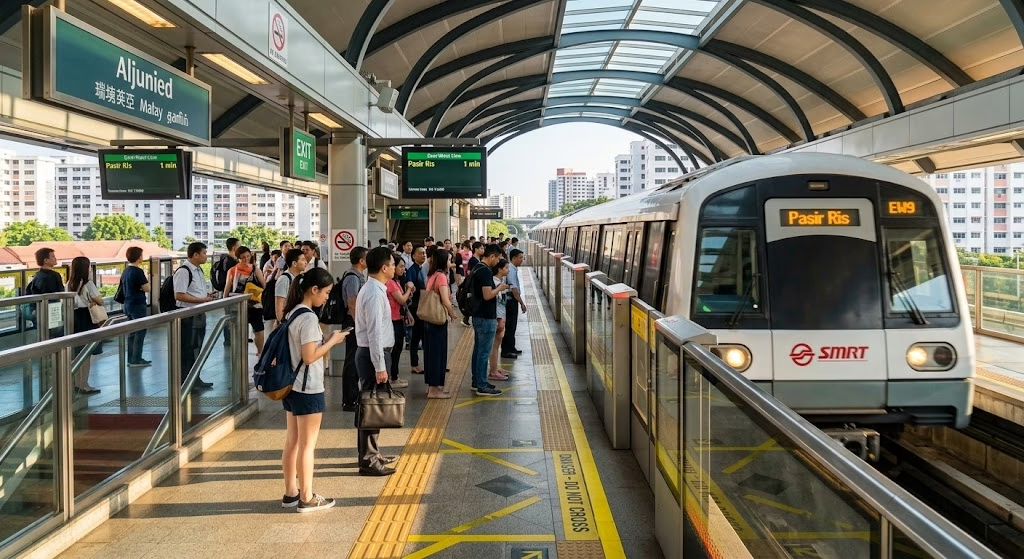
Singapore wakes up early, and the MRT is ready for it. That said, the exact time your station opens depends on where you are along the line.
What Time Does the MRT Open? First Train Times
If you are boarding at a terminal station, such as Pasir Ris on the East West Line (EWL) or Punggol Coast on the North East Line (NEL), the first train typically departs at around 5:25 AM to 5:35 AM on Mondays to Saturdays.
At stations in the middle of a line, such as City Hall or Orchard, the first train arrives a little later, usually between 5:45 AM and 6:00 AM, once it has travelled in from the terminal.
On Sundays and public holidays, the schedule starts later to allow maintenance crews more time on the tracks overnight. First trains on these days tend to depart closer to 5:50 AM or 6:00 AM.
Early flight on a Sunday? Plan ahead.
If your flight from Changi Airport departs at 7:00 AM or 8:00 AM on a Sunday, do not count on the MRT to get you there. The first train from Tanah Merah, where you change for the airport branch, does not reach Changi Airport until close to 6:15 AM. By the time you walk to your terminal, check in and clear immigration, you will be cutting it very fine. For early weekend flights, booking a ride-hailing service such as Grab or Gojek in advance is the safer option.
What Time Does the MRT Close? Last Train Times
The Singapore MRT does not run around the clock. The system shuts down every night for track inspections, maintenance and cleaning, so last train times matter if you are out late.
Standard Last Train Timings
Generally, last trains depart from their terminal stations at around 11:30 PM. Exact times vary by line and direction, so always check before you travel.
If you need to change lines, factor in the transfer time. Arriving at an interchange at 11:55 PM only to find the connecting line has already finished for the night is a painful experience. To be safe, aim to start any late-night journey by 11:00 PM so you have enough time to make your connections.
Check our interactive Singapore MRT map to plan your route and transfers.
Eve of Public Holiday and Late Night Train Hours
Services do not always stop at the same time every night. On the eves of major public holidays, including New Year’s Eve, Chinese New Year, Deepavali and Hari Raya Puasa, SMRT and SBS Transit typically extend operating hours by one to two hours.
Extended hours also apply during large events. For the Formula 1 Singapore Grand Prix in September, trains around the Marina Bay area generally run until 1:00 AM or later to handle the crowds leaving the street circuit.
See the first and last train times by line at the top of this guide.
For real-time station-specific updates, check the Land Transport Authority (LTA) MyTransport.SG app for live arrival data.
Surviving Singapore MRT Peak Hours
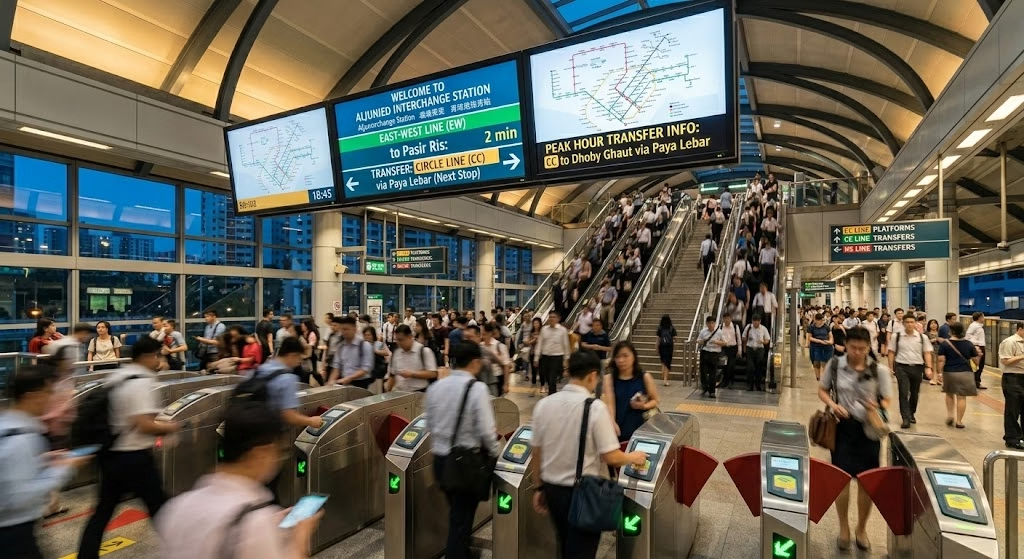
Peak-hour MRT travel in Singapore is not for the faint-hearted. If keeping your personal space matters, it is worth knowing exactly when to avoid the worst of it.
What Are the Exact Peak Hours?
Morning peak runs from 7:00 AM to 9:00 AM, with the busiest stretch between 7:30 AM and 8:30 AM. Trains arrive every 2 to 3 minutes during this window, yet you may still have to let one or two pass before you can board.
Evening peak runs from 5:00 PM to 7:00 PM and tends to be slightly less intense than the morning rush. People leave work at different times, stop for dinner, or go to the gym, so the crowds are more spread out.
The “Crush Hour” Interchanges to Avoid
Not all stations are created equal during rush hour. If you are planning your day around the MRT, try to route around these consistently packed interchanges during peak windows:
-
Jurong East (NSL/EWL): A major transfer point for commuters heading in from the north and west, particularly those going to workplaces in the Jurong corridor.
-
Bishan (NSL/CCL): A consistent bottleneck where Circle Line commuters transfer to the North South Line heading into the city.
-
Dhoby Ghaut (NSL/NEL/CCL): A three-line interchange spread across multiple levels. The walking distances between platforms can be tiring when platforms are crowded.
-
Raffles Place and Tanjong Pagar (EWL/NSL): Right in the CBD. Both stations see large numbers of office workers arriving before 9:00 AM and leaving again around 6:00 PM.
Tip: Consider the Thomson-East Coast Line (TEL)
The brown TEL runs from Woodlands down through the city to the East Coast, largely parallel to the older North South Line. If you are heading from the north to Marina Bay, it is worth checking whether the TEL serves your journey, as it tends to be less congested than the red line during peak hours. Note that Stage 5 (Bedok South and Sungei Bedok) is due in the second half of 2026 but has not opened yet.
Off-Peak Travel and Fare Discounts
Singapore uses fare structures that reward commuters who travel before the morning rush. If you tap in before 7:45 AM on a weekday, you receive a discount on your fare automatically.
For visitors heading to places like Gardens by the Bay, leaving around 9:30 AM means you travel at standard fares but with far more breathing room. You are also more likely to get a seat.
Payment and Ticketing in 2026: The SimplyGo Era
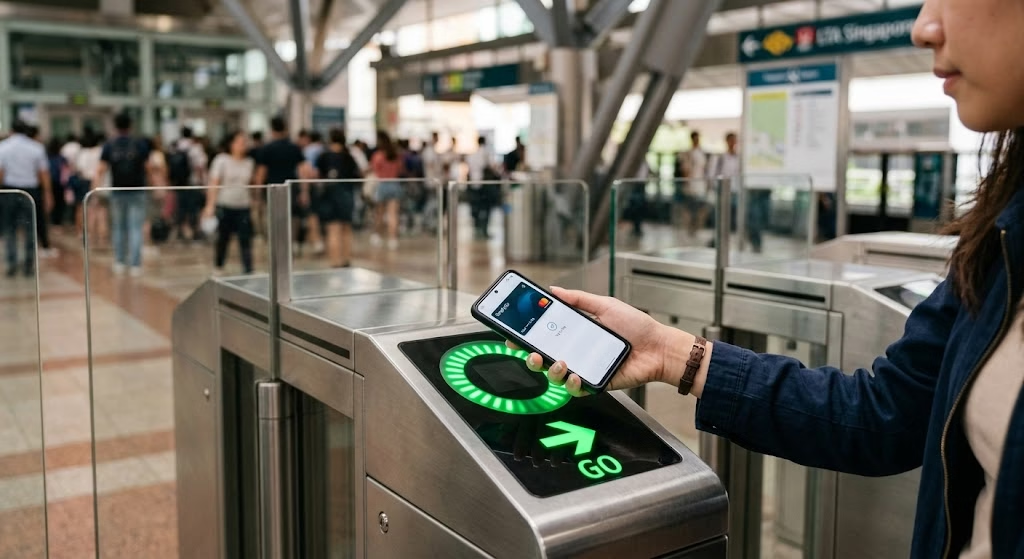
There is no need to queue at ticketing machines or top up an EZ-Link card before every trip. By 2026, Singapore’s transit network has fully adopted the SimplyGo system.
How to Pay Like a Local Commuter
SimplyGo lets you tap your contactless bank card (Visa, Mastercard, NETS) or mobile wallet (Apple Pay, Google Wallet, Samsung Pay) directly at the gantry. No separate card to buy, no top-up queues.
For visitors: you almost certainly do not need a dedicated tourist pass unless you are making a very large number of trips each day. Just tap your travel card or phone at the gantry and the system calculates the distance-based fare for you. The Singapore Tourist Pass is worth considering if you expect to ride heavily.
One thing to watch: your bank may add a small foreign transaction fee on top. The system also batches charges rather than posting one transaction per trip, so you will typically see a consolidated amount on your statement every few days rather than individual small charges.
Learn more: Singapore MRT fares, ticketing and practical guide 2026
What Happens If You Miss the Last Train?
It happens to everyone eventually. The dinner ran long, the concert overran, and you arrive at the station to find the shutters down. You still have a few solid options.
Night Buses and Ride-Hailing Apps
Singapore does not leave night owls stranded. Here are your main choices after the MRT closes:
-
Ride-hailing: Grab, Gojek, TADA and Ryde all operate around the clock. Be prepared for late-night surge pricing. A fare that costs you a modest amount in the afternoon can climb noticeably after midnight.
-
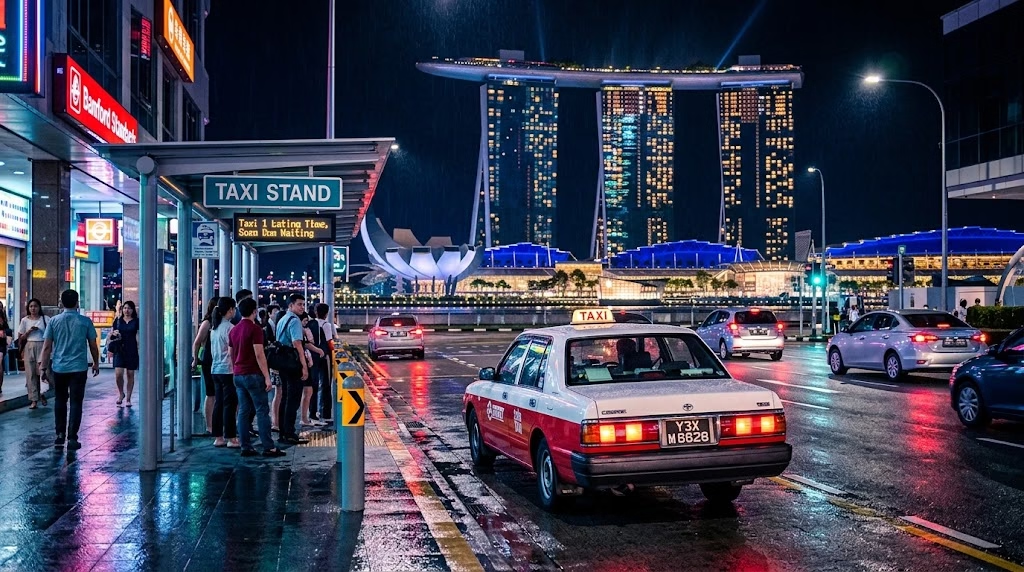
Taxis: You can flag a ComfortDelGro taxi at designated taxi stands. A midnight surcharge applies to the metered fare between midnight and 6:00 AM, so factor that into your budget.
-
Night buses: The old NightRider and Nite Owl late-night bus services were withdrawn in 2020 and have not come back, so once the trains stop, a taxi or ride-hail is usually the only practical way home. A few regular bus routes run until a little after midnight, which is worth checking in a journey planner app.
Frequently Asked Questions (FAQ)
Does the Singapore MRT run 24 hours?
No. The MRT shuts down roughly between midnight and 5:30 AM every day so that crews can carry out track maintenance, cleaning and engineering works. Operating hours are occasionally extended during major public holidays or large-scale events.
What are the peak hours for Singapore MRT?
Morning peak runs from 7:00 AM to 9:00 AM, with the heaviest crowds between 7:30 AM and 8:30 AM. Evening peak is from 5:00 PM to 7:00 PM. Weekends have no defined peak periods, but trains heading to shopping districts can get busy around midday.
How much does the MRT cost in Singapore?
MRT fares are distance-based, so a short hop costs less than a cross-island trip. There is also an early morning fare discount if you tap in before 7:45 AM, which is worth knowing if you commute regularly. Check the TransitLink website for current fare tables, as amounts are reviewed periodically.
Can I use Apple Pay or Google Pay on the MRT?
Yes. Through the SimplyGo system, you can tap in with Apple Pay, Google Pay, Samsung Wallet, or any contactless Visa or Mastercard directly at the fare gates. There is no need to buy a separate transit card or paper ticket.
What time is the last train to Changi Airport?
Trains to Changi Airport run on a short branch line off the East West Line, connecting at Tanah Merah. The last service from Tanah Merah to the airport departs late at night, so if you are catching a red-eye flight, plan your journey carefully to make that connecting train in time. Check the SMRT journey planner for the exact last train time on the night you are travelling.