
179 Videos Over Three Years: How a Predator Went Undetected So Long
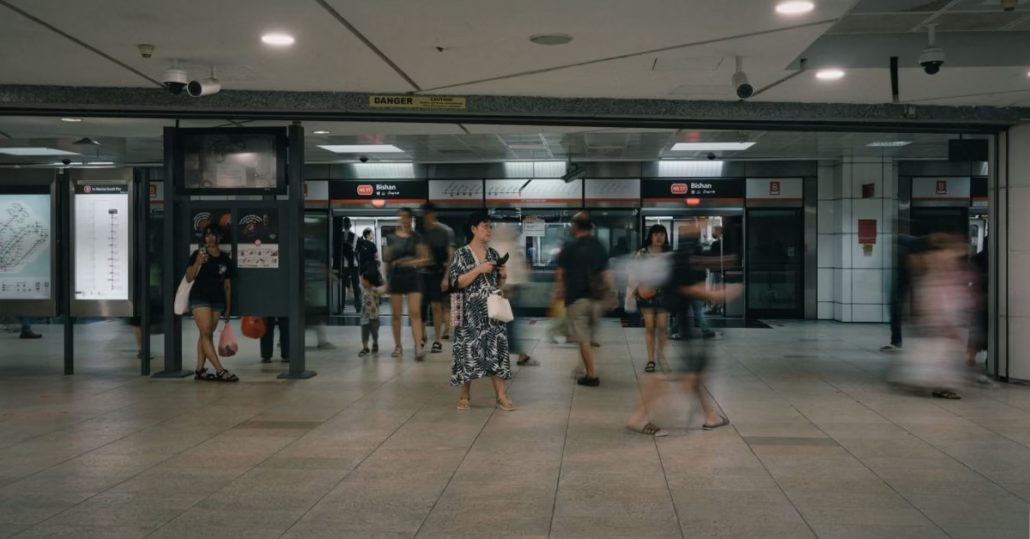
One hundred and seventy-nine videos. That is not a moment of poor judgment. That is systematic offending across three full years, targeting unsuspecting women in some of Singapore’s busiest public spaces, including at least one MRT station.
- 179 Videos Over Three Years: How a Predator Went Undetected So Long
- What Did the Man Actually Do?
- Why Do MRT Stations Feature So Prominently in These Cases?
- How Does Singapore's Legal Framework Deal With Voyeurism?
- What Can Commuters Do to Protect Themselves?
- How Does This Affect Public Trust in the MRT?
- Reporting, Support and Next Steps for Victims
- What Does This Case Say About Commuter Safety Going Forward?
- Before You Tap In
- FAQ
Reported by CNA on 7 August 2026, this case is a stark reminder that personal safety on the MRT is not just about platform screen doors or train frequency. It is about the everyday dignity of every commuter riding a train or standing on an escalator. How many cases go unreported simply because victims do not know they were filmed, or feel too rattled to speak up?
This article covers what happened, what the law says, what the penalties look like, and most importantly, what you can do if you witness or experience something similar on the network.
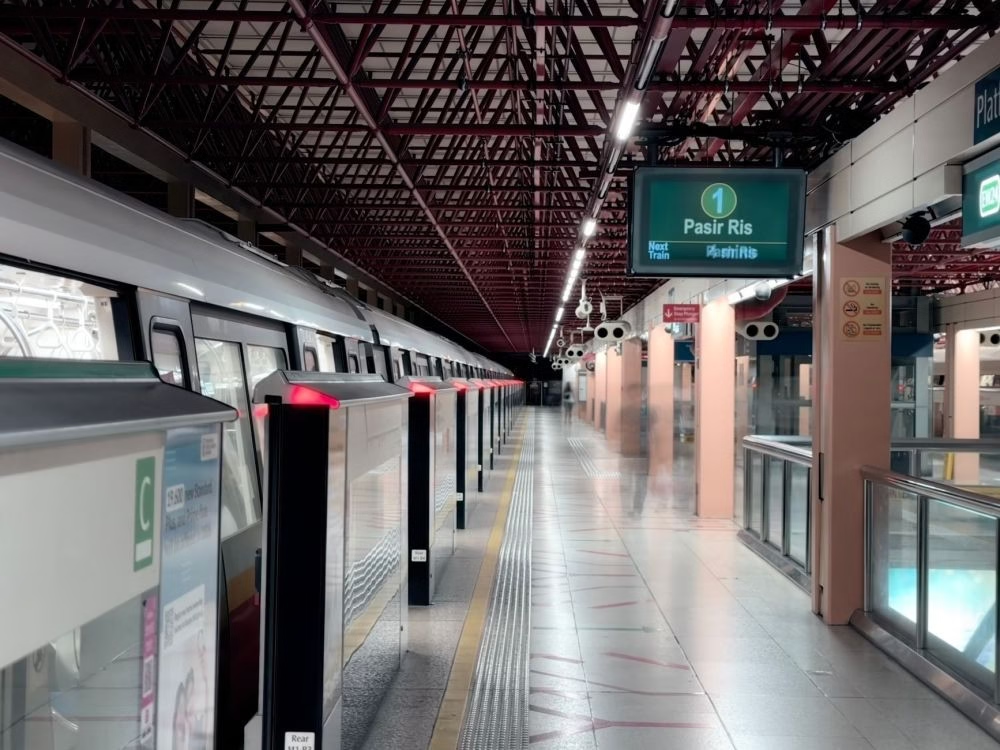
Getting around Singapore? Find any station on the interactive MRT map, or save the PDF map to use offline.
What Did the Man Actually Do?
According to the CNA report, the man took 179 upskirt videos over roughly three years. The offences spanned multiple locations, with at least one incident of outrage of modesty occurring at an MRT station, where he molested a woman.
Upskirt photography and videography in Singapore fall under the Films Act and the Penal Code. Section 377BB of the Penal Code covers voyeurism, which includes recording another person’s private parts without consent in circumstances where that person has a reasonable expectation of privacy. An MRT platform, an escalator, a packed train coach: all qualify. No commuter steps out of the house expecting a camera pointed up their skirt.
Outrage of modesty, governed by Section 354 of the Penal Code, carries up to two years’ jail, a fine, caning, or any combination. Voyeurism offences can attract up to two years’ imprisonment per charge. When courts deal with multiple charges, sentences can run consecutively, which is why the total jail term in cases like this can be substantial.
Why Do MRT Stations Feature So Prominently in These Cases?
MRT stations and trains create near-perfect conditions for voyeurs: dense crowds, distracted commuters checking phones, escalators that position one person directly behind another, and the social norm of keeping to yourself on public transport. It is not comfortable, but it is a truth worth acknowledging.
The Singapore MRT network now covers well over a hundred stations across six lines, with millions of journeys made every week. Sheer volume means that even a small number of bad actors can cause significant harm before they are caught. Most victims on escalators or platforms have no idea they have been filmed, so the offence count climbs very high before any single incident triggers a report.
This is not unique to Singapore. Transit systems globally struggle with voyeurism. What sets Singapore apart is a legal framework that takes it seriously and a camera network inside stations that provides investigators with footage when complaints do come in.
How Does Singapore’s Legal Framework Deal With Voyeurism?
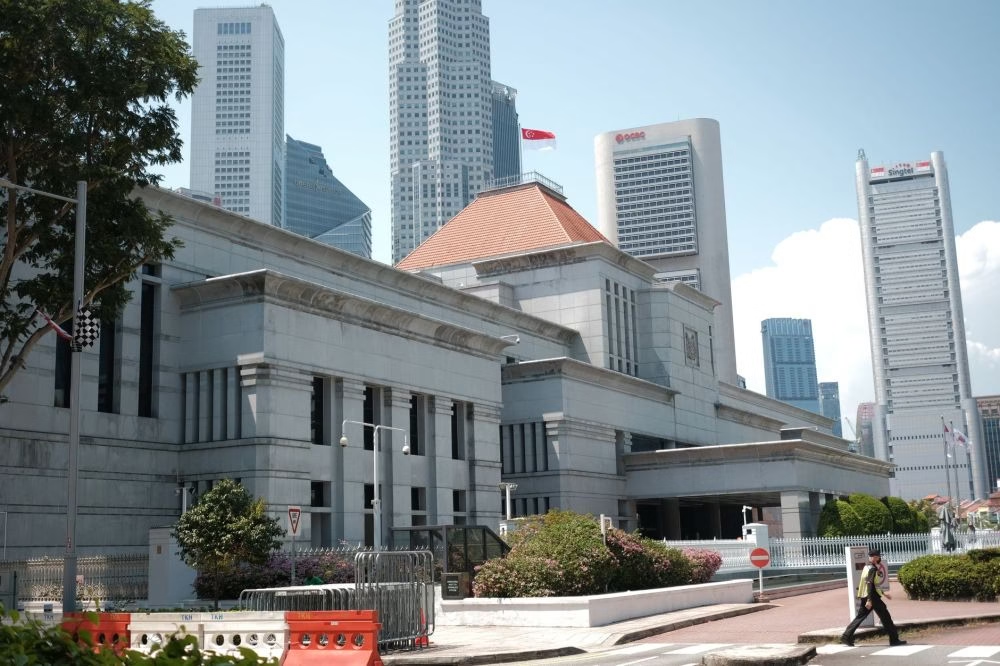
Singapore treats voyeurism as a serious criminal offence, not a minor civil matter. The Penal Code amendments that came into force in 2019 introduced Section 377BB, creating a dedicated voyeurism offence that carries a maximum of two years’ imprisonment, a fine, caning, or any combination. First-time offenders are not automatically spared jail, particularly where the number of victims or recordings is large.
Here is a quick look at how the key relevant offences stack up under Singapore law as of August 2026:
| Offence | Penal Code Section | Maximum Penalty |
|---|---|---|
| Voyeurism (upskirt recording) | 377BB | 2 years’ jail, fine, caning, or any combination |
| Outrage of modesty | 354 | 2 years’ jail, fine, caning, or any combination |
| Aggravated outrage of modesty (on public transport) | 354A | Up to 5 years’ jail, fine, and caning |
| Distribution of voyeuristic recordings | 377BC | 5 years’ jail, fine, caning, or any combination |
When courts convict on multiple charges, judges have discretion to run sentences concurrently or consecutively. With 179 recordings spanning three years, the charge sheet in this case would have been substantial. Singapore courts have consistently signalled that the number of victims and duration of offending are aggravating factors that push sentences upward.
This is not the first serious case on the network. We covered another case where a man pleaded guilty to rape near Tuas West Road MRT. These cases together paint a picture: commuter safety extends well beyond train reliability figures.
What Can Commuters Do to Protect Themselves?
Awareness is your first line of defence. You do not have to be paranoid, but a few habits make a real difference on a daily commute.
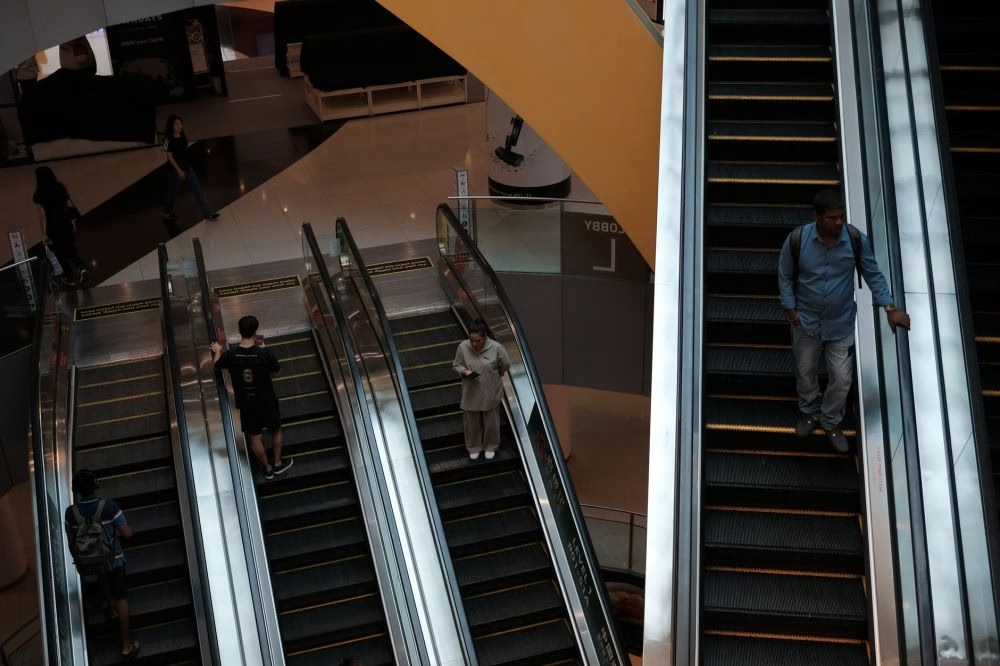
On escalators, standing with your back to the wall panel rather than facing the open side makes it harder for anyone behind you to angle a phone downward. On platforms and in coaches, if someone is standing unusually close and holding their phone low or at an odd angle, trust your instincts and move. You are not being dramatic.
If you experience outrage of modesty on the MRT, alert the station manager by pressing the intercom button at the fare gates, or approach any uniformed SMRT staff member. The network’s CCTV coverage is extensive, and station staff can trigger a hold on footage quickly. Time matters: CCTV retention periods are finite.
The Land Transport Authority (LTA) and SMRT have worked in recent years to improve safety infrastructure across the network. We covered separately the push to better support commuters on public transport, which includes staff training and clearer reporting pathways. Whether those improvements translate into more offenders being caught before they accumulate 179 videos is a fair question to keep asking.
How Does This Affect Public Trust in the MRT?
Singapore’s MRT has had a strong year on reliability metrics, with impressive mean kilometres between failures figures across consecutive months in 2026. But reliability statistics do not capture the full experience of riding the train. Safety, in its broadest sense, includes whether you feel comfortable and protected from the moment you tap in to the moment you tap out.
Cases like this chip away at that sense of safety, particularly for women commuters. The MRT is used by hundreds of thousands of people every day, from schoolchildren to elderly residents to tourists who have just arrived and are figuring out how to travel from Changi Airport to the city centre via MRT. Everyone on that system deserves to travel without being victimised.
There is also a deterrence question. High-profile sentencing, covered publicly by media outlets like CNA, serves a purpose beyond punishing the individual. It signals clearly to anyone considering similar behaviour that Singapore’s courts are not lenient and that the country’s dense camera infrastructure makes eventual detection likely. The man in this case accumulated 179 recordings over three years. He was caught. That outcome matters.
Reporting, Support and Next Steps for Victims
Victims of voyeurism or outrage of modesty on the MRT or elsewhere in Singapore have several avenues available. Call the Police on 999 for emergencies or 1800-255-0000 for non-urgent matters. The Association of Women for Action and Research (AWARE) runs a helpline on 1800-777-5555 that provides support and guidance specifically for survivors of sexual violence and harassment.
Courts in Singapore also allow victim impact statements in sentencing, which means that even if you are not the complainant in a case, your experience as a witness or bystander matters. Speaking to the police about what you observed can form part of the body of evidence that supports prosecution.
One practical note: if you discover you may have been filmed without consent, do not confront the perpetrator yourself. Gather whatever information you safely can, such as a description, a photo of the person from a safe distance, or the carriage number, and report it to station staff immediately. Let the CCTV and the authorities do the rest.
What Does This Case Say About Commuter Safety Going Forward?
The fact that this man operated for three years before facing justice should give authorities pause. It is not just about the sentence handed down. It is about the gap between when the offending started and when it stopped.
Technology is catching up. We reported on a facial recognition fare payment trial underway at Punggol Coast MRT, which demonstrates that the network is moving toward richer biometric data at entry points. Whether that infrastructure can be leveraged for safety and not just ticketing is a conversation LTA and SMRT will need to have openly with commuters.
Meanwhile, the Land Transport Authority continues to develop the network, with new lines and stations expanding coverage across the island. More commuters in more places means more responsibility to get the safety environment right. Sentencing a man for 179 upskirt videos is justice. Preventing the next hundred would be better.
Before You Tap In
If this case has left you thinking about your own commuter safety routine, that is not a bad thing. Save the Police emergency number (999) and the SGSecure app to your phone, know that every station has an intercom at the fare gates, and trust your gut if something feels wrong on a platform or in a coach. For more on how the MRT network operates and what to expect as a commuter, our full guide to MRT stations in Singapore is a good place to start, and our fares, ticketing and practical info page covers everything from tap-in procedures to concession passes.