
Last updated . Facts checked against LTA announcements.
If you live in or are visiting Singapore, you will spend time on the Mass Rapid Transit (MRT) system. Two questions come up immediately: how do you pay, and what will it cost?
Fares are distance-based, so a short hop costs noticeably less than a cross-island journey. Instead of buying paper tickets, you pay by tapping a contactless bank card, mobile wallet or EZ-Link/SimplyGo card at the fare gate. The Singapore Tourist Pass is also available for visitors who prefer unlimited rides over a fixed number of days.
Quick Takeaways
-
Distance-based pricing: You pay for the distance you travel. Short trips are cheap, and all journeys are capped at a maximum fare.
-
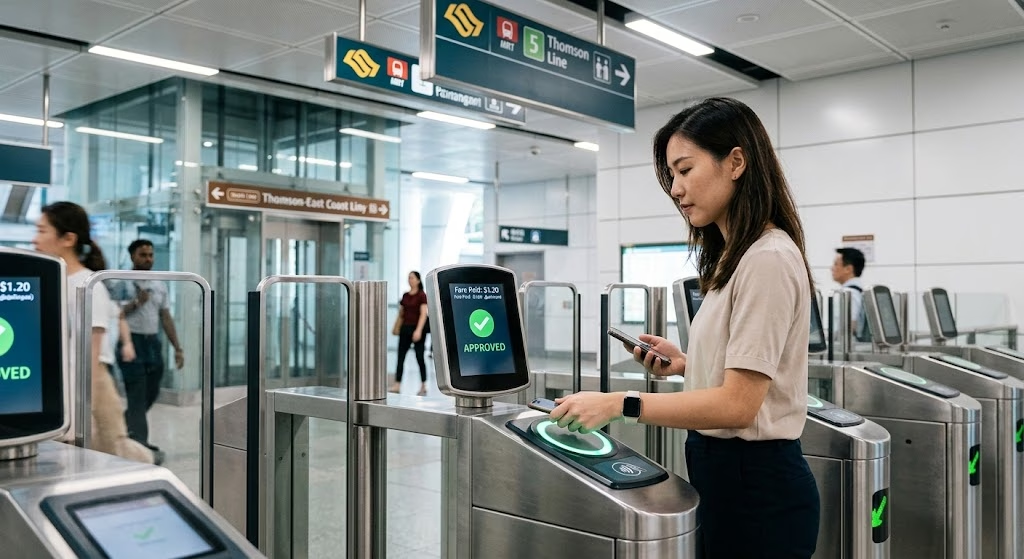
Contactless is standard: SimplyGo lets you tap in and out with a contactless credit card, debit card or mobile wallet directly at the gantry.
-
Singapore Tourist Pass: Available for 1, 2 or 3 days of unlimited rides, which suits visitors doing a lot of sightseeing in a short time.
-
45-minute transfer window: Transfer between MRT lines and buses within 45 minutes and you will not be charged a new boarding fee.
How Singapore MRT Fares Work in 2026
Singapore does not charge a flat fare. The Land Transport Authority (LTA) calculates what you pay based on the total distance from tap-in to tap-out.
This means a quick two-stop ride on the Thomson-East Coast Line costs far less than travelling from Changi Airport all the way to Jurong East. Fares for adult card users start low for short journeys and increase incrementally with distance, up to a capped maximum per trip.
Mixing trains and buses? The same distance calculation applies across both. As long as you transfer between an MRT station and a bus stop within 45 minutes, your fare continues accumulating on the same journey rather than resetting with a new boarding charge.
Important: Always tap out. Because fares are calculated by distance, failing to tap your card when you leave a station or alight from a bus will result in the maximum possible fare being charged for that trip.
Getting around Singapore? Find any station on the interactive MRT map, or save the PDF map to use offline.
Choosing the Right Ticket for Your Trip
Single-trip paper tickets are largely a thing of the past. In 2026, the ticketing system is heavily digitised, and your choice of payment method affects both convenience and cost.
Here are the three main ways to pay for your MRT rides.
1. Contactless Bank Cards and Mobile Wallets (SimplyGo)
The SimplyGo system means all MRT fare gates accept contactless Mastercard, Visa and NETS bank cards. Mobile wallets including Apple Pay, Google Pay and Samsung Pay work at the same gates.
This is the most convenient option if you want to skip the ticketing machines entirely. Tap in, tap out, and your fares are billed directly to your bank account. It works well for both regular commuters and visitors who already carry a contactless card.
One thing to watch if you are using a foreign-issued card: an administrative fee applies per day of use. If you are riding the MRT frequently over several weeks, those additional charges can accumulate, so it is worth weighing up whether a local option makes more sense.
2. The EZ-Link Card
The EZ-Link card is Singapore’s classic stored-value transit card and remains popular with regular commuters. You can buy one at any TransitLink Ticket Office, Passenger Service Centre, or convenience stores such as 7-Eleven.
A new card typically costs about $10, which includes a non-refundable card fee and some usable travel value. You can top up at ticketing machines in any station or through the SimplyGo app.
Why pick an EZ-Link card over a contactless bank card? If you are visiting for more than a few days, it sidesteps the daily administrative fees that apply to foreign bank cards. It is also a practical option for parents who want to give older children their own transit card.
3. The Singapore Tourist Pass (STP)
If your day involves crossing the island from Marina Bay to Sentosa, Chinatown and Orchard Road, the Singapore Tourist Pass is worth considering.
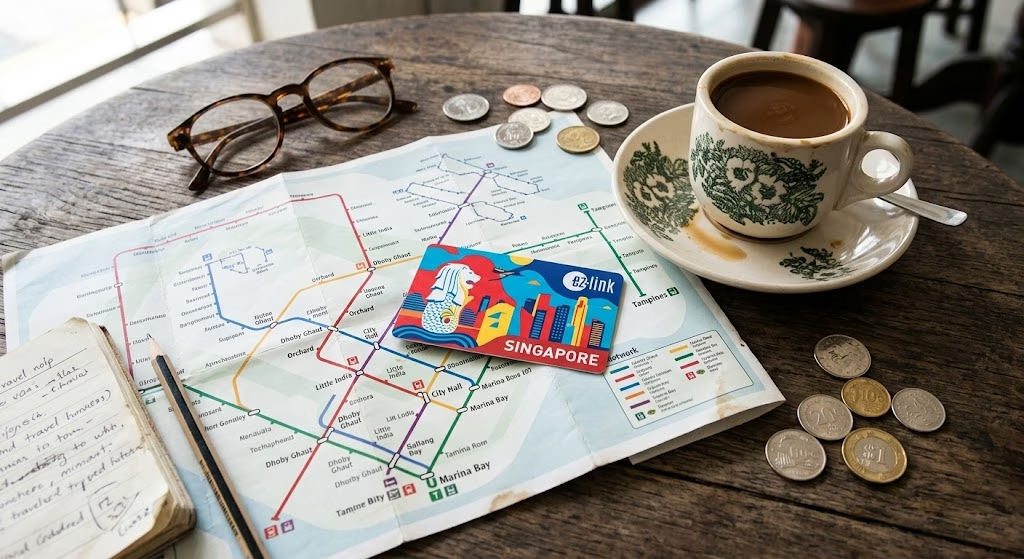
The STP is a special EZ-Link card giving tourists unlimited travel on MRT, LRT and basic bus services. You tap in, tap out, and never need to watch your balance.
The pass comes in 1-Day, 2-Day and 3-Day versions. Prices change from time to time and include a refundable card deposit, so check the current price on the official Singapore Tourist Pass website or at a TransitLink ticket office before you buy.
Tip: A “day” on the Singapore Tourist Pass is not a 24-hour block. Coverage starts from your first tap and ends when services close for that calendar day, typically around midnight. Start early to get the most out of it.
You can buy your pass in advance through the Singapore Tourist Pass website.
Fare Comparison: Which Option is Best?
Not sure which payment method suits your 2026 trip? The comparison table below matches each ticketing option to different travel styles.
| Feature | Contactless Bank Card (SimplyGo) | EZ-Link Card | Singapore Tourist Pass |
| Best For | Short trips, immediate convenience | Long stays, avoiding foreign card fees | Heavy sightseeing, tourists |
| Upfront Cost | $0 | $10 ($5 value + $5 card fee) | Starts at $22 |
| Top-Up Required? | No | Yes | No (unlimited rides) |
| Foreign Card Fees? | Yes ($0.60 daily admin fee) | No | No |
| Where to Buy | Already in your wallet | MRT stations, 7-Eleven | Changi Airport, select MRT stations |
Practical Travel Tips for 2026 Commuters
Riding the MRT confidently involves more than knowing how to pay. Here are a few practical things worth knowing before you head out.
Travelling with Children
The transit system is family-friendly. Children under 0.9 metres in height, or under seven years old, travel free on the MRT and basic bus services.
If your child is under seven but taller than 0.9 metres, apply for a Child Concession Card at any SimplyGo Ticket Office. Bring your passport or the child’s birth certificate, and they can tap in and out at no cost.
See our guide on accessible MRT stations for strollers and wheelchairs.
Rush Hour Realities
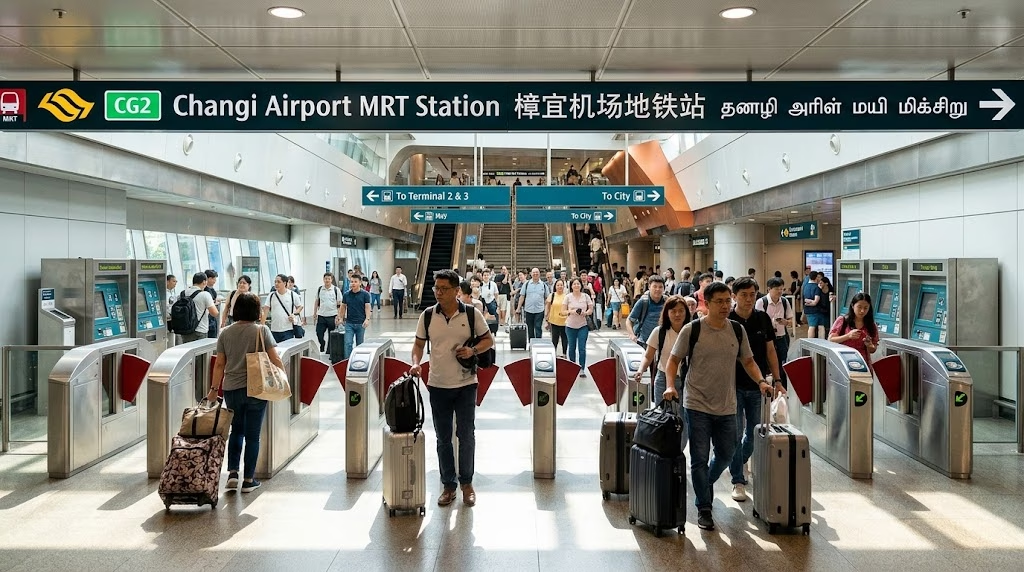
Peak hours on the MRT are real. The morning rush runs from around 7:30 AM to 9:00 AM, and the evening peak falls between about 5:30 PM and 7:00 PM.
Major interchange stations such as Dhoby Ghaut, Raffles Place and Jurong East get very crowded during these windows. If your schedule allows, travelling outside peak hours makes for a noticeably more comfortable journey and a better chance of getting a seat.
Apps and Route Planning
Google Maps and Apple Maps both cover the Singapore MRT with real-time arrival data and reasonably accurate fare estimates. They are reliable enough for most journeys.
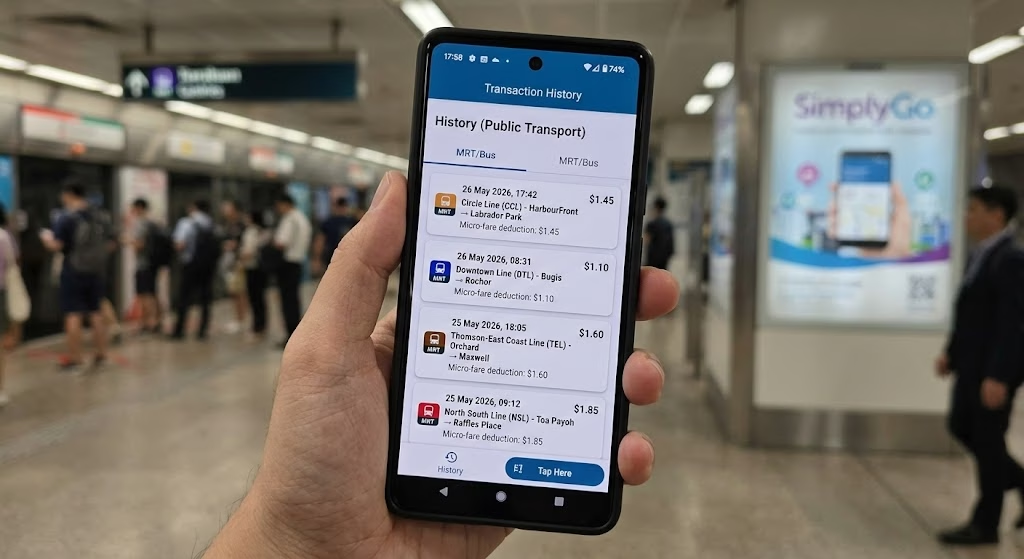
For more detail, the SimplyGo app lets you check your fare history, see travel distances and block your EZ-Link card if it is lost. It is worth having installed before your first trip.
Frequently Asked Questions (People Also Ask)
What is the cheapest way to pay for the Singapore MRT?
It depends on how much you travel. For residents and long-term visitors, a standard EZ-Link card or local bank card keeps costs down by avoiding extra fees. For tourists making several long trips each day, the Singapore Tourist Pass tends to be more cost-effective.
Can I tap my Visa or Mastercard on the Singapore MRT?
Yes. All MRT gantries accept contactless Visa, Mastercard and NETS cards through the SimplyGo system. You can also pay with mobile wallets like Apple Pay and Google Pay. Be aware that foreign-issued cards may incur a small daily administrative fee.
Is the Singapore Tourist Pass worth it?
It depends on how much ground you plan to cover. If you are doing four or more long trips a day across both trains and buses, the flat-rate pass will likely save you money and spare you the effort of topping up. For a lighter itinerary, pay-as-you-go with a contactless card is probably cheaper.
Do kids ride the MRT for free?
Children under 0.9 metres tall travel free automatically, no card needed. Children under seven who are taller than 0.9 metres can still travel free, but they need a physical Child Concession Card, which you can get at any station ticket office.
n
For the exact fare for any distance, see the Singapore MRT fare table and calculator.