
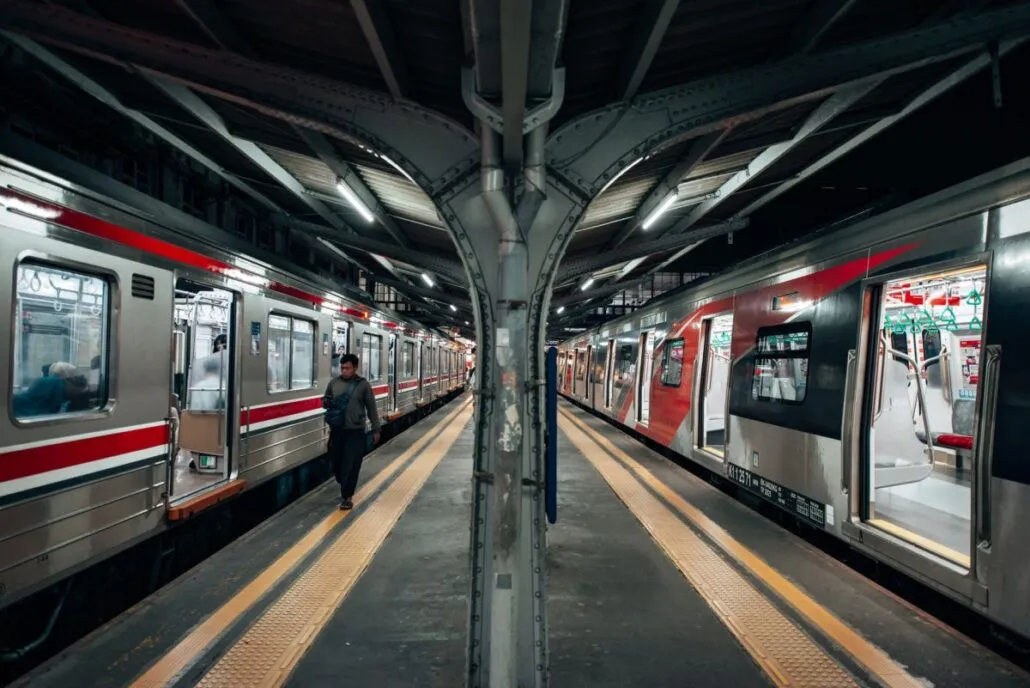
Guangzhou Metro expertise is now being put to work in Singapore, according to a Straits Times report published on 29 October 2026. The headline says a man who helped grow Guangzhou Metro is lending his skills here. What should that mean for the lines you ride every day?
- What did The Straits Times report about Guangzhou Metro expertise?
- Why does Singapore look abroad for rail know-how?
- Which MRT projects could benefit from this rail expansion?
- How does network growth change your daily commute?
- Will Guangzhou Metro expertise affect fares or train hours?
- How can you plan around new MRT lines as they open?
- Before you tap in
- FAQ
What did The Straits Times report about Guangzhou Metro expertise?
The Straits Times reported on 29 October 2026 that a man who helped expand Guangzhou Metro is now sharing his know-how in Singapore. That is the core of the story, and it fits a pattern: Singapore’s network of 6 MRT lines and 3 LRT systems keeps growing, and growth needs people who have built big systems before.
Here are the key facts in one place.
Land Transport Authority (LTA) remains the body that plans and announces rail projects. Check its official site at lta.gov.sg for project updates.
Getting around Singapore? Find any station on the interactive MRT map, or save the PDF map to use offline.
Why does Singapore look abroad for rail know-how?
Singapore looks abroad because building and opening several lines in quick succession is a skill sharpened by repetition. Singapore’s history shows the scale: the Circle Line opened in stages from 28 May 2009 to 14 January 2012, then completed its loop with Stage 6 on 12 July 2026.
Guangzhou Metro is a useful reference point because it grew from a small system into a large one. That experience covers practical questions. How do you stage openings? How do you keep interchanges from jamming? How do you extend a driverless line without disrupting trains already running?
Singapore already runs four driverless lines: the North East Line, Circle Line, Downtown Line and Thomson-East Coast Line. Extending those while trains keep running presents exactly the kind of challenge where outside experience can help. The Singapore Rail Academy covers the home-grown side, building local skills for the same job.
Which MRT projects could benefit from this rail expansion?
The projects that matter most are those still to open. As of 1 November 2026, six rail projects are in the pipeline, with dates set by LTA.
The Thomson-East Coast Line (TEL), the brown line, will also extend to Changi Airport Terminal 5 in the 2030s. For the full pipeline, see our future MRT map page.

How does network growth change your daily commute?
Network growth changes your commute most at interchanges, where additional lines attract more passengers changing trains. This is where lessons from a large system like Guangzhou Metro apply most directly to Singapore.
Look at the stations that already handle several lines. Dhoby Ghaut links the North South Line, North East Line and Circle Line as NS24, NE6 and CC1. Outram Park links the East West Line (EW16), North East Line (NE3) and Thomson-East Coast Line (TE17). Marina Bay combines NS27, TE20 and CE2.
The Circle Line is a good example of growth helping riders. Since 12 July 2026, the orange Circle Line runs as a full loop. Stage 6 added Keppel (CC30), Cantonment (CC31) and Prince Edward Road (CC32) between HarbourFront (CC29) and Marina Bay (CE2).
That loop gives you a second way around town. You no longer need to travel through Dhoby Ghaut when moving between the south and Marina Bay area.
What about stations that are built but closed?
Some stations are built but not yet open. Mount Pleasant (TE10), Marina South (TE21) and Founders’ Memorial (TE22A) on the TEL are built, and trains pass through without stopping. Do not count on alighting there until LTA announces an opening date.

Will Guangzhou Metro expertise affect fares or train hours?
No link has been announced between the report and fares or train hours. The Public Transport Council (PTC) sets fares, and its review on 29 September 2026 is separate from this story.
From 26 December 2026, adult card fares rise 12 cents for trips up to 3.2 km and 13 cents for longer trips. Concession card fares rise 5 cents, adult cash fares 20 cents, and monthly passes stay unchanged. The overall increase is 7.0 percent. Our fares table and calculator shows the figures by distance.
Train hours remain unchanged. First trains depart from terminals between about 5.15am and 5.40am on Mondays to Saturdays, and last full-length trains depart between about 11.18pm and 11.56pm. The MRT does not operate 24 hours, so check the operating hours page before a late night out.
How can you plan around new MRT lines as they open?
Plan around new lines by checking which operator and which interchange each opening affects, then testing your usual route against the updated map. Two habits help.
- Know the operator. SMRT operates the North South, East West, Circle and Thomson-East Coast lines. SBS Transit operates the North East Line and Downtown Line. Disruption notices come from the operator, so follow the right one.
- Learn your interchanges. Bugis (EW12/DT14) and Promenade (CC4/DT15) exemplify where the Downtown Line meets other lines. A new extension changes which interchange is quickest for your trip.
- Use the current map. Our 2026 map page lists what is new, and the station list shows every open code.
Payment remains simple regardless of what opens. Tap in and out with a contactless bank card, mobile wallet or SimplyGo EZ-Link card. Our how to pay guide covers the options, and the Singapore Tourist Pass gives unlimited rides for 1, 2 or 3 days.

Before you tap in
The Guangzhou Metro expertise story signals that Singapore is investing in skills for its next wave of lines, but your journey today has not changed. Open the interactive MRT map to check your usual route, and read up on any line you use through our Thomson-East Coast Line page if you live in the north or east.