
SMRT Teams Up With Chinese Rail Partner to Bid for Cross Island Line Operations
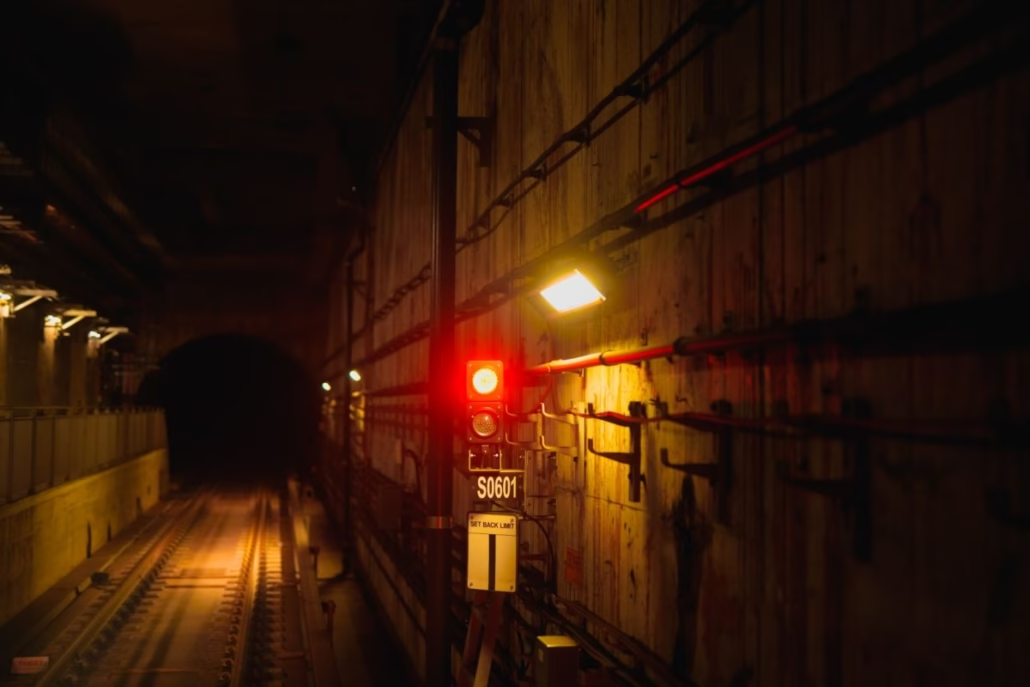
Singapore’s most ambitious new rail corridor in years is about to get an operator, and SMRT just made a bold move. In August 2026, SMRT Corporation announced a joint bid with a Chinese rail operator to run the Cross Island Line (CRL), according to reporting by The Straits Times. The partnership is strategic: it combines SMRT’s two decades of local operating experience with deep Chinese rail expertise, at a time when the CRL is already running trains manufactured by CRRC.
- SMRT Teams Up With Chinese Rail Partner to Bid for Cross Island Line Operations
- What Is the Cross Island Line and Why Does It Matter?
- Who Exactly Is SMRT's Chinese Partner?
- Will This Change the Commuter Experience?
- How Does This Fit Into Singapore's Bigger Rail Picture?
- Will Anyone Else Bid to Run the CRL?
- When Will the CRL Open and What Happens Next?
- SMRT vs. SBS Transit: How They Currently Divide the Network
- Why This Matters for Singapore's Transport Future
- Before You Tap In
- FAQ
This is not entirely unexpected. The CRL’s trains, the CRRC Qingdao Sifang CR151, are already being tested on the line. A Chinese manufacturing footprint is already embedded in the project. Adding a Chinese operating partner through SMRT makes sense: it could mean tighter coordination between the train maker and the day-to-day operator, especially in those critical first years.
Getting around Singapore? Find any station on the interactive MRT map, or save the PDF map to use offline.
What Is the Cross Island Line and Why Does It Matter?
The Cross Island Line is Singapore’s eighth MRT line, and it is different from anything we have today. When fully complete, the CRL will stretch from Jurong Lake District in the west all the way to Changi in the east, slicing across the island in a path no existing line takes. Phase 1 spans around 29 kilometres with 12 stations from Aviation Park to Bright Hill, including Loyang, Pasir Ris, Tampines North, Defu, Hougang, Ang Mo Kio and Teck Ghee.
If you currently commute between the eastern heartlands and areas near the North-South Line, you already know the pain. Multiple transfers, multiple changes, and a journey that eats into your day. The CRL is built to fix exactly that problem.
The operator matters enormously because they control everything: train services, maintenance, staffing, safety, and passenger experience. Singapore uses a licensed operating model where the government (via LTA) owns the infrastructure and assets, while a private operator runs the trains. SBS Transit operates the Downtown Line and North East Line. SMRT runs the North-South Line, East-West Line, Circle Line, and Thomson-East Coast Line. The CRL will need its own operator appointment before passenger services can begin.

Who Exactly Is SMRT’s Chinese Partner?
As of August 2026, the specific identity of the Chinese rail operator in the joint bid has not been officially confirmed. The Straits Times reported on the partnership without naming the Chinese party publicly. Industry observers point to operators with ties to CRRC or major Chinese metro networks, but that remains speculation at this point. We will update this section as more details come out.
What we do know is that SMRT is bidding from a position of strength. On the same day the partnership news broke, SMRT announced that rail revenue had grown by 5.6% and profit after tax had nearly doubled. That is a company bidding confidently, not defensively. Pair that financial health with Chinese rail operational expertise, and the joint bid looks credible on both the commercial and technical fronts.
Will This Change the Commuter Experience?
For most riders, the operator’s identity won’t transform day-to-day life on the CRL. Fares will still be distance-based and integrated into Singapore’s national fare system. You will tap in and out with an EZ-Link card, SimplyGo, or a contactless bank card, just as you do now. No separate payment method required.
What the operator will shape is reliability, service frequency, and maintenance quality over time. Singapore’s recent push to install an MRT axle box monitoring system across all lines by end-2030 shows how seriously the authorities take predictive maintenance. Read more about that in our article on the MRT axle box system rollout. A new CRL operator will inherit these standards from day one.
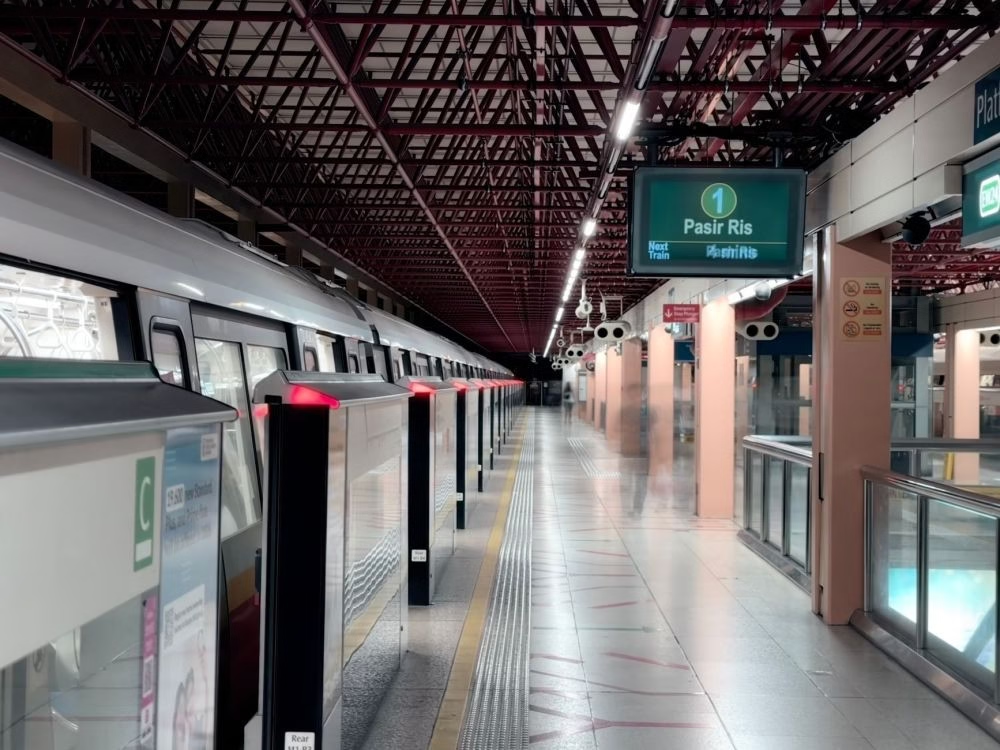
There is also the AI factor. SMRT’s August 2026 financial results specifically highlighted advances in AI-enabled maintenance and monitoring. If SMRT wins the CRL contract, those AI tools would likely roll out to the new line, which could mean fewer unexpected delays. That matters when the CRL serves major transfer stations and densely populated areas in the east and north.
How Does This Fit Into Singapore’s Bigger Rail Picture?
Singapore has deliberately avoided letting any single operator dominate the entire network. SMRT currently runs four of the six metro lines, with SBS Transit running two. The CRL would be the eighth line overall. LTA structures operating licences to ensure accountability and competitive benchmarking across operators.
The joint bid model is not new to Singapore. It mirrors how international expertise has been brought into local transport projects before, especially where new technology or rolling stock from a specific country is involved. The CR151 trains manufactured by CRRC already represent a substantial Chinese industrial footprint on the CRL. Adding a Chinese operating partner could mean smoother technical coordination between the manufacturer and the daily operator, particularly in the early years when a brand-new line is still finding its rhythm.
Will Anyone Else Bid to Run the CRL?
Singapore’s licensing framework invites competitive tenders. While SMRT’s joint bid is the headline right now, SBS Transit would be the natural rival given its existing experience on two lines. Whether SBS Transit bids, and whether they do it alone or with a partner, has not been confirmed.
A completely new consortium entering the Singapore rail market is theoretically possible but faces high barriers. Running an MRT line demands deep familiarity with LTA’s operating standards, local regulations, and the commuting patterns of a million-plus daily riders. That institutional knowledge takes years. SMRT, despite some well-publicised reliability challenges in the early 2010s, has improved substantially. In 2026, the network has consistently maintained mean kilometres between failures above two million train-kilometres for multiple consecutive months.
When Will the CRL Open and What Happens Next?
Phase 1 is targeted to open to the public in 2030, though LTA has not confirmed a specific month. The operator appointment typically comes a few years before opening to allow for staff hiring, training, systems integration, and emergency response preparation. If bidding runs through late 2026 into 2027, an operator announcement could realistically come in 2027 or 2028.
The CR151 trains are already undergoing track testing. That is a positive sign the hardware side is on schedule. The operator selection is the next major institutional milestone.
For commuters in the eastern and central parts of Singapore, particularly those who currently travel into the city before heading back out to the other side of the island, the CRL cannot come soon enough. Anyone who has taken the East-West Line from Tampines all the way to Ang Mo Kio during peak hour knows exactly what this line will solve. You can check the full current MRT network and all interchange options using our complete list of MRT stations in Singapore.
SMRT vs. SBS Transit: How They Currently Divide the Network
| Operator | Lines Operated | Approximate Stations |
|---|---|---|
| SMRT Trains | North-South Line (NS), East-West Line (EW), Circle Line (CCL), Thomson-East Coast Line (TEL) | Around 117 stations |
| SBS Transit | North East Line (NEL), Downtown Line (DTL) | Around 52 stations |
| CRL Operator (TBD) | Cross Island Line (CRL) Phase 1 | 12 stations (Phase 1) |
Station counts above are approximate as of August 2026 and include recently opened stations such as the CCL Stage 6 stations at Keppel, Cantonment, and Prince Edward Road. The CRL Phase 1 figure is based on LTA’s confirmed alignment. Check the full MRT line overview for a current picture of how each line is structured.
Why This Matters for Singapore’s Transport Future
The CRL is not just another line extension. It is a structural shift in how Singapore’s rail network functions, moving from a hub-and-spoke model towards a true grid. The operator who wins this contract will shape the commuting experience for hundreds of thousands of residents in Hougang, Tampines, Ang Mo Kio, and surrounding areas for the next several decades. Getting the right operator with the right technical capabilities and local knowledge is a decision that outlasts any government term or corporate leadership cycle.
SMRT’s joint bid with a Chinese rail partner signals confidence. It also signals that the transition from manufacturing to operations in the Chinese rail sector has matured enough that international metro operators see real value in those partnerships. Whether LTA agrees when the bids are evaluated is another matter. According to LTA’s official website, all operating licences are awarded through a competitive and transparent process with safety, reliability, and value for money as the primary criteria.
Singapore Rail Is Moving on Multiple Fronts at Once
Singapore’s public transport ecosystem is moving fast. The Circle Line is now complete following the July 2026 opening of its Stage 6 stations. The Thomson-East Coast Line continues its phased rollout. AI is being deployed in maintenance. Facial recognition fare trials are under way. And the CRL operator selection process is heating up. It is genuinely exciting to watch Singapore rail right now, even if the day-to-day moments can be quiet. Behind the headlines, 200-plus stations are kept running smoothly by dedicated teams every single day. For the latest on SMRT’s performance across its existing lines, their official site carries full reliability and service statistics.
Before You Tap In
The SMRT and Chinese rail operator joint bid for the Cross Island Line is still unfolding, and we will be tracking developments as LTA moves towards a formal operator appointment. If you want to stay on top of all CRL developments, route maps, and station guides, bookmark our Singapore MRT blog for the latest updates.
FAQ
Keep exploring
- New Cross Island Line Trains: 3 Key Features
- 4 New Cross Island Line Stations: Jurong Pier & Gul Circle
- MRT Axle Box System Coming to All Lines by 2030