
Last updated . Facts checked against LTA announcements.
Arriving in Singapore for the first time? The city is large, but getting around it is straightforward once you know how the MRT works.
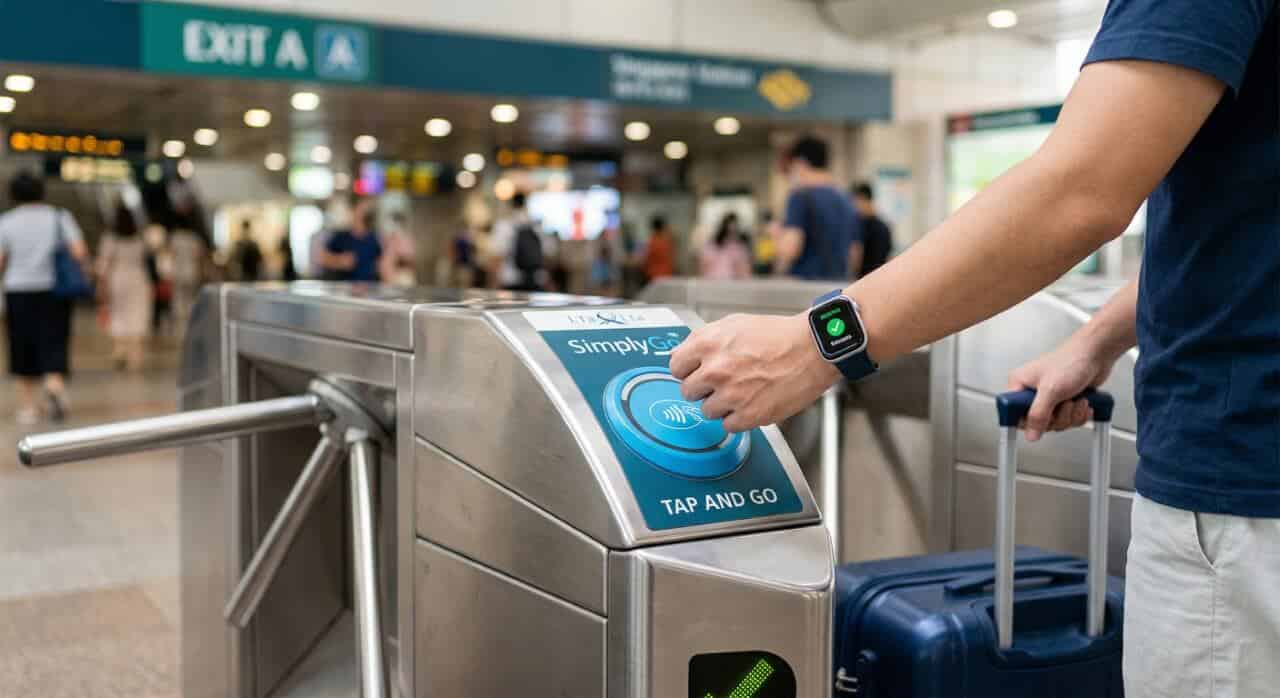
The Singapore MRT (Mass Rapid Transit) is the fastest and most reliable way to travel around the island. To use it, tap your contactless bank card, mobile wallet (via SimplyGo), or a dedicated travel card such as an EZ-Link card or Singapore Tourist Pass at the fare gantry, follow the colour-coded signs to your platform, and tap out again when you leave. The system calculates your fare automatically based on the distance travelled.
The MRT covers almost every major attraction, from Gardens by the Bay to the hawker centres of the heartlands.
Quick Takeaways
-
No paper tickets needed: Most international credit and debit cards with tap-to-pay (Apple Pay, Google Wallet) work directly at the fare gates via SimplyGo.
-
Broad coverage: The network has grown considerably, and most attractions are within a short walk of a station.
-
Rules are strictly enforced: Eating, drinking and smoking on the MRT carry heavy fines. Even a sip of water counts.
-
Easy to follow: Colour-coded lines and alphanumeric station codes make transfers straightforward, even on your first day.
Why the MRT is Your Best Option in Singapore
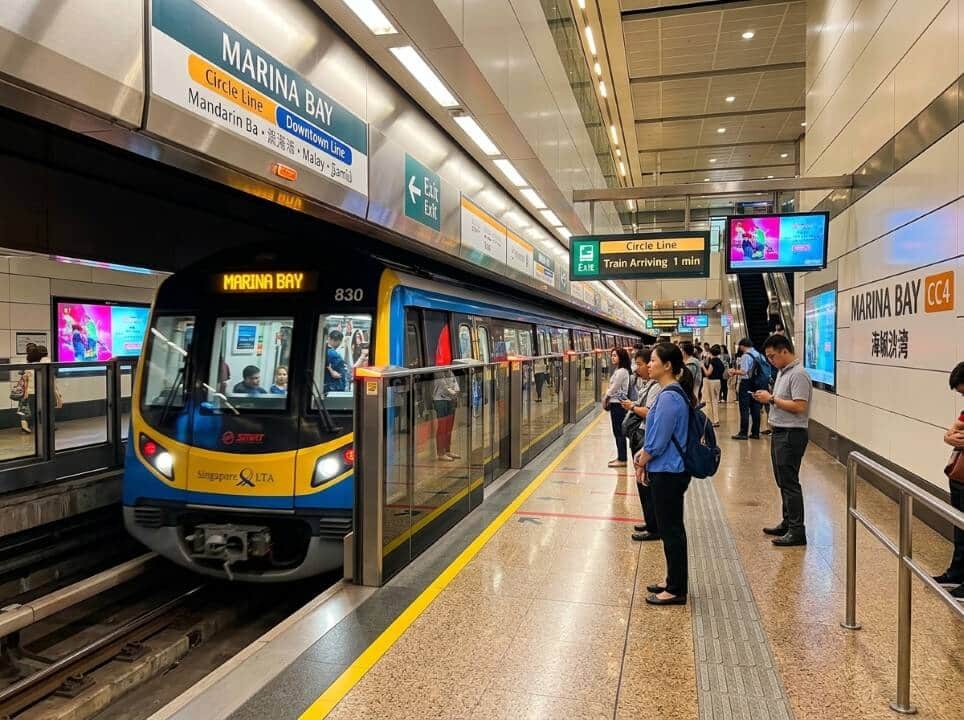
The network is operated by SMRT and SBS Transit under the Land Transport Authority (LTA), and it is consistently rated among the best urban rail systems in the world. Taking the train means you avoid surface traffic entirely, which matters in a city where taxis and ride-hailing services can get caught in congestion, especially near the CBD and tourist areas.
By 2026 the network has expanded further. The Thomson-East Coast Line now gives direct access to parts of the east coast that used to require a bus connection, and the Circle Line has closed into a full loop. For visitors, the MRT is not just the budget-friendly choice; it is genuinely the most practical way to get around.
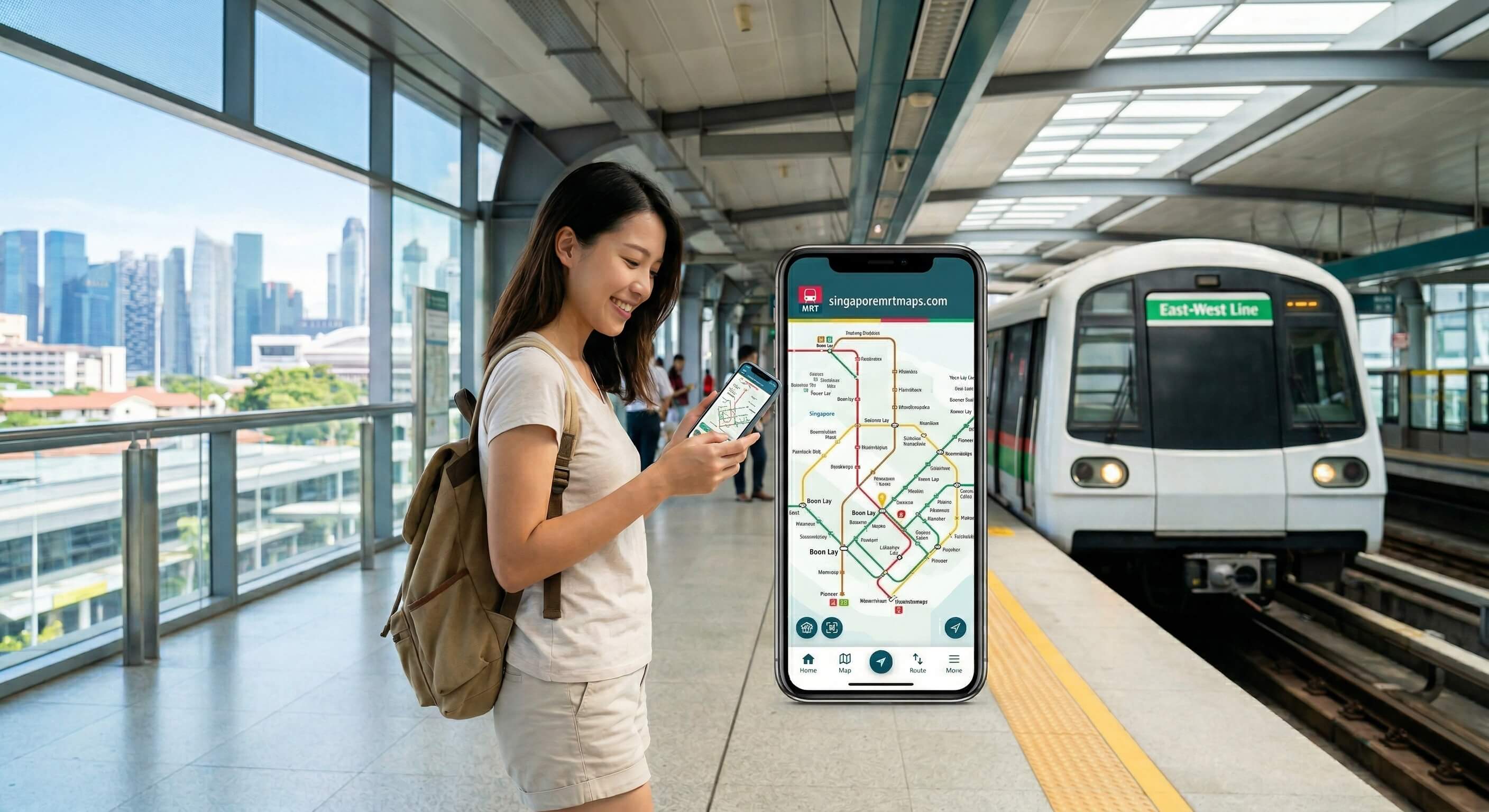
Getting around Singapore? Find any station on the interactive MRT map, or save the PDF map to use offline.
Decoding the Singapore MRT Map
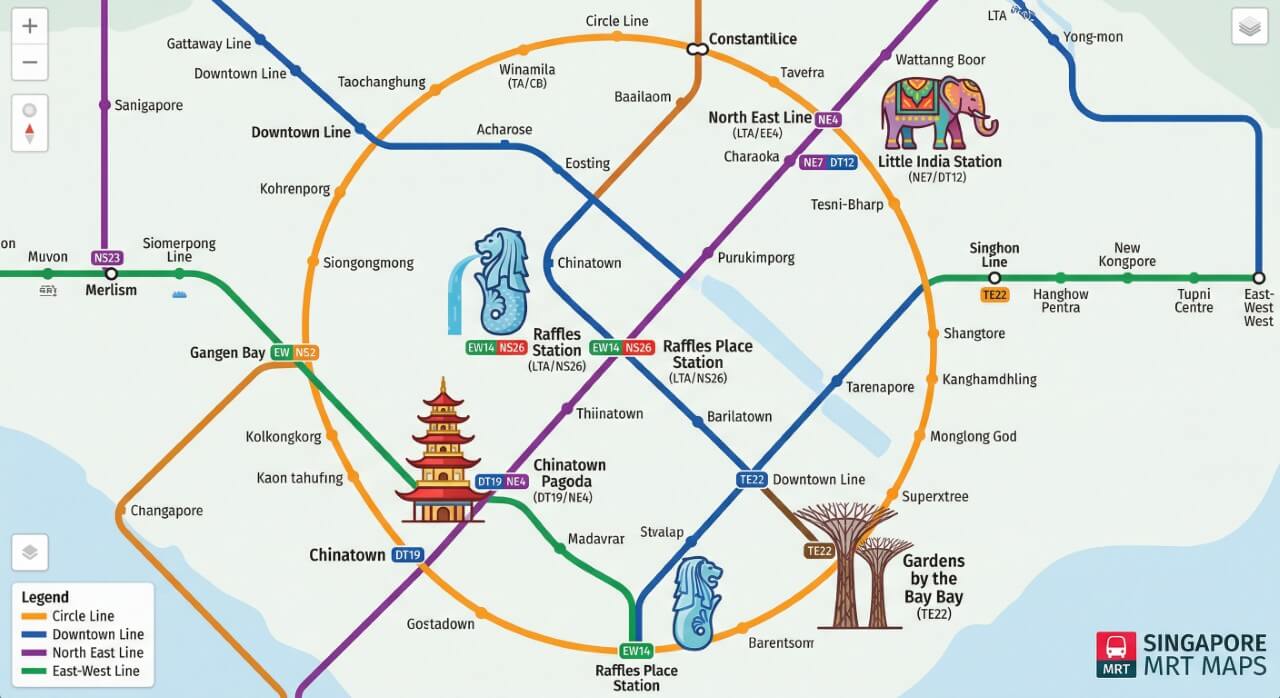
At first glance, the map can look like a colourful bowl of spaghetti. Once you understand the coding system, though, it makes good sense. Every station has a colour corresponding to its line and an alphanumeric code showing its position on that line.
Here is a quick reference for the main lines you are likely to use:
-
Red Line (North South Line / NS): Connects Orchard Road to the Marina Bay business and financial district.
-
Green Line (East West Line / EW): Runs from Changi Airport into the city centre and all the way west to Tuas. It is often the first line visitors ride.
-
Purple Line (North East Line / NE): Takes you directly to Chinatown, Little India and HarbourFront, which is where you catch the ferry or cable car to Sentosa.
-
Orange Line (Circle Line / CC): Now a full loop around the city centre since Stage 6 opened in July 2026, making transfers between other lines straightforward. It also stops at Botanic Gardens.
-
Blue Line (Downtown Line / DT): Weaves through the central business district and historic neighbourhoods like Bugis and Chinatown.
-
Brown Line (Thomson-East Coast Line / TE): The most recently expanded line, useful for reaching Gardens by the Bay and the east coast.
Planning your route now? Use our Singapore MRT map or the interactive Singapore MRT map 2026 to zoom in on specific stations and plan your transfers.
How to Pay for Your Ride in 2026
You no longer need to queue at a ticketing machine or carry exact change. Singapore’s MRT runs on a largely cashless payment system. There are three main ways to pay.
1. SimplyGo (Contactless Bank Cards and Mobile Wallets)
For most short-term visitors, SimplyGo is the simplest option. You can tap a Visa, Mastercard or NETS contactless card directly at the fare gates, or pay via Apple Pay, Google Pay or another mobile wallet. There is no separate card to buy and no queue at the ticket machine.
Worth knowing: If you use a foreign credit card via SimplyGo, an administrative fee applies for each day you tap in. To keep costs down, use a card with no foreign transaction fees, or a travel card such as Revolut or Wise.
2. The Singapore Tourist Pass (STP)
If you plan to ride the train frequently, the STP is worth considering. It gives you unlimited travel on basic bus and MRT services for 1, 2 or 3 days. You can pick one up at Changi Airport or major MRT transit offices.
3. EZ-Link / NETS FlashPay Cards
This is the stored-value smartcard that most locals use. You buy the card for a flat fee, which includes some pre-loaded credit, then top it up at ticketing machines using cash or card when your balance runs low. It doubles as a decent souvenir, though you do need to keep an eye on your balance.
Payment Methods Comparison
| Payment Method | Cost / Setup | Best For | Pros & Cons |
| SimplyGo (Bank Cards) | No setup cost (just tap) | Casual tourists & tech-savvy travelers | Pro: Ultimate convenience. Con: Daily foreign transaction/admin fees apply. |
| Singapore Tourist Pass | Fixed price for 1, 2 or 3 days (check current rates) | Power-travelers & tight itineraries | Pro: Unlimited rides, budget-friendly. Con: Must be purchased at specific counters. |
| EZ-Link Card | $10 SGD ($5 card cost + $5 value) | Long-term visitors & returning guests | Pro: No daily admin fees, great souvenir. Con: Requires manual top-ups. |
Your First Journey: From Changi Airport to the City
Getting from the airport to your hotel is straightforward on the MRT. Changi Airport Station (CG2) is underground, between Terminals 2 and 3.
-
Follow the “Train to City” signs after collecting your luggage.
-
Tap your payment card or device at the gantry and head down to the platform.
-
Board the train. Important: This service only runs two stops.
-
Alight at Tanah Merah Station (EW4).
-
Cross the platform and board the East West Line (green) towards Tuas Link. This takes you directly into the city centre.
Getting to the Top Tourist Attractions
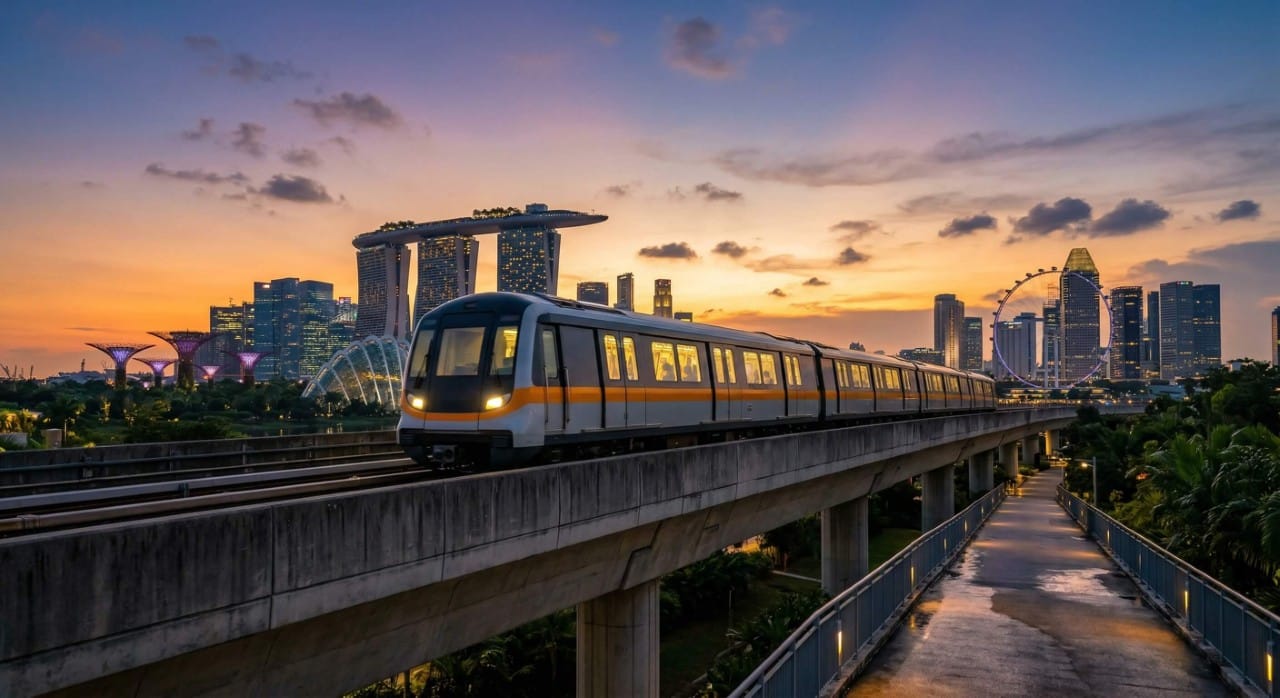
Most of Singapore’s popular sights sit right on the MRT network, which means you rarely need to flag a taxi or book a ride.
Here is a quick reference to reaching the most popular spots in 2026:
Marina Bay Sands & Gardens by the Bay
Take the Circle Line (orange) or Downtown Line (blue) to Bayfront Station (CE1/DT16), which connects directly to the mall beneath the hotel. If you are heading to the Supertree Grove, the Thomson-East Coast Line (brown) drops you at Gardens by the Bay Station (TE22) for a more direct approach.
Sentosa Island & Universal Studios
Ride the North East Line (purple) or Circle Line (orange) to HarbourFront Station (NE1/CC32). From there, head up through VivoCity shopping mall to catch the Sentosa Express monorail, or walk across the boardwalk on foot. You can find more details on the official Sentosa website.
Cultural Enclaves
-
Chinatown: Take the Downtown Line or North East Line to Chinatown Station (DT19/NE4), which puts you right in the middle of the market streets.
-
Little India: The North East Line or Downtown Line to Little India Station (NE7/DT12) drops you close to Tekka Centre and the surrounding shophouses.
Strict Rules and MRT Etiquette
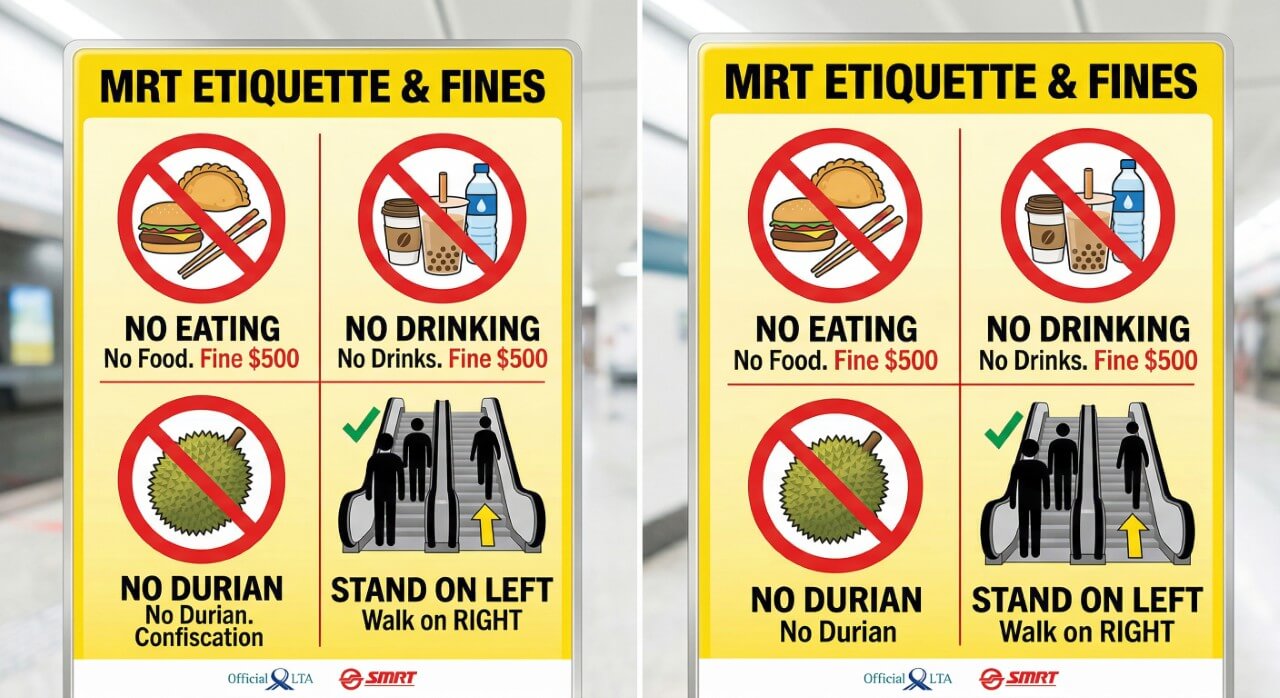
Singapore enforces its MRT rules seriously, and ignorance is not accepted as an excuse. Keep the following in mind before you board.
-
No eating or drinking: Do not consume any food or drinks on the train or on station platforms. This includes water.
-
Give up priority seats: Seats near the doors are reserved for elderly passengers, pregnant women and passengers with disabilities. You may sit there on an empty train, but give the seat up immediately when someone needs it.
-
Stand on the left: On escalators, keep to the left. The right side is for people who want to walk up or down.
-
No durians: The “king of fruits” is banned from the MRT due to its strong smell. Do not bring one on board.
Worth knowing: Fines in Singapore are real and enforced. Eating or drinking on the MRT can result in a substantial fine, so finish your coffee before you tap through the fare gates.
2026 Commuter Tips for First-Timers
A few practical habits will make your MRT experience noticeably smoother.
Avoid the Peak Hour Crush
On weekdays, trains get heavily congested between 7:30 am and 9:00 am and again between 5:30 pm and 7:30 pm. If your plans are flexible, travelling outside these windows is much more comfortable and you are far more likely to get a seat.
Use the MRT Station Exit Maps
Underground stations in Singapore can be large, and a single station may have many exits leading to different streets or shopping malls. Before tapping out at the fare gates, check the large yellow locality maps on the walls. Find your destination, note the exit letter, and follow the overhead signs. It saves you from surfacing at the wrong end and having to cross a busy road.
Check the Last Train Timings
The MRT does not run around the clock, and services generally stop around midnight. If you are planning a late night out at Clarke Quay or anywhere else, check our MRT first and last train timings guide before you head out. Missing the last train means paying for a taxi or ride-hailing at peak surcharge rates.
(FAQs)
Is the Singapore MRT open 24 hours?
No. Most lines start around 5:30 AM and run until about midnight. On certain public holidays such as New Year’s Eve, services are sometimes extended into the early hours.
How do I calculate my MRT fare?
You do not need to calculate anything manually. Fares are worked out automatically based on the distance you travel. Tap your card or device when entering and exiting, and the correct amount is deducted from your balance or pass.
Can I use Apple Pay or Google Wallet on the MRT?
Yes. Through the SimplyGo system, you can tap in and out using Apple Pay, Google Wallet, or any contactless Visa or Mastercard. You do not need a physical transit card.
Are Singapore MRT stations wheelchair accessible?
Yes. Every station has lifts, wide fare gates, tactile guidance paths and dedicated wheelchair spaces inside the train carriages, making the network fully barrier-free.
What is the longest MRT line in Singapore?
As of 2026, the East West Line is the longest in the network at about 57 km, while the Downtown Line has the most stations, with 35. The East West Line, including the Changi Airport branch, also covers a substantial distance, running from Pasir Ris in the east to Tuas Link in the west.