
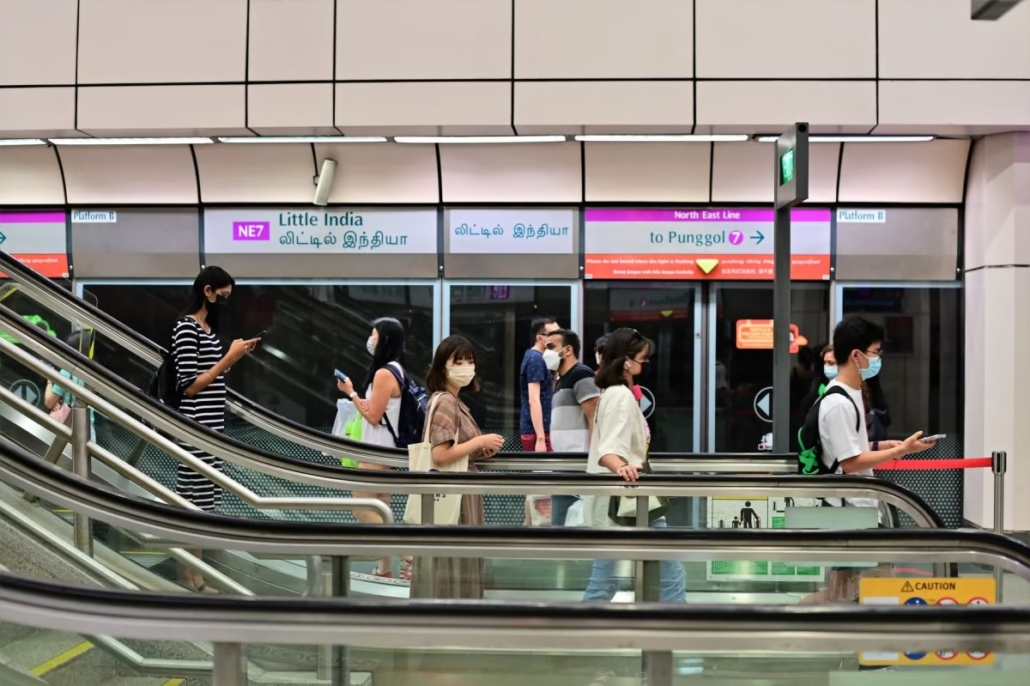
Singapore just got its first proper look at the Cross Island Line trains, and they’re genuinely different from what’s already running. Fully driverless, wider doors, and six cars from day one. These aren’t tweaks to the existing fleet. They’re a proper upgrade.
- What makes the new Cross Island Line trains different?
- How do the CRL trains stack up against other lines?
- What will the CRL network actually look like?
- When will you actually get to ride these trains?
- How will you pay on the CRL?
- What does the CRL mean for the rest of the network?
- Before you tap in
- FAQ
LTA revealed these details in late July 2026, alongside news of four additional CRL stations serving Taman Jurong and the western industrial estates. For commuters stuck in the west, that’s a lot of good news in one week. Here’s what these trains actually offer and why it matters for your daily commute.
What makes the new Cross Island Line trains different?
The CRL trains are purpose-built for Singapore’s longest future MRT line. Unlike some of the older rolling stock still running on the East-West Line (EWL) or the North South Line (NSL), every CRL train will be brand new, with specs reflecting where public transport technology stands in 2026.
Three headline features stand out: driverless operation, wider doors, and a six-car formation. Each one tackles a specific frustration that regular MRT commuters will recognise instantly.
Feature 1: Fully driverless, fully automated
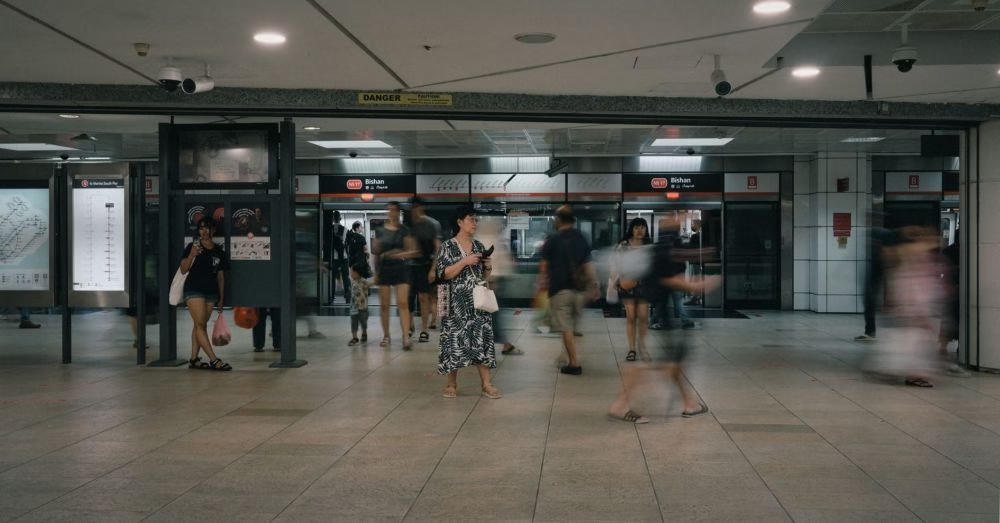
The CRL trains will run under Grade of Automation 4 (GoA4), meaning fully driverless operation with no crew onboard during normal service. This is the same standard used on the Downtown Line (DTL) and the Circle Line (CCL), so Singapore already has years of track record with this technology.
What does driverless actually mean for you on the platform? Faster turnaround at terminals since there’s no crew changeover. Train frequencies can be adjusted more precisely by the control system, which matters during peak hours. According to LTA, automated operations allow headways to be reduced more reliably than on manually driven lines.
The automation also means the train management system responds instantly to track obstructions or platform incidents, which feeds into the reliability figures the Singapore MRT has been working hard to maintain. If you want deeper context on recent trends, our piece on MRT reliability above two million train-kilometres for the third consecutive month is worth reading.
Feature 2: Wider doors for faster boarding and alighting
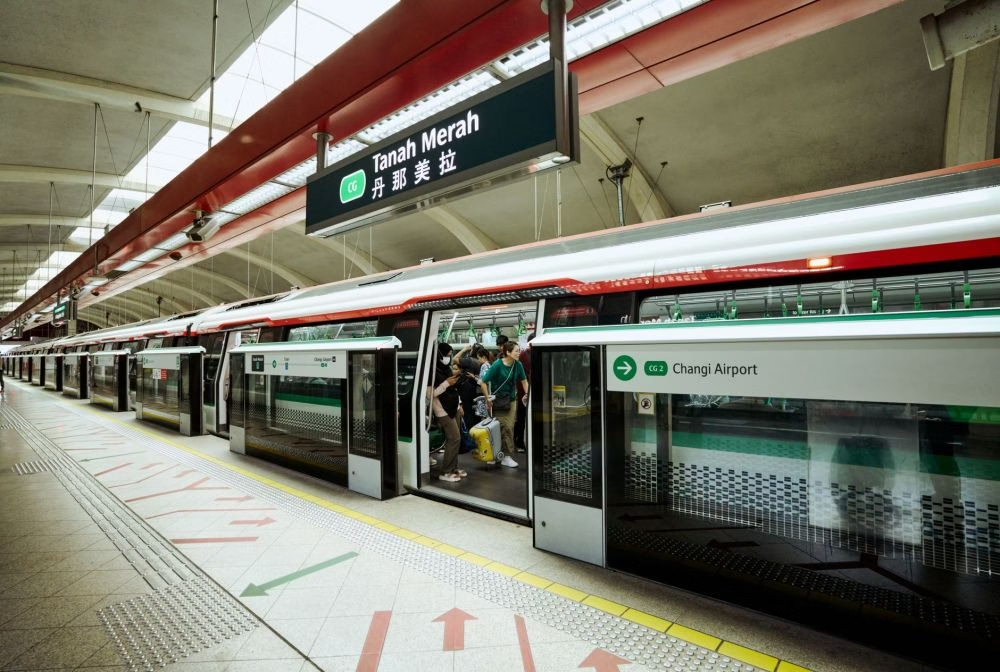
The second key feature is wider train doors compared to older designs. This one matters most to everyday commuters during peak hours. Anyone who’s tried to alight at Raffles Place or Bishan during morning rush knows the nightmare: narrow doors bottleneck, crowds pushing in before you’ve even stepped off.
Wider doors cut dwell time at each station. That’s the gap between doors opening and the train safely moving again. Shave a few seconds off dwell time at every station on the route, and the end-to-end journey gets meaningfully shorter. On a line as long as the CRL, that adds up.
The doors also tie into an updated interior layout that prioritises standing room and passenger flow. That matters more on a line where many travellers will be onboard for long stretches, crossing from east to west.
Feature 3: Six-car formation from day one
Many Singapore MRT lines started life with shorter trains and only added cars once ridership proved the demand. The CRL is launching with six-car trains from the beginning. That’s the same formation as the longer trains on the NSL and EWL.
Why does this matter? The CRL is projected to carry very high ridership from the outset, especially as Phase 1 stations connect densely populated areas in Ang Mo Kio, Buangkok, and eventually the western estates around Jurong. Starting with six cars avoids the situation where a line opens, gets overwhelmed within months, and then needs costly upgrades.
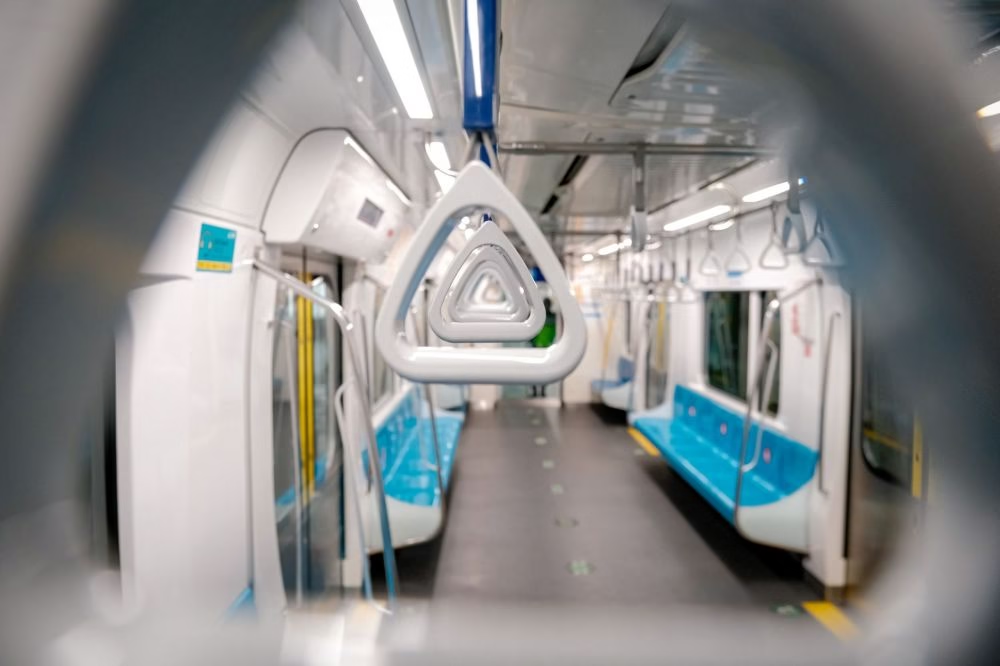
Getting around Singapore? Find any station on the interactive MRT map, or save the PDF map to use offline.
How do the CRL trains stack up against other lines?
Here’s how the CRL rolling stock compares to what’s already running across Singapore’s main lines, based on publicly available information as of August 2026. Some figures are approximate and subject to official confirmation closer to opening.
| Line | Automation Level | Train Formation | Door Width |
|---|---|---|---|
| North South / East-West Lines | Semi-automated (GoA2) | 6 cars | Standard |
| Circle Line | Fully driverless (GoA4) | 3 cars | Standard |
| Downtown Line | Fully driverless (GoA4) | 3 cars | Standard |
| Thomson-East Coast Line | Fully driverless (GoA4) | 5 cars | Standard |
| Cross Island Line | Fully driverless (GoA4) | 6 cars | Wider (new spec) |
The CRL is unique in Singapore right now: full automation of the newer lines combined with the long formation of the heavier rail lines. That’s a strong combination. Head to our Singapore MRT lines overview page to see how this fits into the broader network.
What will the CRL network actually look like?
The Cross Island Line is being built in phases, and by the late 2030s it’ll be substantially different from what was first announced. In late July 2026, LTA confirmed four new stations will be added to connect Taman Jurong and the western industrial estates, including interchanges at Jurong Pier and Gul Circle. That pushes the total CRL station count even higher than earlier projections.
These four new stations form what’s effectively a Phase 3 extension. There will be interchanges with both the East-West Line and the upcoming Jurong Region Line (JRL), making the western end of the CRL a genuine transport hub for that part of Singapore. Our article on the 4 new CRL stations at Jurong Pier and Gul Circle breaks down all the detail.
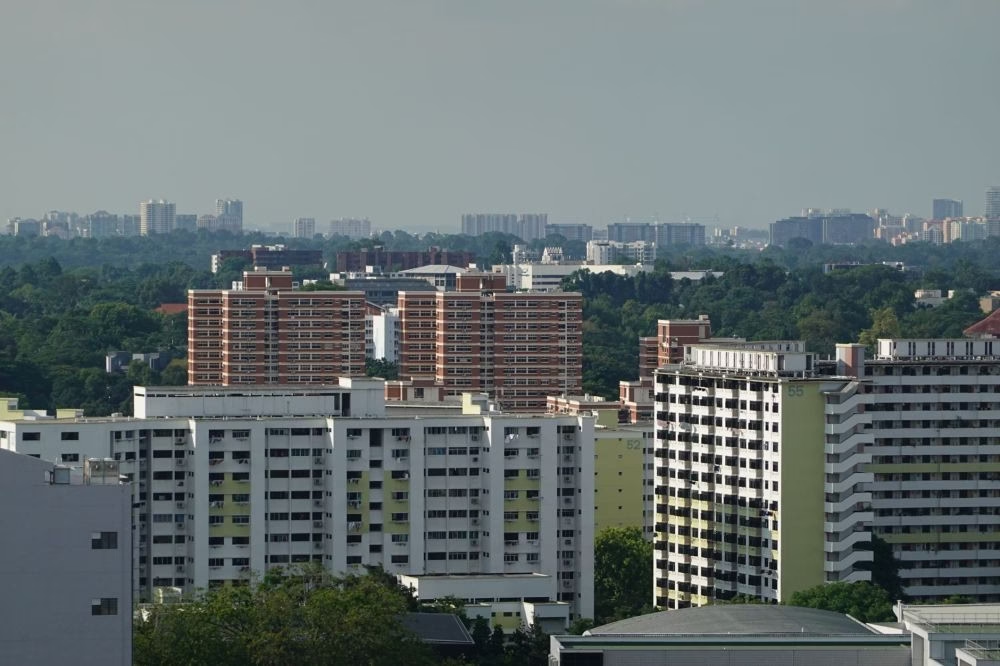
For commuters currently relying on the East-West Line to get between west and central or eastern Singapore, this is significant. The CRL offers an alternative cross-island route that avoids the need to travel into the city centre and back out again. That’s exactly the kind of inefficiency long-distance commuters in the west have been battling for years.
When will you actually get to ride these trains?
Cross Island Line Phase 1, covering stations from Aviation Park to Bright Hill, is targeted to open around 2030. Still a few years away, so the trains won’t be in passenger service anytime soon. Testing and trial runs will start before that, with LTA typically running extensive reliability trials before any new line opens to the public.
Phase 2, extending westward to Jurong Lake District, is targeted for 2032. The new Phase 3 stations including Jurong Pier and Gul Circle are targeted for the late 2030s. So if you’re in Taman Jurong or working in the western industrial estates, your wait is longer, but it’ll be worth it.
How will you pay on the CRL?
Ticketing on the CRL will work exactly like every other MRT line in Singapore. That means SimplyGo-compatible payments: EZ-Link cards, contactless bank cards, and mobile wallets. Fares are distance-based, calculated from your tap-in to your tap-out station, just like everywhere else on the network.
If you’re unsure how MRT ticketing works in general, the complete guide to paying for the MRT covers every option including contactless cards and mobile wallets. Tourists planning ahead should read the Singapore Tourist Pass vs EZ-Link vs SimplyGo comparison before you arrive. Official details are also available directly from SimplyGo.
The CRL’s distance-based fares will integrate into the same structure as all other lines. Early estimates based on comparable journey lengths suggest cross-island trips could cost around S$1.20 to S$2.50 for adults, depending on origin and destination, but official fare tables will only be confirmed closer to opening. Concession cardholders including students, seniors, and persons with disabilities will pay reduced rates.
What does the CRL mean for the rest of the network?
Every new MRT line reshapes how people use the existing network, and the CRL will redistribute significant commuter volumes. Stations like Bright Hill will become interchanges between the CRL and the Thomson-East Coast Line (TEL). Ang Mo Kio will gain a second MRT line. The western end will eventually tie into the EWL at multiple points.
The North East Line (NEL) and Circle Line may also see ridership shifts as people who currently make multi-leg journeys find a more direct CRL route. LTA and operators like SMRT will need to balance capacity across lines accordingly. Check our full list of MRT stations in Singapore to stay on top of these changes as announcements come through.
Singapore’s push to move more commuters out of private cars and onto public transport depends heavily on lines like the CRL making cross-town trips genuinely faster and more comfortable. Three-car driverless trains serving a niche corridor won’t achieve that. Six-car, wide-door, fully automated trains on the island’s longest corridor just might.
Before you tap in
The new Cross Island Line trains are a genuine step forward: six cars, wider doors, and full automation from day one. Phase 1 is still a few years out, but the design decisions locked in now will shape how millions of commuters travel for decades. Keep an eye on our blog for the latest CRL updates, station-by-station guides, and practical tips as opening day approaches. The interactive Singapore MRT map is also your best starting point for planning any journey on the current network while you wait.
FAQ
For official updates on the rail network, check the Land Transport Authority (LTA) website.
Keep exploring
- 4 New Cross Island Line Stations: Jurong Pier & Gul Circle
- East-West Line MRT Map and Guide
- Singapore MRT Operating Hours: First Train, Last Train, and Peak Hours Explained