
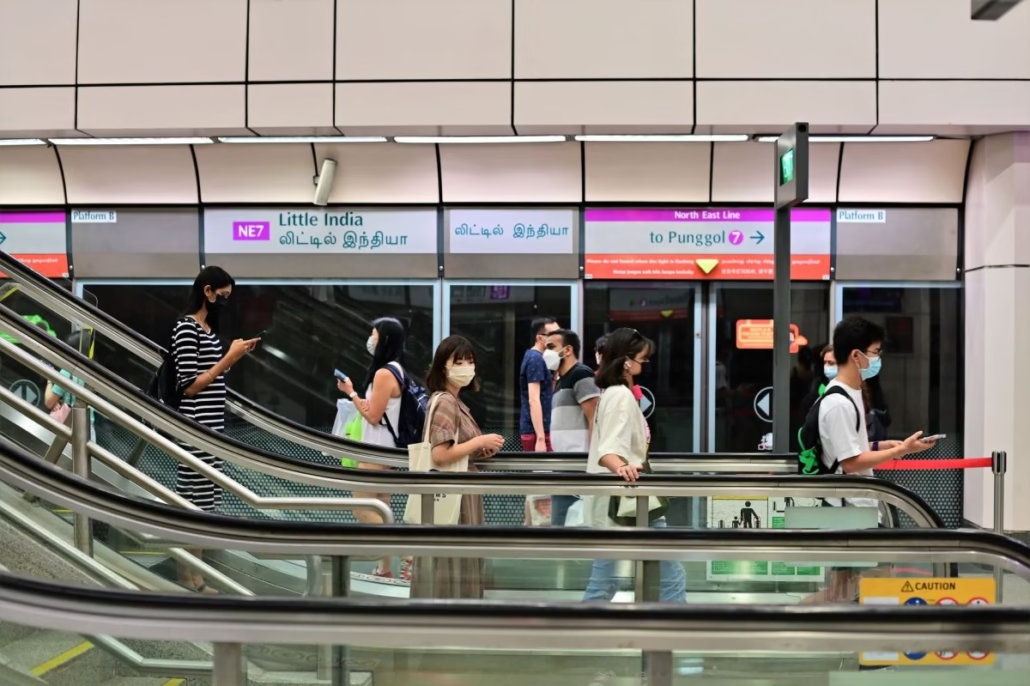
If you’ve ever been stuck on an MRT train that suddenly ground to a halt because of a “train fault”, you’ll know the frustration of watching the minutes tick by while the driver makes a very calm announcement over the PA. A lot of those faults trace back to mechanical heat buildup in components most commuters have never heard of. That’s about to change.
- What Is the MRT Axle Box System and Why Does It Matter?
- Which MRT Lines Are Getting the System First?
- How Does This Compare to What's Already in Place?
- What Does This Mean for Everyday Commuters?
- How Does This Fit Into Singapore's Wider Rail Upgrade Plans?
- Should You Expect Disruptions During the Rollout?
- A Timeline of the MRT Axle Box System Rollout
- The Bigger Picture: Predictive Maintenance Is the New Normal
- Before You Tap In
- FAQ
What Is the MRT Axle Box System and Why Does It Matter?
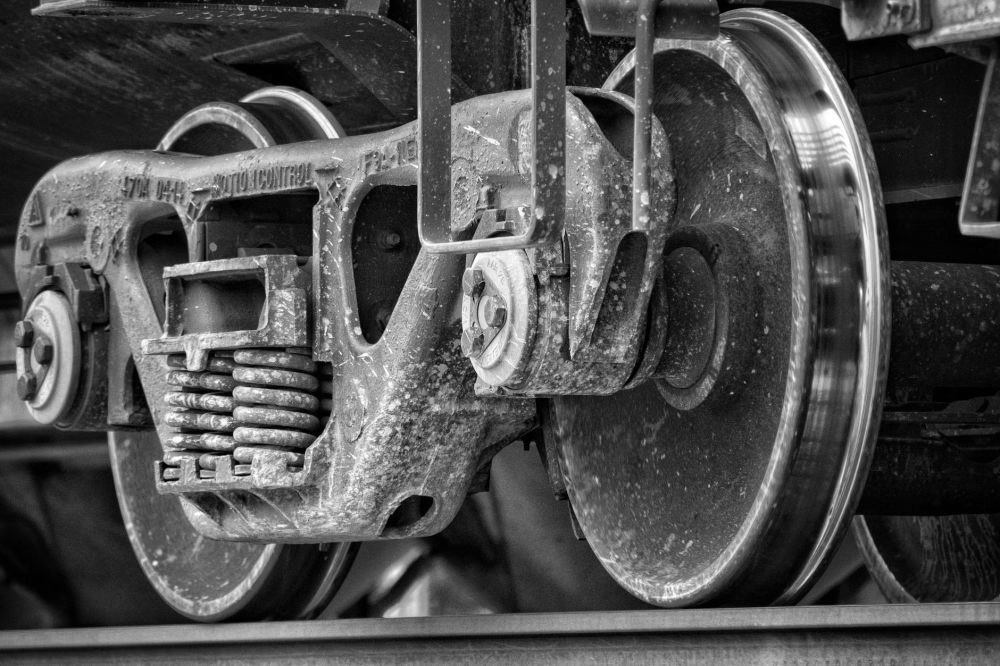
The MRT axle box system is a real-time heat-monitoring solution fitted to train bogies, the wheeled frames that sit underneath each MRT coach. Each axle is enclosed in a housing called an axle box, which contains bearings that can overheat when they wear or are inadequately lubricated. Left undetected, that heat buildup can cause bearing failure mid-journey, forcing trains to stop and triggering the cascade of delays every regular commuter knows too well.
The detection technology works by continuously reading axle box bearing temperatures while the train is in service. When a sensor flags an abnormal reading, the operations control centre is alerted immediately, allowing operators to take the affected train out of service in a controlled way at the next station rather than waiting for a complete breakdown on the track. That’s the difference between a minor inconvenience and a 45-minute delay at Raffles Place that ruins your morning.
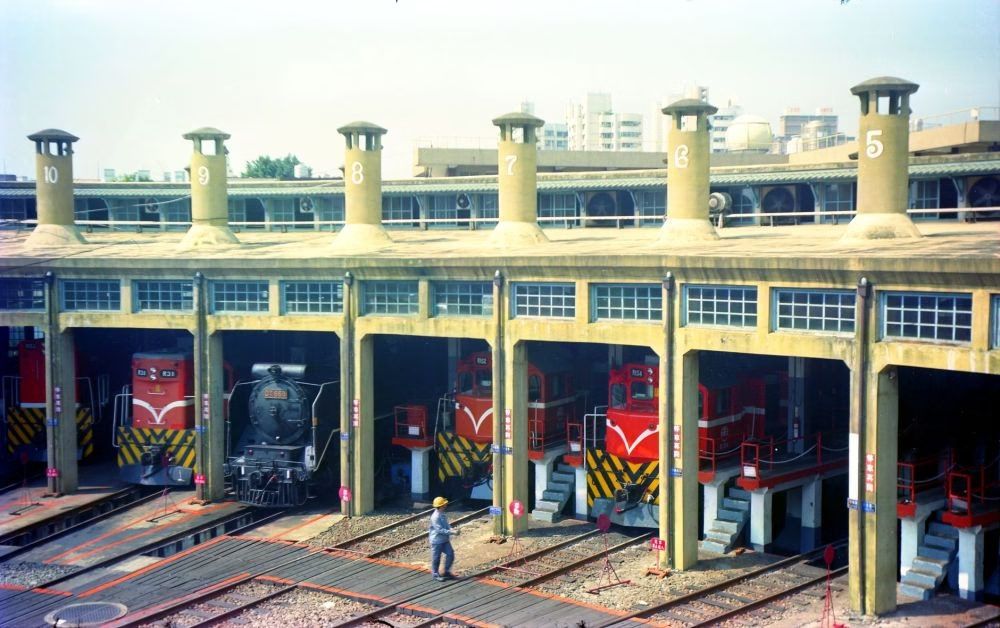
As of August 2026, the LTA has confirmed this system will be installed across all existing MRT lines by 2028, with full rollout completed network-wide by end-2030. That covers every line you ride today, from the North-South Line (NSL) and East-West Line (EWL) to the Circle Line (CCL), the North East Line (NEL), the Downtown Line (DTL), and the Thomson-East Coast Line (TEL).
Getting around Singapore? Find any station on the interactive MRT map, or save the PDF map to use offline.
Which MRT Lines Are Getting the System First?
All existing MRT lines are in scope for the rollout before 2028, with the full network, including lines still under construction, covered by end-2030. This distinction matters: the 2028 figure specifically refers to lines currently in operation.
Singapore currently operates six MRT lines managed by two operators. SMRT Trains runs the North-South Line, the East-West Line, the Circle Line, and the TEL. SBS Transit operates the Downtown Line and the North East Line. Both operators will work within the LTA’s framework to implement the detection system across their respective fleets.
Then there’s the incoming Cross Island Line (CRL). According to an LTA factsheet released on 31 July 2026, the new CRL trains are being designed with advanced monitoring and diagnostic features from the outset. It’s far more efficient to build these systems in during train manufacturing than to retrofit them onto existing fleets, which is why the rollout for older lines takes a few years longer. You can read more about what’s coming in our piece on new Cross Island Line trains and their key features.
How Does This Compare to What’s Already in Place?
Singapore’s MRT network has used heat-monitoring tools before, but existing arrangements are inconsistent across lines and rely more on scheduled maintenance inspections than continuous in-service monitoring. The new axle box system shifts the approach from reactive to predictive.
| Approach | How It Works | Limitation |
|---|---|---|
| Scheduled maintenance | Trains inspected at depot on a fixed cycle | Faults can develop between inspection windows |
| Wayside detection | Sensors at fixed track points read passing trains | Only catches a problem when the train passes that point |
| On-board axle box monitoring (new) | Continuous real-time temperature readings from train itself | Requires retrofit on older fleets, takes time to roll out |
This push toward real-time, on-board diagnostics fits a broader trend in Singapore’s rail operations. Earlier in 2026, reports indicated that Singapore MRT depots have been incorporating greater automation into maintenance workflows. The LTA and both train operators have been steadily moving toward predictive maintenance, where data from the train itself tells engineers what needs attention before anything actually breaks. Our article on Singapore putting AI to work on the metro network covers this evolution in more detail.
What Does This Mean for Everyday Commuters?
A working axle box detection system should reduce unplanned train stoppages caused by overheating bearing failures. If you commute on the North-South Line between Jurong East and the CBD during morning peak, or if you tap in at busier interchanges like Dhoby Ghaut or Outram Park, you’ve probably experienced the knock-on effect of a single train fault holding up the entire service. Fewer such faults means trains maintain their headway, and platform crowding after a disruption becomes less common.
There’s a second benefit that rarely gets mentioned: passenger safety. Axle box bearing failures that go undetected can, in severe cases, increase derailment risk. That’s an extreme scenario, and Singapore’s MRT safety record is strong, but this system closes that gap further. The Land Transport Authority has consistently framed rail safety investments in terms of both reliability and passenger protection, and this rollout sits squarely in that tradition.
Worth noting too: the reliability figures the network has been posting recently. The MRT has logged mean kilometres between failures (MKBF) above the two-million-train-kilometre mark for several consecutive months in 2026, as we covered in our piece on MRT reliability hitting two million train-km for the third month running. The axle box system is, in part, an effort to protect and build on those figures rather than take them for granted.
How Does This Fit Into Singapore’s Wider Rail Upgrade Plans?
The axle box detection rollout is one piece of a busy period for Singapore’s rail network. July and August 2026 alone brought several major announcements. The LTA confirmed Cross Island Line Phase 3, which will add four new stations connecting Taman Jurong and the western industrial estates to the CRL network, with interchanges to the East-West Line and the upcoming Jurong Region Line (JRL). Our article on 4 new Cross Island Line stations including Jurong Pier and Gul Circle breaks this down in full.
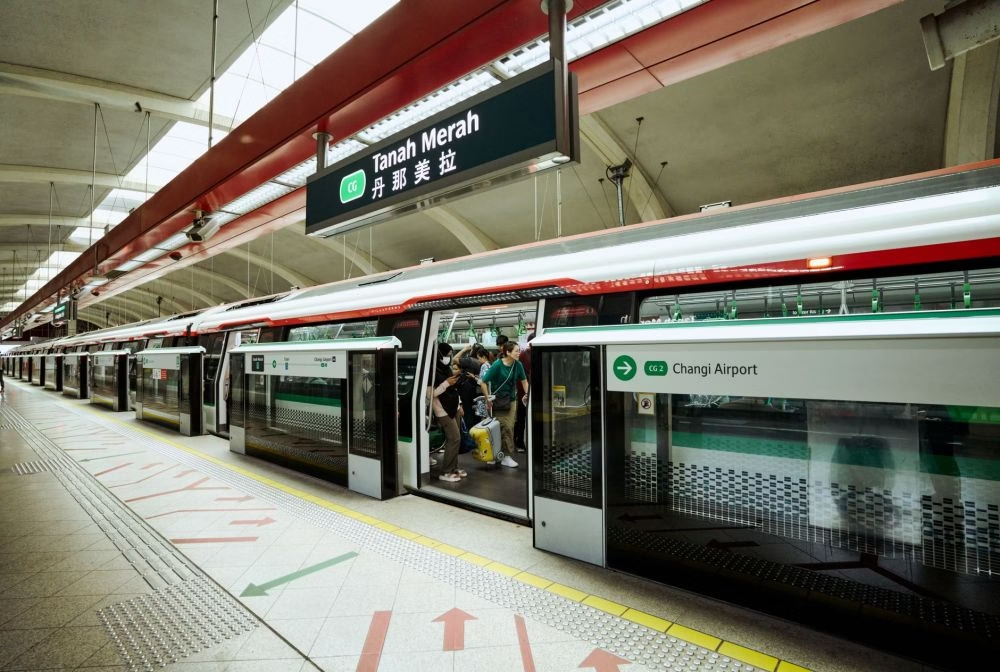
The Circle Line also just completed its long-awaited Stage 6 in July 2026, finally closing the loop after three decades. The TEL continues extending southward. And the CRL’s first trains are now on track for testing, with integrated monitoring features built in from the start. It all points to a network that is expanding while simultaneously bringing its older infrastructure up to the standard of its newest lines.
SMRT and SBS Transit will handle the actual implementation work on their respective fleets, coordinating with train manufacturers on retrofit kits and sensor integration. That process is neither quick nor cheap, which is why the LTA has set a phased timeline rather than a single deadline. The 2028 target for existing lines is ambitious but credible given where the technology and operators currently stand.
Should You Expect Disruptions During the Rollout?
Retrofit work of this kind is typically done in depots during off-service hours, so you’re unlikely to notice anything from the platform. The engineering windows that run after the last train and before the first train each morning are exactly what they exist for. That said, if individual trains require more extended retrofit sessions, operators may temporarily reduce available trainsets on a given line, which could slightly affect frequencies during lower-demand periods.
The honest answer: don’t expect to feel this on your commute. The visible impact should come later, in the form of fewer unplanned stoppages rather than any immediate change to how you tap in and travel. Based on SMRT’s approach to previous fleet upgrades, phased retrofit programmes are managed to minimise service impact, and there’s no indication this rollout will be handled differently.
A Timeline of the MRT Axle Box System Rollout
Here’s how the rollout is expected to play out based on official reporting as of August 2026.
| Timeline | Milestone | Lines Affected |
|---|---|---|
| By 2028 | Axle box overheating detection installed on all existing operating MRT lines | NSL, EWL, CCL, NEL, DTL, TEL |
| By end-2030 | Full network-wide coverage completed, including lines opening in the period | All lines including CRL Phase 1 and 2 |
| CRL trains (new fleet) | Monitoring built in from manufacturing | Cross Island Line |
These dates come from reporting on 3 August 2026, cross-referenced with the LTA’s CRL train factsheet released on 31 July 2026. We’ll update this article if official timelines shift.
The Bigger Picture: Predictive Maintenance Is the New Normal
Singapore is not the only metro network moving this direction. Rail operators around the world have been shifting from fixed-interval maintenance schedules to condition-based and predictive models, where sensors on the train generate the data that tells engineers when and what to fix. The axle box system is one component of that shift, alongside automated depot inspection, AI-assisted fault diagnosis, and real-time performance dashboards that operators use to manage the network minute by minute.
For a city where the MRT is quite literally the backbone of daily life for millions, the stakes are high. A single line disruption at Jurong East during the morning rush, or a breakdown between Bishan and Braddell on the NSL, ripples outward into buses, taxis, and walking times across half the island. Any technology that reduces the frequency of those events is worth the investment, and worth understanding as a commuter.
If you want to stay across all the changes happening to the Singapore MRT network right now, the SingaporeMRTMaps blog covers every major development as it happens, from new station openings to service upgrades like this one.
Before You Tap In
The MRT axle box overheating detection system is one of the more technically unglamorous rail upgrades you’ll read about, but its impact on your daily commute could be very real. Fewer bearing failures mean fewer unplanned stoppages, more reliable headways, and a slightly less stressful journey, from heading to work at 8am or catching the last train home after a late dinner. Check our interactive Singapore MRT map to see the full network as it stands today, and keep an eye on updates as the 2028 and 2030 milestones approach.