
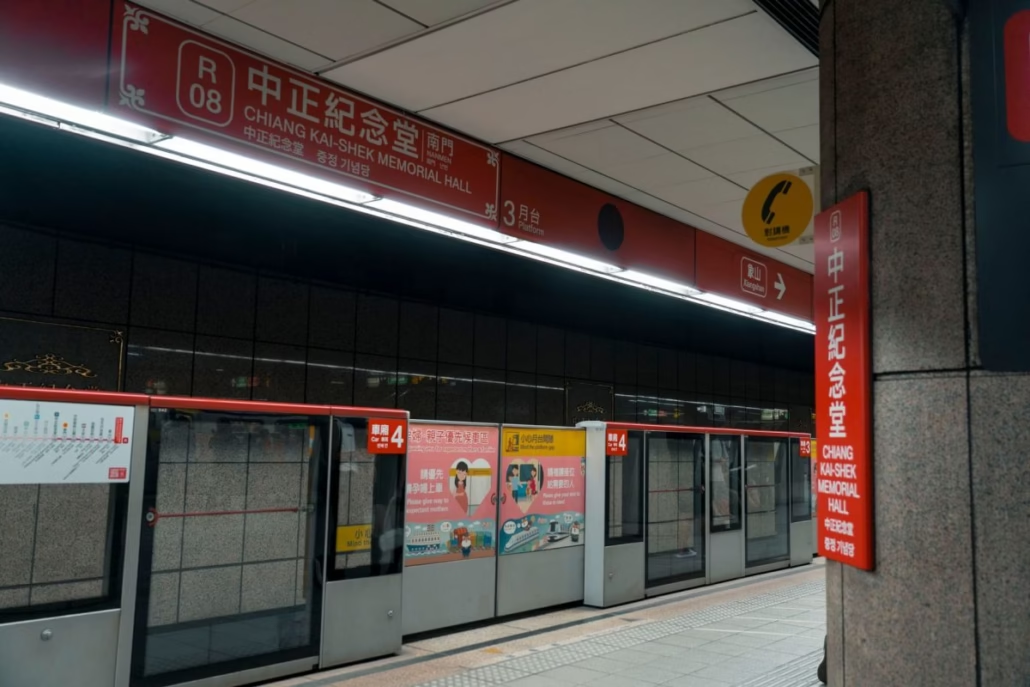
A field just a short walk from Tuas West Road MRT station became the scene of a serious sexual assault that has now resulted in a guilty plea in court. The case, which surfaced in court reporting on 17 July 2026, is a sobering reminder that the safety infrastructure we rely on inside our MRT stations does not always extend to the dark stretches of open land that surround some of Singapore’s more remote stops.
- What Happened Near Tuas West Road MRT Station?
- Why Is Tuas West Road MRT Station So Isolated?
- How Does This Compare to Other Safety Incidents Near MRT Stations?
- What Are Commuters' Rights and Responsibilities in Isolated Areas?
- Should LTA and SMRT Extend Safety Infrastructure Beyond Station Boundaries?
- What Does the Guilty Plea Mean for the Legal Process?
- Practical Safety Tips for Commuters at Isolated MRT Stations
- The Broader Context: MRT Safety in Singapore in 2026
- Before You Tap In
- FAQ
What Happened Near Tuas West Road MRT Station?
According to court reports published on 17 July 2026, a man sexually assaulted a 32-year-old woman at a field in the vicinity of Tuas West Road MRT station. The accused has since entered a guilty plea, meaning the case will proceed to sentencing rather than a contested trial. Specific sentencing details had not been published at the time of writing, and we will update this article as the case progresses.
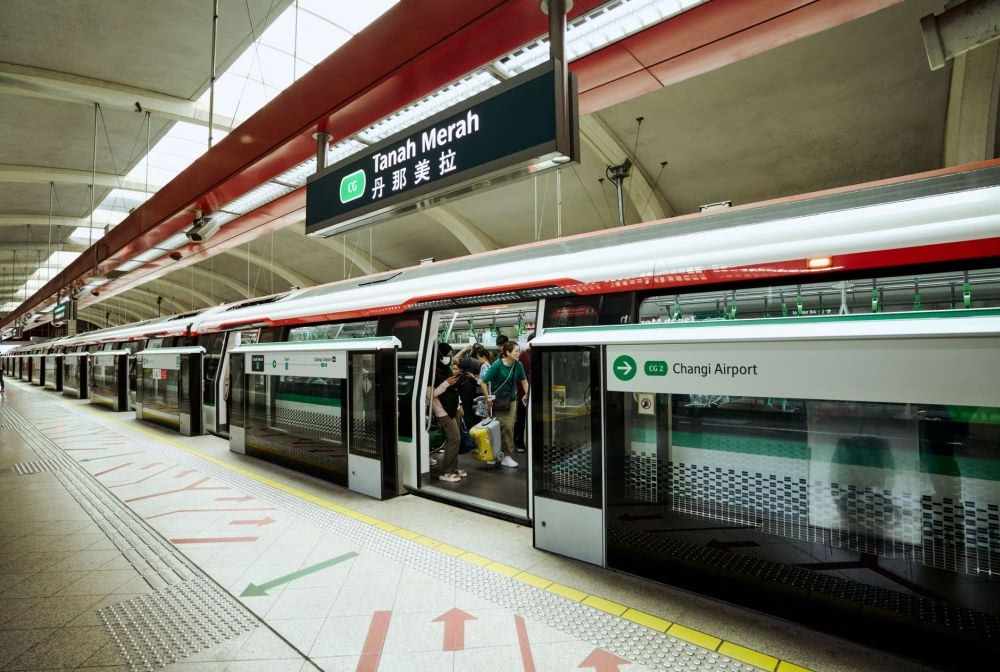
Tuas West Road MRT station sits at the far western terminus of the East-West Line (EWL), code-named the Green Line, operated by SMRT. It is one of the three elevated stations that make up the Tuas West Extension, which opened in 2017 to serve the Tuas industrial estate. The other two stations on that extension are Gul Circle and Tuas Crescent. If you’ve ever taken the train all the way to the end of the line heading west, you’ll know exactly how remote and quiet that stretch feels, especially outside of shift-change hours.
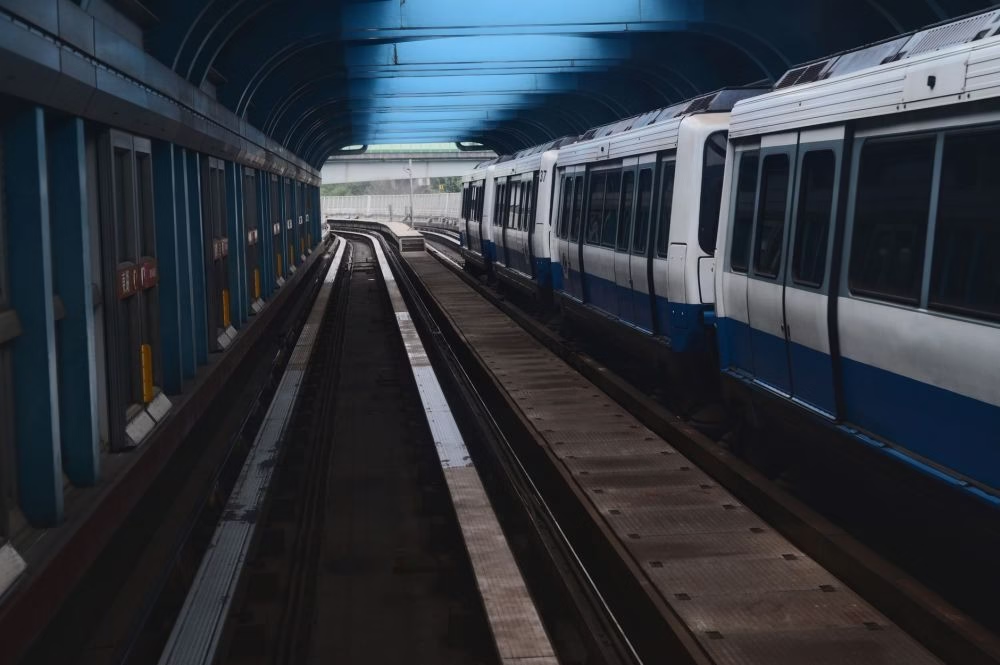
The area around Tuas West Road is largely industrial. There are no hawker centres or shopping malls immediately adjacent to the station. After the evening peak, foot traffic drops off sharply, and the open fields nearby are poorly lit compared to the heartlands or the CBD. That context matters a great deal when thinking about how this assault could occur and what might be done to prevent similar incidents.
Why Is Tuas West Road MRT Station So Isolated?
Tuas West Road MRT station was purpose-built to serve the Tuas industrial estate, one of Singapore’s largest manufacturing and petrochemical zones. Unlike residential MRT stations in Tampines or Sengkang, there is no surrounding HDB estate to generate constant foot traffic at all hours. The station primarily serves shift workers, lorry drivers, and factory staff, meaning ridership is highly concentrated around shift-change windows, typically around 7am, noon, and 6pm to 8pm.
Outside those windows, the platforms and surrounding pathways can be very quiet indeed. The fields and open land near the station have minimal lighting infrastructure compared to what you’d find near, say, Jurong East or Boon Lay. That is not a unique problem to Singapore; industrial rail extensions around the world share the same challenge. But it does mean that personal safety awareness is especially important for anyone using these stations after dark.
For a broader picture of how the East-West Line connects this remote corner of Singapore all the way through to Pasir Ris, you can explore the full East-West Line route map on this site. Tuas West Road is the western-most point on that entire 57-station line.
How Does This Compare to Other Safety Incidents Near MRT Stations?
Serious crimes in the immediate vicinity of MRT stations are rare, but they do occur, and they tend to happen at stations or adjacent spaces that are isolated, poorly lit, or outside the field of view of CCTV cameras. Inside MRT stations themselves, surveillance coverage is extensive. SMRT and SBS Transit both maintain comprehensive camera networks across platforms, concourses, and fare gates. The challenge is always the space just beyond the station boundary.
| Location Type | CCTV Coverage | Foot Traffic After 9pm | Lighting Level |
|---|---|---|---|
| City/CBD stations (e.g. Raffles Place) | Very high | Moderate to high | Bright |
| Residential heartland stations (e.g. Tampines) | High | Moderate | Good |
| Industrial terminus stations (e.g. Tuas West Road) | High inside station; limited outside | Very low | Limited in open fields |
| Open fields adjacent to any station | Typically none | Very low | Variable, often poor |
We covered a different kind of safety concern earlier this year when we reported on the Segar LRT death and the subsequent review of platform barriers. That case prompted a real policy conversation about infrastructure safety. This case raises a different but equally important question: what responsibility do operators and authorities have for the land immediately surrounding a station?
What Are Commuters’ Rights and Responsibilities in Isolated Areas?
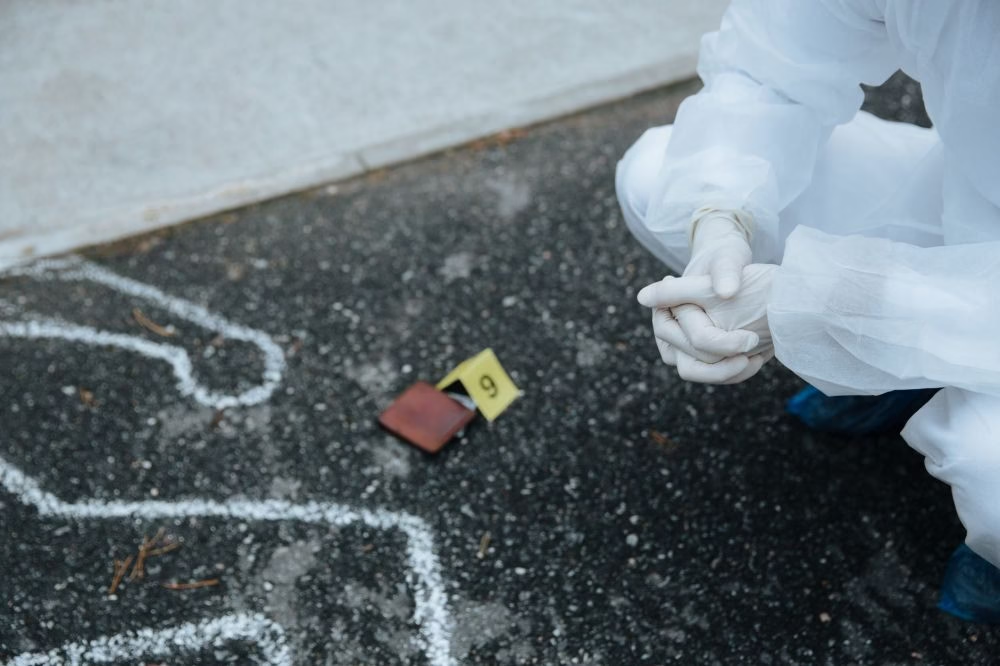
Commuters using MRT stations have every right to expect safety, but the reality is that MRT operators’ jurisdiction ends at the station boundary. The surrounding land, whether it is a car park, a field, or a bus interchange, falls under different agencies. LTA oversees transport infrastructure, while the Singapore Police Force (SPF) is responsible for public safety in surrounding areas. That gap in jurisdiction is worth understanding, not as an excuse, but as practical knowledge.
If you witness a crime or feel unsafe near any MRT station, call 999 immediately. Singapore’s emergency response times are among the fastest in the region. You can also use the SGSecure app to report suspicious activity. Inside a station, approach any SMRT or SBS Transit staff member, or press the emergency intercom found on every platform.
Should LTA and SMRT Extend Safety Infrastructure Beyond Station Boundaries?
This is a legitimate policy question that this case brings back into focus. SMRT operates the East-West Line under a licence framework set by the Land Transport Authority (LTA). LTA, as the regulatory authority, has the power to impose conditions around station environments, including lighting standards and perimeter safety requirements for land immediately adjacent to stations.
There is precedent for this kind of thinking. Bus interchanges adjacent to MRT stations, for example, are lit to a consistent standard. The question is whether open fields and industrial land near terminus stations like Tuas West Road should be held to a similar standard, especially given how isolated they become after working hours. As of July 2026, no public announcement has been made by LTA or SMRT specifically addressing lighting or perimeter safety at Tuas West Road following this case.
For commuters who rely on the far western reaches of the East-West Line, it is worth bookmarking the full list of MRT stations in Singapore along with their surrounding amenities, so you can plan your journeys with awareness of what facilities are actually available at your destination stop.
What Does the Guilty Plea Mean for the Legal Process?
In Singapore’s legal system, a guilty plea typically results in a sentencing discount, though the court retains full discretion on the final sentence. Rape under Section 375 of the Penal Code carries a maximum imprisonment term of 20 years, and the court may also impose a fine or caning. The accused’s sentencing hearing date had not been publicly confirmed at the time of writing on 18 July 2026.
The victim in this case was 32 years old. Beyond the legal outcome, cases like this carry a real human cost that extends far beyond the courtroom. Support services for sexual assault survivors in Singapore include the Association of Women for Action and Research (AWARE), which operates a helpline, and the National Care Hotline. If you or someone you know needs help, please reach out to these organisations.
Practical Safety Tips for Commuters at Isolated MRT Stations
Most of us travel the MRT without incident every single day, and Singapore remains one of the safest cities in the world by any measure. But common sense safety habits are worth building, especially if your commute takes you to less frequented stations.
First, stay on lit pathways. Open fields adjacent to industrial stations may look like shortcuts, but they are shortcuts that remove you from visibility and CCTV range. Second, if you are waiting for a late bus connection, wait inside the station concourse rather than at an unlit external shelter. Third, share your live location with a family member or friend when you are commuting late at night, particularly from stations like Tuas West Road, Gul Circle, or Tuas Crescent where the surrounding area is very quiet.
It is also worth knowing that our full East-West Line guide includes details on interchange options and surrounding amenities for every station on the line, which can help you plan a safer and better-informed journey from end to end.
The Broader Context: MRT Safety in Singapore in 2026
It would be unfair to look at this case in isolation without acknowledging the broader picture. Singapore’s MRT network has been performing at a record level of reliability as of mid-2026. According to LTA, the network has recorded no delays exceeding 30 minutes since November 2025, the longest such streak since records began in 2011. Train kilometres between failures have remained above the two-million mark for three consecutive months. The system is, by technical measures, running better than ever.
Physical safety on platforms and trains is also tightly managed. The introduction of platform screen doors across the entire network and ongoing CCTV upgrades have made the station environment itself very secure. We have previously written about how Singapore is deploying artificial intelligence on the metro network to further enhance monitoring and incident response. That technology will only get sharper over time.
The gap, as this case shows, is the space beyond the station. That gap deserves attention from planners, operators, and policymakers alike. It is not a reason to fear the MRT. It is a reason to advocate for better infrastructure in the spaces that surround it.
Before You Tap In
This case is a reminder that personal safety habits matter most in the spaces our transport system does not fully control. If your regular commute takes you through the Tuas corridor or any other isolated part of the network, plan your journey with awareness, travel with others where you can, and know who to call if something feels wrong. For everything else about navigating Singapore’s MRT network safely and confidently, explore the resources on this site, starting with our full East-West Line route guide and our up-to-date fares and ticketing information for 2026.
FAQ
Keep exploring
- Segar LRT Death: Platform Barriers Under Review
- Singapore MRT Operating Hours: First Train, Last Train, and Peak Hours Explained
- Boys Who Broke Into MRT Train Cabin: What Happened