
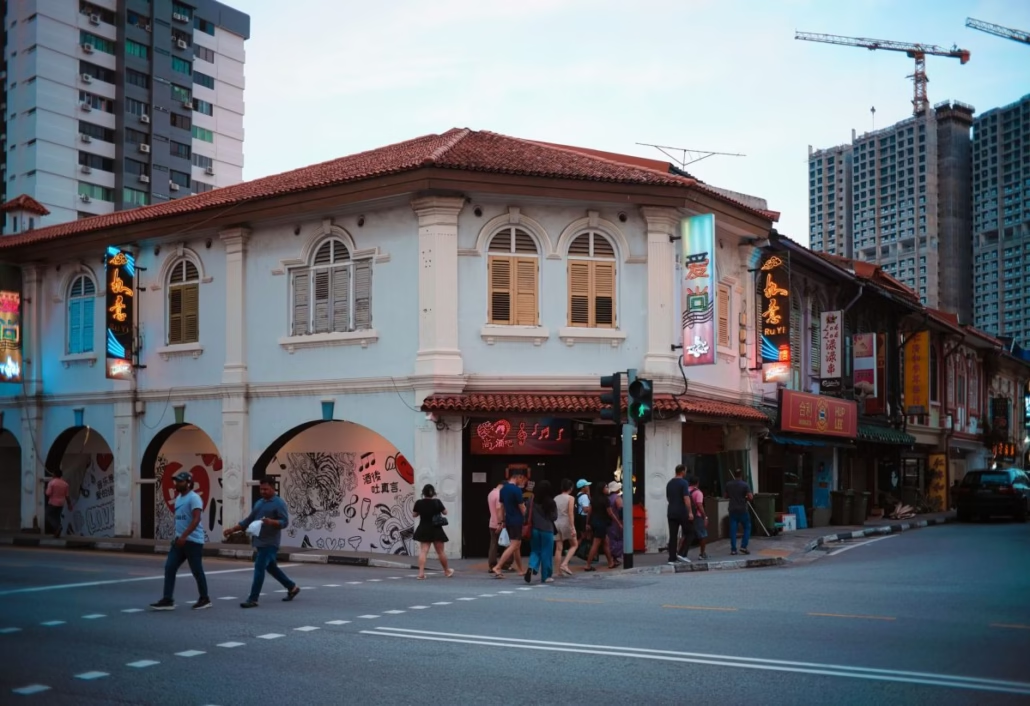
Ten Jaywalkers Fined S$50 Each Near Boon Keng MRT in Traffic Police Operation
Ten pedestrians each copped a S$50 fine after Traffic Police conducted an enforcement operation near Boon Keng MRT on 18 July 2026. Some of those fined complained the crossing didn’t look particularly dangerous. The law, though, does not grade road crossings by how safe they feel.
- Ten Jaywalkers Fined S$50 Each Near Boon Keng MRT in Traffic Police Operation
- Where Exactly Did This Happen, and Why Boon Keng?
- What Does Singapore's Jaywalking Law Actually Say?
- Why Do People Jaywalk Near MRT Stations?
- Is the S$50 Fine Enough of a Deterrent?
- What Should You Do If You Get Caught Jaywalking?
- The Bigger Picture: Pedestrian Safety Around Singapore MRT Stations
- Before You Tap In
- FAQ
Online reactions were mixed. Some commuters sympathised with those fined, pointing out that roads near MRT stations often feel like a maze of barriers and underpasses that add several minutes to what should be a quick crossing. Others made a fair point: the rules exist for a reason, and enforcement near MRT stations makes sense given the volume of foot traffic.

Where Exactly Did This Happen, and Why Boon Keng?
Boon Keng MRT sits on the North East Line, between Farrer Park and Potong Pasir. The station serves a dense residential pocket with several HDB estates, a wet market, and the busy Bendemeer Road corridor nearby. Exit A feeds towards Bendemeer, while Exit B points towards Boon Keng Road.
If you use this station regularly, you know the situation well. The roads around Boon Keng carry steady traffic throughout the day, but the desire lines (where pedestrians naturally want to walk) do not always match the designated crossings. That gap is precisely what encourages jaywalking, and exactly why Traffic Police picked this spot for an enforcement blitz.
According to the Land Transport Authority (LTA), pedestrian road accidents remain a persistent safety concern, and enforcement operations near MRT stations are periodically carried out at hotspots with high foot traffic. Boon Keng is not the first station to see this operation, and likely will not be the last.
What Does Singapore’s Jaywalking Law Actually Say?
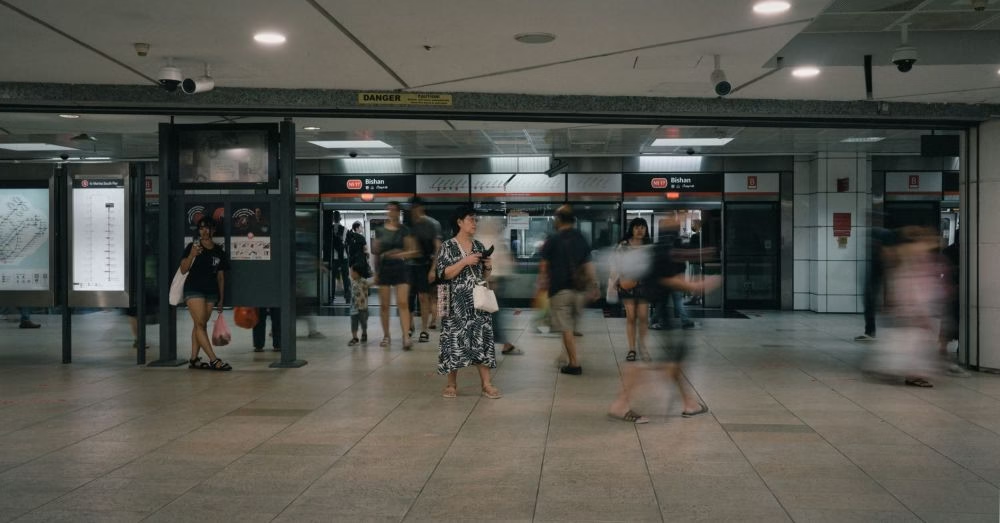
Jaywalking in Singapore is governed by the Road Traffic Act. The key rule is simple: if you cross a road within 50 metres of a designated pedestrian crossing, a traffic signal, or a pedestrian underpass, you must use that facility. Crossing elsewhere in that zone is an offence. First-time offenders face a maximum fine of S$1,000 or three months in jail, though on-the-spot fines of S$50 are standard practice for straightforward cases.
Many Singaporeans know the S$50 figure well enough to have done a quick mental calculation: cross illegally, maybe get caught, maybe not. That is exactly the kind of thinking enforcement operations are designed to break. When a Traffic Police officer with a camera appears, the maths changes very quickly.
The penalty can escalate. Repeat offenders, or those who jaywalk dangerously and force vehicles to brake suddenly, can face a court summons instead of a composition fine. The S$50 is the light end of the scale.
How Does Singapore Compare to Other Cities?
| City | Jaywalking Fine (approx.) | Enforcement Style |
|---|---|---|
| Singapore | S$50 (on-the-spot) | Periodic targeted operations |
| Hong Kong | HK$200 (around S$35) | Spot checks, less frequent |
| New York City | US$0 (largely decriminalised) | Rarely enforced |
| Tokyo | Social norm enforcement | Rarely formalised |
| London | No offence | Not enforced |
Singapore sits in a relatively strict tier globally, though S$50 will not bankrupt you. The intent is clearly deterrence rather than revenue. Whether that works near every MRT station is another question entirely.
Why Do People Jaywalk Near MRT Stations?
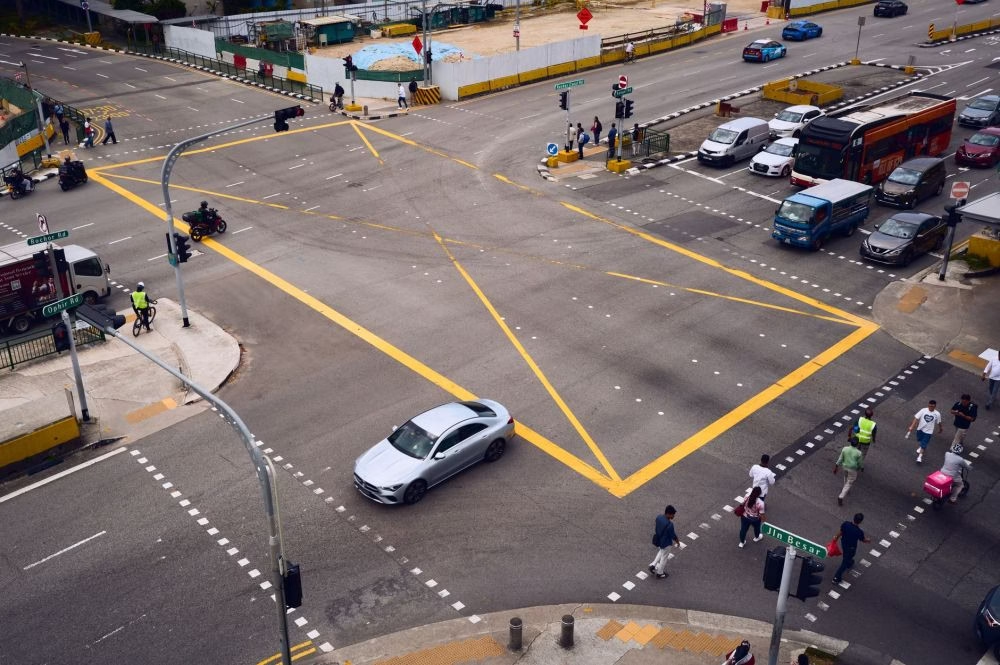
Because, honestly, MRT station design sometimes makes jaywalking easier than doing the right thing. This is not unique to Boon Keng, it applies across multiple stations on the North East Line and elsewhere on the network.
When you alight and want to reach a destination clearly visible across the road, walking 80 metres to a crossing, waiting for the light, and walking 80 metres back feels absurd. Urban planners call these “desire lines,” and good pedestrian infrastructure accounts for them. When it does not, jaywalking fills the gap. Studies consistently show pedestrians will use unofficial crossing points when the detour to a legal one exceeds about 50 to 100 metres.
This matters now because Singapore’s MRT network is undergoing major expansion. The Circle Line (CCL) recently completed with its Stage 6 stations. To see how pedestrian integration can work well, our coverage of the Circle Line completion and new CCL6 stations is worth reading. Those newer stations have better-integrated footpaths and covered walkways. Older stations, including some on the NEL, are showing their age.
Is the S$50 Fine Enough of a Deterrent?
Ten people caught in a single operation at one station. That tells you something about the scale of the behaviour, and something about the limits of reactive enforcement. S$50 stings, but it is a one-time cost. If you cross that road illegally 200 times a year and get caught once, you have effectively paid S$0.25 per crossing.
The real deterrent is unpredictability. When commuters do not know if Traffic Police are around, a S$50 risk becomes harder to dismiss. That is why periodic, targeted operations at specific hotspots work better than permanent stationed officers, which would be impractical to scale across the network.
Singapore’s MRT reliability has been making headlines lately for good reasons. According to LTA, the network logged no major delays above 30 minutes since November 2025, with reliability staying above the two-million train-kilometre mark for three consecutive months as of mid-July 2026. The system runs well. The challenge now is making sure the pedestrian environment around stations keeps pace.
What Should You Do If You Get Caught Jaywalking?
Pay the fine. Do not argue that the crossing feels safe or that traffic was light. The officer is enforcing the law as written, not as you wish it were. The S$50 composition fine, if accepted, closes the matter. Refusing it escalates to a court summons, which means a higher penalty and a court appearance.
If you believe a particular crossing near an MRT station is poorly designed and encourages unsafe behaviour, there is a proper channel. Write to LTA through their official feedback portal. It is not glamorous, but infrastructure changes at the pedestrian level do happen through sustained community feedback. The Circle Line wayfinding sign improvements after passenger feedback are one recent example of LTA acting on what commuters say.
The Bigger Picture: Pedestrian Safety Around Singapore MRT Stations
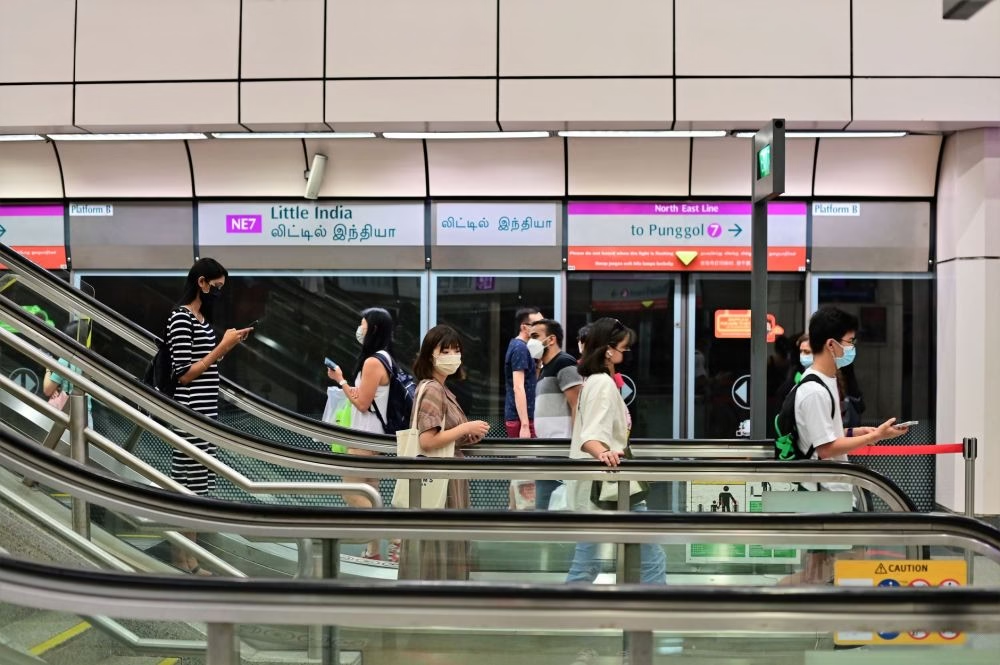
The Boon Keng operation is a reminder that MRT-adjacent pedestrian safety is an ongoing issue across the network. As more stations open and ridership grows, the pressure on pedestrian infrastructure near stations will only increase. The Circle Line completion alone is expected to benefit tens of thousands of additional daily commuters.
LTA and Traffic Police rotate enforcement operations through different areas of the network. If you commute via the North East Line, the Downtown Line, or any other line through dense residential areas, your usual crossing route might be next on the list.
A broader conversation about road design is happening too. The argument that a crossing is “not even that dangerous” is subjective and, legally, irrelevant. But it does reflect real frustration that infrastructure sometimes lags behind pedestrian needs. Singapore has done this well in newer precincts. The covered walkway networks in areas like Jurong East and Tampines are genuinely impressive. Extending that level of pedestrian integration to older station neighbourhoods like Boon Keng would reduce both the temptation to jaywalk and the need for enforcement.
Until then, the S$50 fine is the reality. Use the crossing, add the extra minute to your commute, and keep your money. You can check our MRT operating hours guide if you are timing your commute to avoid the peak crush that often makes jaywalking seem tempting.
Before You Tap In
The Boon Keng jaywalking operation on 18 July 2026 is a timely reminder that Traffic Police do enforce pedestrian rules near MRT stations, and S$50 fines are handed out on the spot. The rules are clear, the crossings are marked, and the network around Boon Keng does have legal crossing options even if they require a short detour. For everything you need to know about getting around Singapore’s MRT safely and efficiently, browse our full blog or check the interactive Singapore MRT map to plan your next journey.
FAQ
Keep exploring
- Circle Line Now Complete: CCL6 Opens July 2026
- Circle Line Wayfinding Signs Upgraded After Passenger Feedback
- Singapore MRT Operating Hours: First Train, Last Train, and Peak Hours Explained