
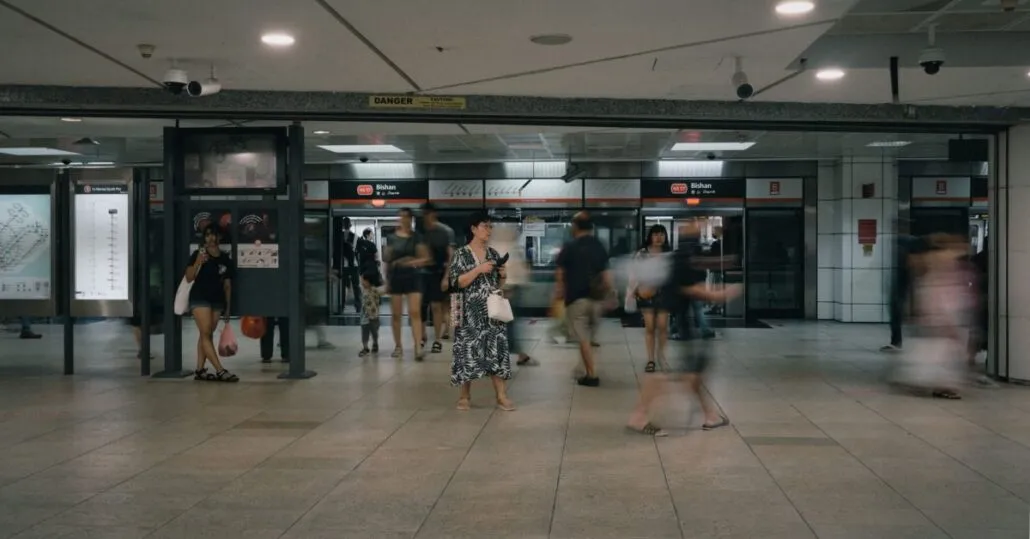
Why travelling with luggage on the MRT matters
Every day, thousands of travellers, international students and house-movers navigate the Singapore MRT with suitcases, backpacks and boxes. The network is designed to be accessible, but if you’re new to it, dragging luggage through crowded platforms or getting stuck at a station without a lift can turn a simple journey into a frustrating one. Planning ahead makes all the difference.
- Why travelling with luggage on the MRT matters
- Does every MRT station have a lift for luggage?
- Can large suitcases fit through MRT fare gates?
- Which MRT lines are best for travelling with luggage?
- What time should I travel on the MRT if I have luggage?
- How to handle interchanges with luggage
- Luggage trolleys and when to use them
- Paying for your journey with luggage
- Common luggage mistakes to avoid
- Special luggage situations: oversized bags, house moves and fragile items
- Planning your route step by step
- Before you tap in
- FAQ
Getting around Singapore? Find any station on the interactive MRT map, or save the PDF map to use offline.
Does every MRT station have a lift for luggage?
Yes. Every MRT station in Singapore has at least one passenger lift connecting the entrance to the platform level, and many have multiple lifts. This is a legal accessibility requirement, so whether you’re at a busy interchange like Dhoby Ghaut (NS24/NE6/CC1) or a quieter station like Stevens (DT10/TE11), you’ll find a lift.
The lifts are typically signposted near the ticket halls. If you’re unsure, ask staff at the information booth or look for the wheelchair symbol on station maps. They’re operational during all MRT service hours.
Can large suitcases fit through MRT fare gates?
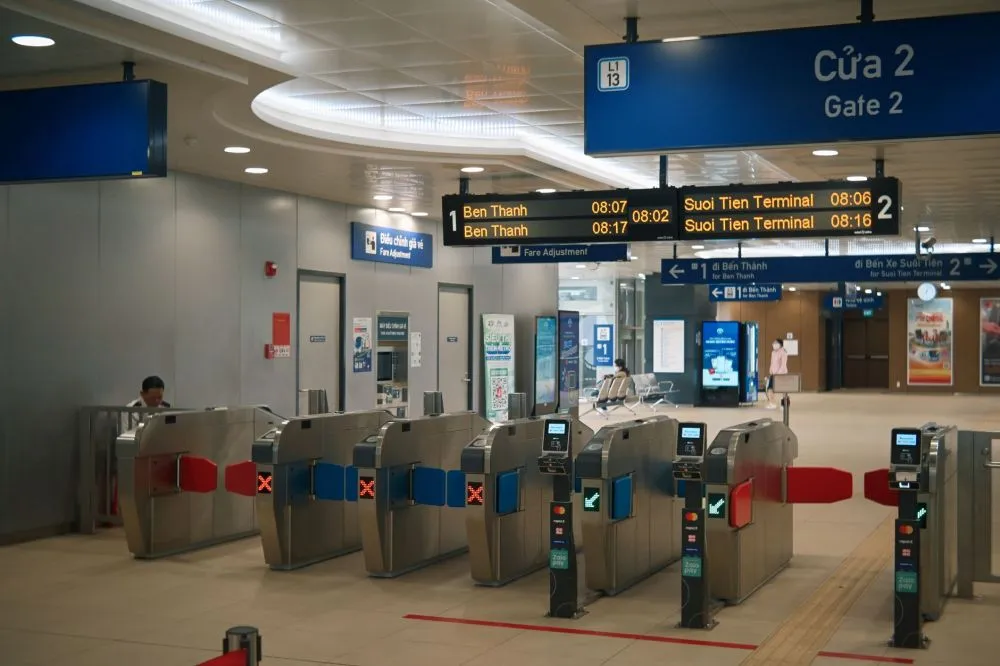
MRT fare gates come in standard and wider versions. The wider gates, usually marked for accessibility, are designed for wheelchairs and trolleys but work perfectly for large suitcases too. They’re typically positioned alongside the standard gates and have the wheelchair symbol on them.
Standard wheelie suitcases (around 50cm wide) pass through both standard and wide gates. For unusually shaped items, ask staff at the gate booth and they will open it manually. There’s no extra charge.
Tap in using your SimplyGo card or contactless bank card just as you would without luggage. The tap readers are positioned at a standard height on the gate, so even if you’re pushing a trolley, you can reach them easily.
Which MRT lines are best for travelling with luggage?
Lines with fewer interchanges offer simpler routes for luggage travellers. The East West Line (EW), the green line, is often the smoothest choice because it’s long, relatively direct, and doesn’t force you to change trains as often. If you’re heading to Changi Airport (CG2), the dedicated Changi Airport branch from Tanah Merah (EW4/CG) is straightforward.
The North East Line (NE), the purple line, running from HarbourFront (NE1) to Punggol Coast (NE18), is also good for luggage because it has no intermediate line interchange stations (you don’t change lines mid-journey). The North South Line (NS), the red line, is direct and long, though it can get very crowded during rush hours.
Avoid the Circle Line (CCL), the orange or yellow line, if you have multiple large bags, simply because it has many stations close together and frequent stops mean more boarding, alighting and manoeuvring. The same applies to LRT systems, which have smaller trains and tighter platforms.
What time should I travel on the MRT if I have luggage?
Travelling with luggage during rush hour is harder because platforms are packed and lifts fill up quickly. Peak hours are roughly 7am to 9.30am and 5pm to 8pm on weekdays.
Off-peak times offer more space and comfort. Weekday off-peak runs from around 9am to 4pm. Weekend mid-mornings (10am to noon) and early afternoons are usually quieter too. Mid-evening after 8pm is also quiet, though trains run until around 11.30pm.
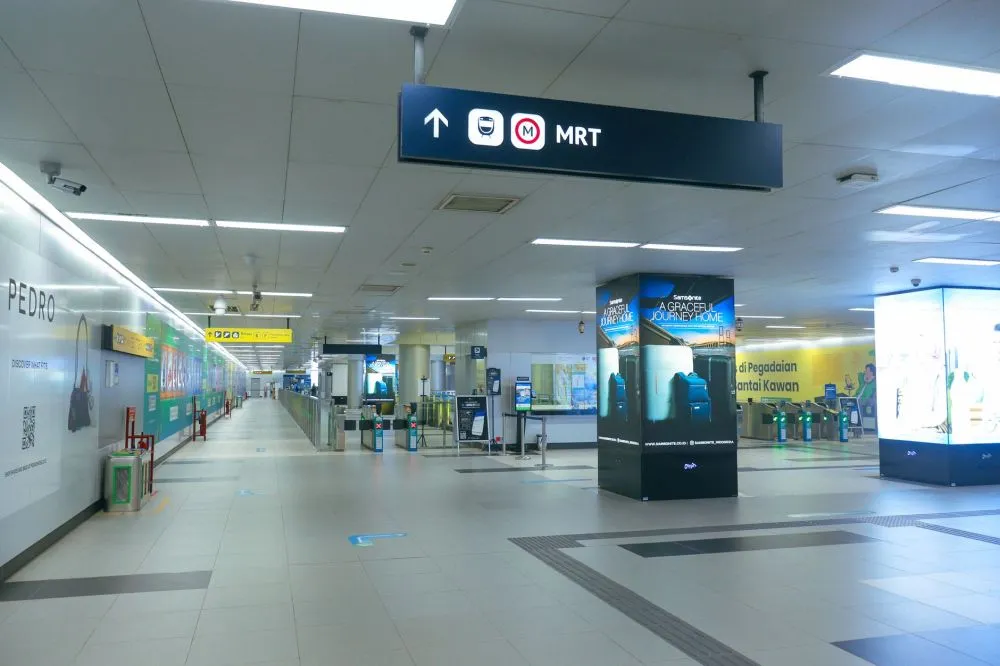
Off-peak travel offers faster lifts, more spacious carriages, and room to position your luggage safely.
How to handle interchanges with luggage
Changing trains is where luggage travel becomes more challenging. Each interchange adds walking, stair avoidance, and platform changes. When you plan your route, look for paths with as few line changes as possible.
If you must change lines, follow these steps. First, follow the blue interchange signs on the platform and in the corridors, they always lead to lifts rather than stairs. Second, allow extra time: an interchange that takes a non-luggage traveller four minutes might take you six to eight minutes. Third, at complex interchanges like Raffles Place (EW14/NS26) or City Hall (EW13/NS25), ask staff which lift serves which line. They’re used to the question and will point you in the right direction.
Major interchanges have information booths and signage. Look for directional maps at entrance halls showing which lifts serve which lines.
Luggage trolleys and when to use them
Airport trolleys aren’t available at MRT stations, but if you’re starting your journey from Changi Airport Terminal 1 or 2, the airport trolley will roll onto the train and down the platform, no transfer needed if you stay with it all the way. Once you exit the MRT, return the trolley or leave it at the station for staff to collect.
For other luggage, a rolling suitcase is better than a backpack or duffel bag because it distributes weight and allows one-handed movement through lifts and platforms. If you’re carrying soft bags (backpacks, gym duffels), consider transferring to a hard-shell suitcase for the MRT leg if you’re staying a while in Singapore.
Don’t leave luggage unattended on trains or platforms. SMRT and SBS Transit staff monitor security, but the safest approach is to keep luggage in sight at all times.
Paying for your journey with luggage
Luggage passengers pay the same distance-based MRT fare as anyone else. There’s no extra charge for bags, trolleys or suitcases. Fares are set by the Public Transport Council (PTC) and range based on how far you travel, not what you’re carrying.
Use a SimplyGo card, contactless bank card, or mobile wallet for payment. Paper tickets were phased out in 2022, so these payment methods are essential. Tap in at the wide gate and tap out at your destination.
If you’re in Singapore for several days, the Singapore Tourist Pass offers unlimited travel for 1, 2 or 3 consecutive days across all MRT lines and LRT systems, which saves time fussing with payment at each stop.
Common luggage mistakes to avoid
Never block the doorway when the train is moving or when doors are opening and closing. Stand to the side of the carriage and position your suitcase where it won’t roll or fall. If the train is crowded, hold your luggage closer to avoid it shifting into other passengers.
Don’t assume all stations look the same. Even experienced MRT users sometimes exit at the wrong platform level or walk the wrong way out of an interchange because station layouts vary. Check the blue directional signs and the station map before you leave the train.
Avoid travelling during school holidays (especially June and December) if you can, as both commuter numbers and other travellers with luggage spike, making platforms and lifts even more congested.
Don’t rush between platforms at interchanges. A missed connection with luggage feels worse than without it, but the next train is usually only a few minutes away, and you’ll be less stressed and safer taking your time.
Special luggage situations: oversized bags, house moves and fragile items
For genuinely oversized items (flat-pack furniture, musical instruments, building materials), the MRT isn’t ideal. The SMRT and SBS Transit websites don’t prohibit them, but they’re impractical on trains. For house moves or bulk transport, hire a taxi, Grab, or removal van instead.
Fragile items like glassware or electronics should be in your carry-on backpack, not rolling on the floor. If you’re moving house via the MRT, pack the most breakable things in small boxes you can carry by hand, and save the large suitcases for clothes and soft goods.
Instrument cases and sports equipment (guitar cases, tennis racket bags) are common on the MRT. They’re usually fine as long as they fit upright in the carriage or stand against your seat. If it’s awkwardly shaped, travel off-peak so there’s more room to manoeuvre.
Planning your route step by step
Start by identifying your origin and destination stations. Use the interactive MRT map to check how many lines you’ll cross and whether you can reach your destination with one or two changes at most. Avoid three or more line changes if luggage is heavy.
Check the operating hours and first and last train times. If you are catching an early flight, know which terminals have which branch lines (Changi Airport is on the Changi Airport branch from Tanah Merah, for example).
Calculate journey time and add 5 to 10 minutes for slower lift access and platform changes. If you’re told the journey is 45 minutes, budget 50 to 55 minutes with luggage.
If you’re staying at a hotel or flat with an MRT station nearby, ask the front desk or your host for tips on which exit and which lift to use, locals know the station better than any map.
Before you tap in
Travelling with luggage on the Singapore MRT is manageable once you know where the lifts are, when the quiet times run, and which lines offer the simplest routes. Plan to travel during off-peak hours, use the wide accessibility gates, choose direct lines, and give yourself extra time at interchanges. A rolling suitcase and a SimplyGo card are all you need. For your next trip, check the station you are starting from and note which lift serves the platform. One small detail makes the whole journey smoother.