
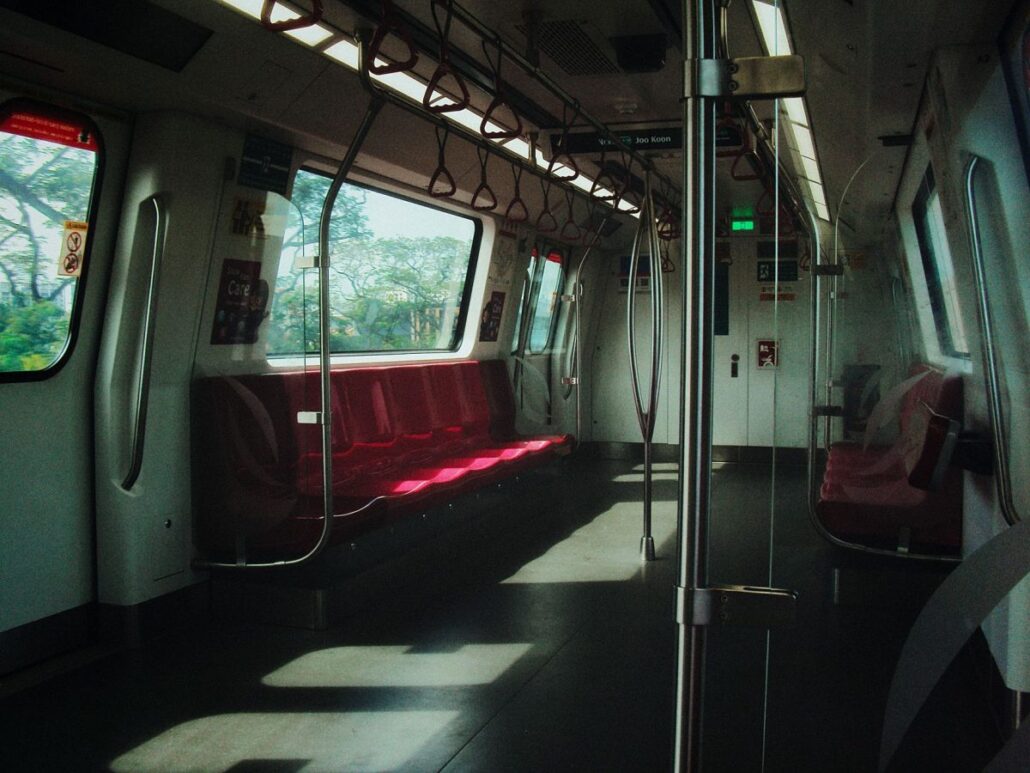
Most people tap in, stare at their phones, and tap out. They walk straight past ceilings that architects spent years designing, past murals that cost hundreds of thousands of dollars to commission, and past light conditions that serious photographers would fly to Europe to find. The photogenic MRT station has been hiding in plain sight the whole time.
- Why Does Singapore's MRT Photograph So Well?
- Which Stations Are the Most Photogenic for Architecture Shots?
- Where Are the Best Stations for Public Art Photography?
- Which Stations Have the Best Natural Light?
- Comparing the Top Photo Spots: A Quick Reference
- What Are the Practical Rules for Photography on the MRT?
- Hidden Gems Worth the Extra Ride
- Planning Your MRT Photography Day: What to Know Before You Go
- Before You Tap In
- FAQ
This guide covers the stations that genuinely earn a detour, with practical notes on which exit, which end of the platform, and what time of day produces the best result. No vague Instagram-speak here, just tested spots across the network.
Why Does Singapore’s MRT Photograph So Well?
Singapore’s MRT network was built in distinct architectural waves. The original North South and East West Line stations feel functional and bold. Newer stations on the Downtown Line and Thomson-East Coast Line (TEL) are sleek and gallery-like. Knowing which era produced a particular station helps you decide what kind of shot you’re after.
The real magic comes from the Art in Transit programme. Since the 1980s, it has commissioned over 100 permanent artworks across the network, making the MRT one of Southeast Asia’s densest public art corridors. Each line has its own visual signature, and no two stations look quite alike.
Getting around Singapore? Find any station on the interactive MRT map, or save the PDF map to use offline.
Which Stations Are the Most Photogenic for Architecture Shots?
Bayfront (CC1 / DT16), The Underground Cathedral
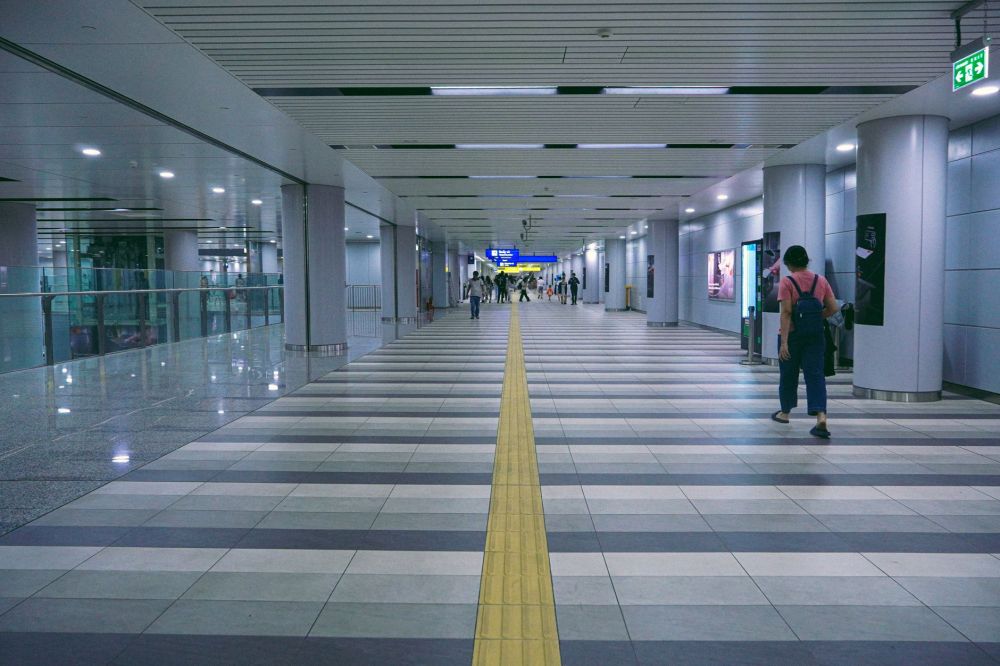
The Bayfront MRT station concourse is the single most architecturally dramatic space on the entire network. The vaulted ceiling, curved structural columns, and warm amber lighting create an underground hall that feels more like a European opera house than a transit stop. Shoot from the base of the escalators looking upward for a leading-lines composition that stops people scrolling.
Arrive before 8.00am on a Saturday and you’ll find the concourse nearly empty. A single adult fare from Orchard is around S$1.50 to S$1.80 with your EZ-Link card or contactless payment.
Stevens (TE11 / DT10), The Cross-Platform Interchange
The Stevens MRT station is arguably the most technically impressive station built in the last decade. Here, passengers switch between the Thomson-East Coast Line and the Downtown Line by simply stepping across the platform. No stairs, no long corridors. Just clean grey-and-white engineering that looks almost impossible from certain angles.
Stand on the lower DTL platform and shoot upward through the structural cutout toward the TEL platform above. The dramatic vertical space reads immediately on a phone screen. This is one of the few stations where the functional engineering is itself the art.
Downtown (DT17), Geometry and Repetition
The Downtown MRT station on the Downtown Line rewards photographers who love clean symmetry. The platform ceiling grid is perfectly uniform, and the consistent lighting makes a centred, straight-on composition effortless.
Because the Downtown Line is fully automated and driverless, you can stand at the glass screen door closest to the tunnel entrance and shoot the train arriving head-on. Something you simply cannot do safely on older lines where drivers occupy the cab.
Where Are the Best Stations for Public Art Photography?
Caldecott (CC17 / TE9), Heritage Meets Hyperrealism
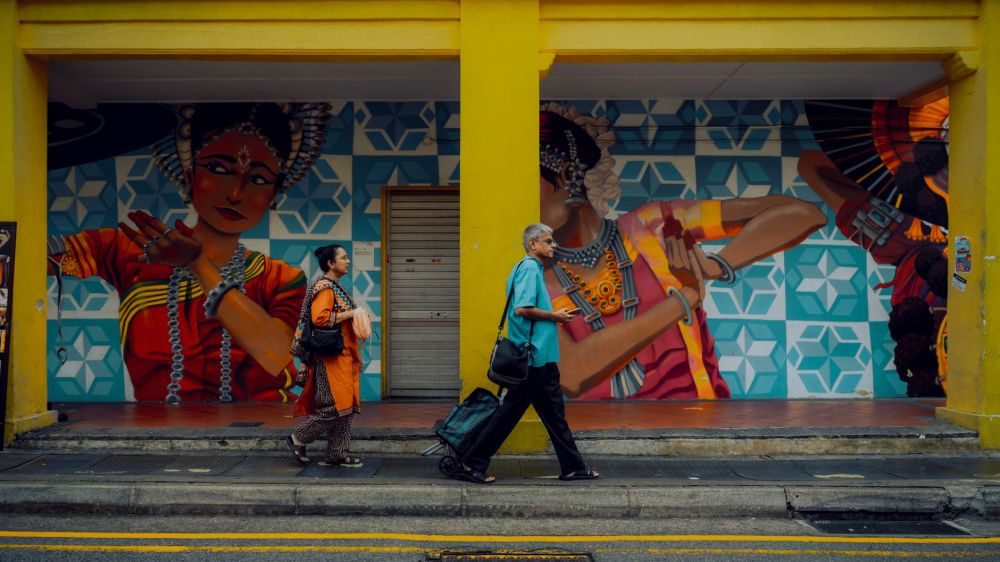
The Caldecott MRT station features Art in Transit work that references the broadcast estate nearby, evoking Singapore’s television and radio history. Murals run the full length of the platform walls and reward both close-up macro shooting and wide environmental shots. Caldecott is also a Circle Line and TEL interchange, so you can combine photography with a cross-island trip without backtracking.
Arrive just after the morning peak around 9.30am on a weekday, when the platform is often near-empty. The warm colour palette photographs best under the station’s consistent white LED lighting, which doesn’t shift colour temperature the way natural light does.
Little India (NE7 / DT12), Colour and Texture
The Little India MRT station sits at the junction of the North East Line and Downtown Line. Its Art in Transit works draw on the area’s rich cultural heritage. Step out of Exit E and you’re directly on Serangoon Road, with shophouses, flower garlands, and temple gopurams all within 50 metres.
For pure station photography, the NE7 platform has bolder colour on its commissioned artworks than most North East Line stations. The DTL platform at DT12 is newer and more clinical-looking, good for contrast shots if you want to show both eras in one visit. Shoot during off-peak hours.
Chinatown (NE4 / DT19), Deep Colour Underground
The Chinatown MRT station features bold red and gold design elements that reflect the district’s character. The fare gate lobby on the NE4 level has a particularly photogenic tiled ceiling pattern. Since it’s a busy interchange, timing matters. Come between 10.00am and 12.00pm on weekdays when the peak commuters have cleared out but before the lunchtime crowd arrives.
Which Stations Have the Best Natural Light?
Botanic Gardens (CC19 / DT9), A Rare Above-Ground Gem
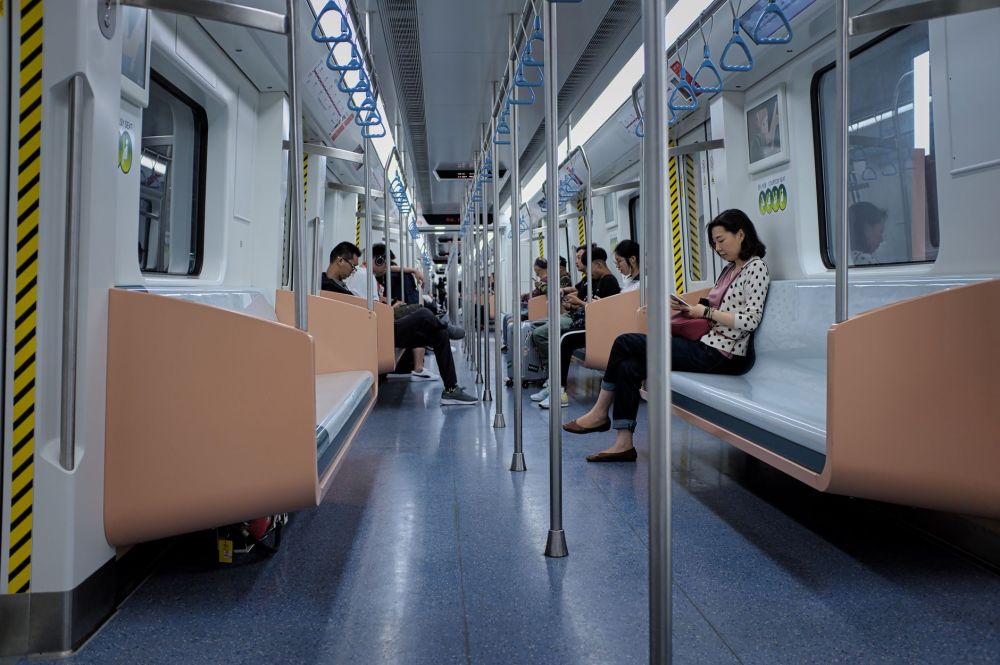
The Botanic Gardens MRT station is one of the few Circle Line stations that sits close enough to the surface to admit natural light through its roof. On a clear morning, the platform is bathed in soft, diffused daylight that no LED array can replicate. This makes it ideal for portrait photography and for shots where you want a warm, organic feel.
The best window is between 8.00am and 10.00am when the sun is low enough to send shafts of light down the platform. Exit toward the Botanic Gardens and you step directly into one of Singapore’s most photographed green spaces.
Promenade (CC4 / DT15), Elevated Walkways and Marina Views
The Promenade MRT station connects the Circle and Downtown Lines and sits metres from The Esplanade and Marina Bay. The journey from underground station to the open waterfront promenade takes about 90 seconds on foot and offers a complete photographic narrative in itself: from dark, moody underground to bright sky and water.
Comparing the Top Photo Spots: A Quick Reference
| Station | Line(s) | Best for | Best time |
|---|---|---|---|
| Bayfront | CC1 / DT16 | Architecture, vaulted ceiling | Before 8.00am Sat |
| Stevens | TE11 / DT10 | Engineering, cross-platform geometry | Weekday 9.30am |
| Downtown | DT17 | Symmetry, driverless train front | Off-peak any day |
| Caldecott | CC17 / TE9 | Heritage murals, Art in Transit | Weekday after 9.30am |
| Little India | NE7 / DT12 | Colour, street photography nearby | Late morning |
| Botanic Gardens | CC19 / DT9 | Natural light, portrait photography | 8.00, 10.00am |
| Chinatown | NE4 / DT19 | Bold colour, cultural identity | 10.00am, 12.00pm |
| Promenade | CC4 / DT15 | Transition: underground to waterfront | Golden hour evening |
What Are the Practical Rules for Photography on the MRT?
Personal photography for non-commercial purposes is permitted on the MRT, subject to standard SMRT and SBS Transit conditions of travel. You must not obstruct other commuters, must not use flash that could distract train operators, and must not film in ways that compromise passenger privacy. Commercial photography and filming require a permit from the Land Transport Authority obtained in advance.
Tripods are a grey area. In practice, small gorillapods and low-profile rigs go unquestioned during off-peak hours. A full-size tripod with an extended centre column will attract staff attention quickly on a crowded platform, and rightly so. A camera on a phone mount or a compact mirrorless camera with a wide-angle lens is the practical kit of choice for MRT photography. You’ll get 95% of the best shots with nothing more complicated than that.
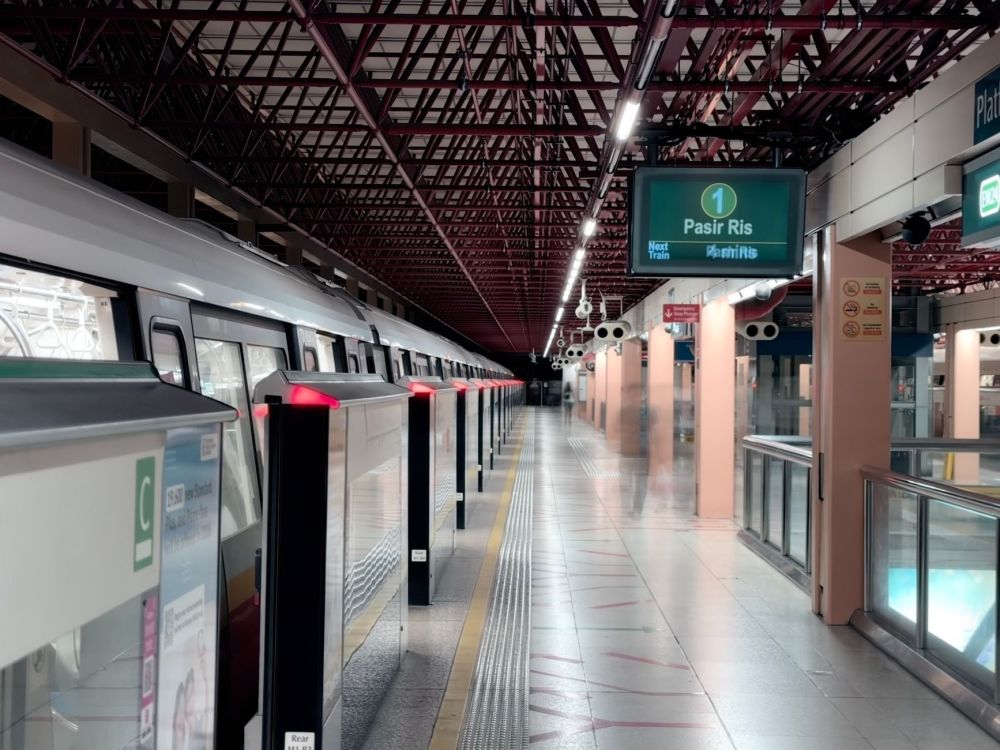
Hidden Gems Worth the Extra Ride
MacPherson (CC10 / DT26), The Quiet Interchange
Most people pass through MacPherson MRT station without a second glance. But the cross-platform Circle and Downtown Line interchange has a clean, understated visual logic that rewards slow observation. The repeating column grid and the contrast between the Circle Line’s warmer finishes and the Downtown Line’s cooler palette can produce striking diptych-style compositions if you photograph both platforms in one session.
Outram Park (EW16 / NE3 / TE17), Triple-Line Complexity
The Outram Park MRT station connects three lines: East West, North East, and Thomson-East Coast. The TEL addition, which opened in stages from 2022 onward, brought fresh architectural finishes and a deeper underground level. Photograph the lift shafts from above at the TE17 concourse level for a satisfying vertical composition that most visitors never find. Come on a Sunday morning before 9.00am when the interchange is at its calmest.
Serangoon (CC13 / NE12) and the North East Line’s Colour Coding
The Serangoon MRT station and the broader North East Line use a strong purple accent across their platforms that photographs with real vibrancy. When it opened in 2003, the North East Line was Singapore’s first fully automated heavy rail network. Its stations have a consistency of design that makes a run of the entire line feel like a curated photo essay. If you want to understand how Singapore’s MRT architecture evolved across eras, combine a Downtown Line station visit with a North East Line station visit in the same day for clear visual contrast.
For a broader overview of the full MRT station directory, our complete MRT stations in Singapore guide lists every station by line with interchange information, helping you chain photo stops efficiently without doubling back.
Planning Your MRT Photography Day: What to Know Before You Go
The MRT network runs from approximately 5.30am to midnight daily, with the first trains offering the least crowded platforms and the most photogenic conditions. Weekday peaks (7.30am to 9.00am and 5.30pm to 7.30pm) produce congested platforms that are difficult to shoot without people filling the frame. If people in the frame are part of your composition, then peak hours are actually ideal, especially at busy interchanges like Raffles Place where the North South and East West lines cross and commuter volume is high.
Saturday mornings between 7.30am and 10.00am hit a sweet spot. Trains run frequently enough to capture arriving trains, but passenger volumes are low enough to frame shots cleanly. This window is the single most consistently productive time for MRT photography across all station types.
Payment is straightforward. Tap in with any contactless Mastercard or Visa, an EZ-Link card, or a SimplyGo-linked payment method. If you’re visiting Singapore and want to tour multiple stations without planning individual fares, check the Singapore Tourist Pass options at the Visit Singapore website before you arrive. It’s genuinely one of the most cost-efficient ways to spend a photography day in the city.
For deeper context on the artwork you’ll encounter, our article on the MRT Art in Transit programme explains how each commission is selected and which artists have shaped the network over the decades. Reading it before your visit means you’ll recognise the stories embedded in the walls you’re photographing.
Before You Tap In
The best photo spots on Singapore’s MRT are not secrets, just overlooked by people thinking about where they’re going rather than where they are. Set aside a morning, use the station comparison table to plan your route, and start early. For inspiration, browse the full MRT lines overview to understand how the network fits together before you hop between stations.
FAQ
Keep exploring
- Singapore MRT Art in Transit Programme Explained
- MRT Station Art: Stories Behind Hougang, Newton & More
- Art for the Heart 2026: Shortlisted Works at Bayfront MRT