
Metro Singapore Is Closing Two Department Stores: What We Know
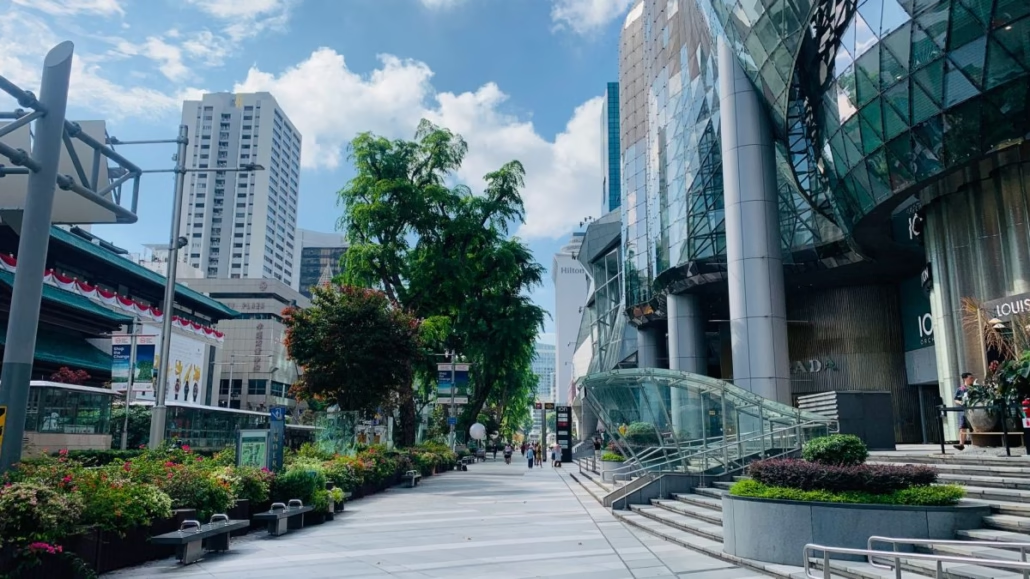
One of Singapore’s oldest surviving department store brands is getting a lot smaller. As of July 21, 2026, Metro Singapore has confirmed it will shut two of its department store locations, with the Paragon outlet at Orchard Road among those affected. For anyone who grew up browsing Metro’s housewares section or grabbing last-minute gifts there before catching the MRT home, this one stings a little.
- Metro Singapore Is Closing Two Department Stores: What We Know
- Which Metro Stores Are Closing and Where Are They?
- How Does This Fit Into Metro's Broader Retail Decline in Singapore?
- What Does the Paragon Closure Mean for Commuters Using the MRT?
- Is Orchard Road Itself in Trouble as a Retail Destination?
- What Happens to the Paragon Space After Metro Leaves?
- Other Singapore Transport and Retail Stories Worth Knowing About This Week
- Who Does the Metro Closure Actually Affect Most?
- What This Means for Singapore Retail Alongside the MRT Network
- Before You Tap In
- FAQ
Metro has been a fixture in Singapore retail since the 1960s. But the brand has been steadily trimming its footprint for years, and this latest round of closures underscores how much the department store format has struggled against e-commerce and shifting shopper habits. You don’t need to have a business degree to see the writing on the wall.
Which Metro Stores Are Closing and Where Are They?
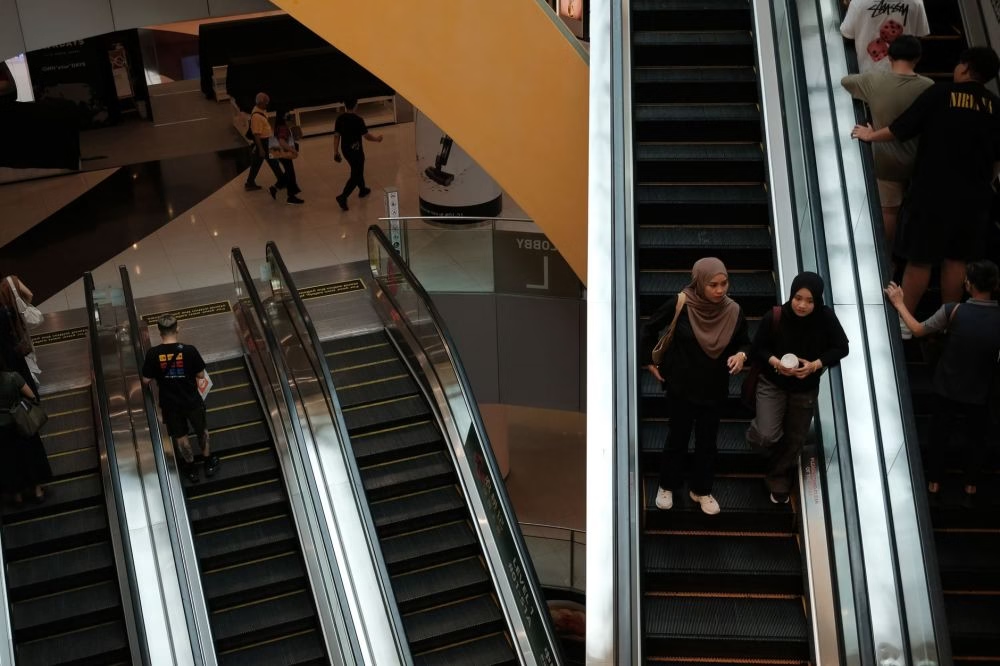
Two Metro department store locations are shutting. According to reporting by Inside Retail Asia on July 21, 2026, the Paragon store is confirmed among those closing. Paragon is one of Orchard Road’s premium malls, sitting right in the heart of what Singaporeans call “town.” The second location has not been publicly named in detail as of the time of writing, but it is understood to be another existing Metro department store outlet.
The Paragon closure is directly linked to plans by CapitaLand Integrated Commercial Trust (CICT) to reconfigure parts of the mall. The Business Times reported on July 20, 2026 that CICT intends to repurpose the Metro space within Paragon, replacing it with a different retail mix. In other words, the landlord wants something new in that space, and Metro’s lease arrangement is ending as a result.
For regular shoppers, the Paragon Metro has long been the more upscale of the brand’s outlets, carrying a curated range of fashion, homeware and cosmetics. Losing it leaves a sizeable gap in a mall that already skews premium. CICT has not yet detailed what exactly will replace Metro in the space, though reconfiguration projects of this scale typically take twelve to eighteen months to complete once a tenant vacates.
How Does This Fit Into Metro’s Broader Retail Decline in Singapore?
Metro’s story in Singapore is one of gradual retreat. The brand once operated multiple stores across the island, including outlets in Woodlands, Tampines and the Causeway Point area. Over the past decade, those locations have closed one by one. After these latest two shut, Metro’s Singapore department store presence will be significantly reduced, possibly to a single remaining outlet depending on how the second closure plays out.
This isn’t unique to Metro. The traditional department store model, where you browse multiple brands under one roof and pay at a central counter, has been under pressure globally. In Singapore, the closure of Robinsons in 2020 and 2021, followed by the contraction of other mid-market retailers, made clear that foot traffic alone can’t sustain a large-format store if the retail model isn’t converting browsers into buyers at the margins needed to cover high Orchard Road rents.
CICT’s decision to reconfigure Paragon is also telling. When landlords are willing to take on the cost and disruption of a reconfiguration rather than simply renewing a department store lease, it signals that they see better returns from a different format, whether that’s food and beverage, experiential retail, medical aesthetics, or some other category that’s drawing crowds in 2026. If you’ve walked through Orchard Road recently, you’ll have noticed how many wellness clinics, beauty concept stores and specialty dining spots have replaced what were once traditional retail floors.
What Does the Paragon Closure Mean for Commuters Using the MRT?
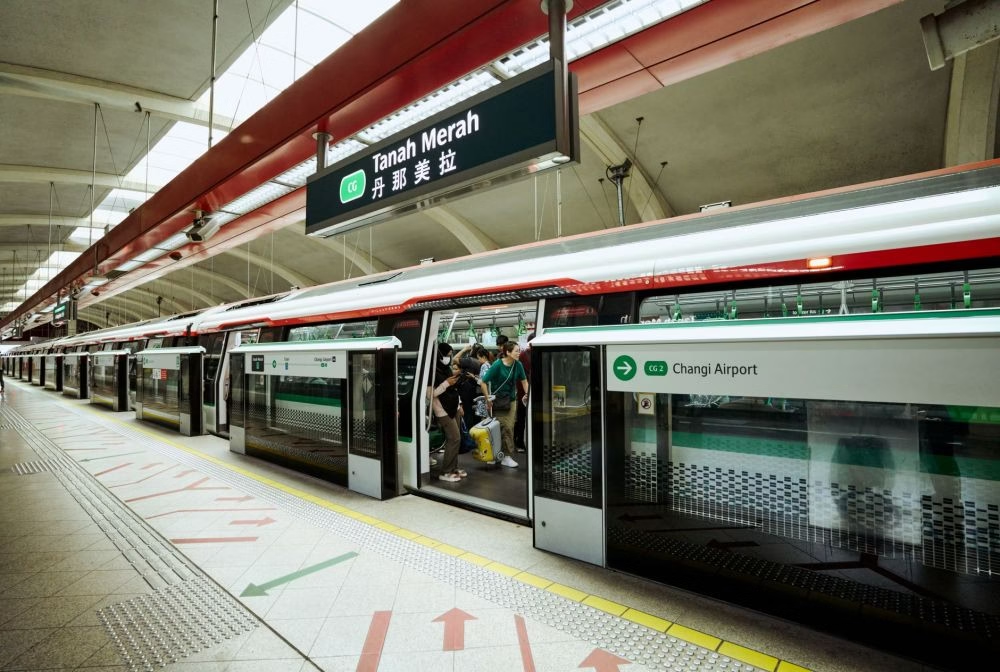
Practically speaking, the Paragon Metro closing changes the practical shopping calculus for thousands of commuters who use Orchard MRT daily. The North South Line (NS Line) station at Orchard is one of the busiest on the network, and a significant number of people factor in a quick Metro stop during their evening commute home. Once the store closes, those shoppers will need to reroute.
If you’re looking for comparable department store options within easy MRT reach of town, here’s a quick comparison of what remains accessible:
| Store / Location | Nearest MRT Station | MRT Line | Walk Time |
|---|---|---|---|
| Metro Paragon (closing) | Orchard | NS Line | ~4 min (Exit E) |
| Isetan Shaw House | Orchard | NS Line | ~5 min |
| Takashimaya Ngee Ann City | Orchard | NS Line | ~6 min |
| BHG Bugis | Bugis | EW Line / DT Line | ~3 min |
| OG People’s Park | Chinatown | NE Line / DT Line | ~5 min |
For those heading home toward the Thomson-East Coast Line (TEL) or the Downtown Line (DTL), Bugis and its nearby options might be a more natural stopover than Orchard anyway. Check the full Downtown Line MRT route if you’re working out the best way to reroute your usual commute-and-shop routine.
Is Orchard Road Itself in Trouble as a Retail Destination?
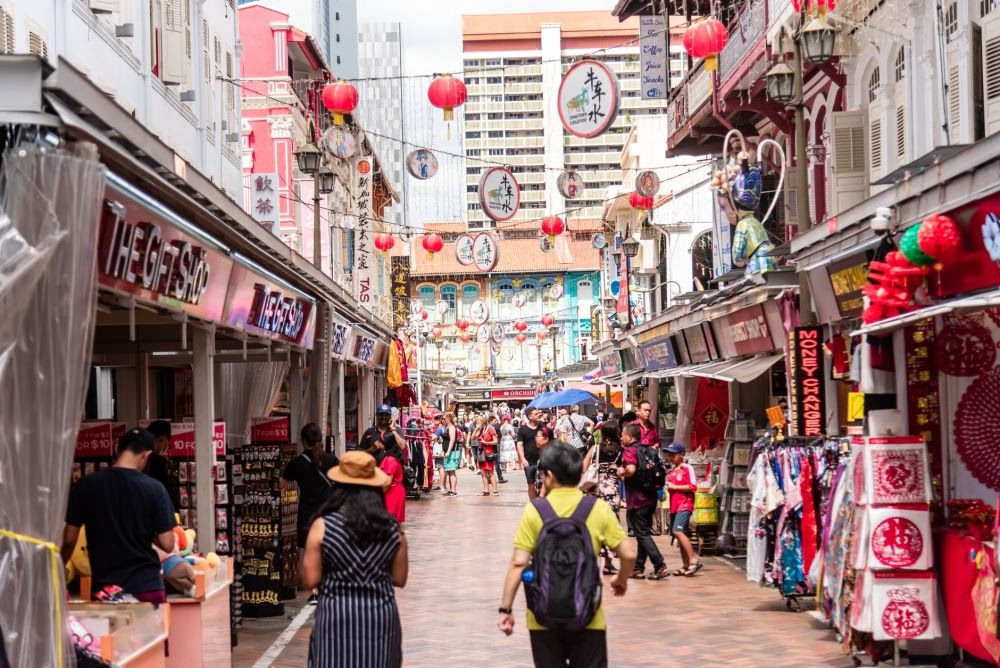
This is the question a lot of people are quietly asking. The honest answer is: it’s complicated. Orchard Road is not dying, but it is changing faster than at any point in the last thirty years. The Urban Redevelopment Authority (URA) and various mall operators have been actively trying to shift the street away from pure retail and toward a mixed-use lifestyle destination, which is a fancy way of saying more food, more experiences, and fewer shops selling things you can buy cheaper on Shopee.
Foot traffic along the Orchard corridor has recovered well post-pandemic, and Orchard MRT remains one of the key interchange points on the NS Line with growing connectivity since the Thomson-East Coast Line added its own Orchard station. You can now alight at the TEL’s Thomson-East Coast Line Orchard station and walk through to the NS platform in the same complex. That connectivity is drawing more commuters through the area, which is good for foot traffic, though it doesn’t automatically translate into department store sales.
What Happens to the Paragon Space After Metro Leaves?
CICT has signalled it plans to reconfigure the Metro space rather than simply find another anchor tenant. In practical terms, that likely means subdividing the floor into smaller units that can command individually higher per-square-foot rents, or converting them to a format better aligned with current shopper demand. Medical and wellness retail, specialty grocery, or high-footfall food and beverage concepts are the categories that Singapore mall operators have been chasing most aggressively as of mid-2026.
Paragon already has a strong medical and dental cluster on its upper floors, so it would not be surprising to see that profile extended downward once the Metro space frees up. Specific plans from CICT have not been publicly announced as of July 23, 2026. The reconfiguration timeline will depend on lease arrangements and fitting-out schedules, but major mall reconfigurations of this scale in Singapore typically take around twelve to twenty-four months before new tenants are trading.
Other Singapore Transport and Retail Stories Worth Knowing About This Week
While the Metro closures are the headline retail story this week, it’s been a busy few days around the MRT network more broadly. On July 21, 2026, a power bank inside a commuter’s bag caught fire at Woodlands MRT station on the North South Line. Staff stepped in quickly and the fire was extinguished, though the woman involved reportedly suffered blisters. Our full coverage of the power bank fire at Woodlands MRT has all the details, including what you should know before bringing power banks onto trains.
Separately, the Circle Line (CCL) has been celebrating its completion this month, with Stage 6 bringing three new stations, Keppel, Cantonment, and Prince Edward Road, into service. That’s big news for commuters in the southern part of the island. Read more about the Circle Line completion and what CCL6 means for commuters if you haven’t already. It’s genuinely one of the more significant network expansions in recent years, and the new stations are already drawing curious visitors looking for the cafes and eateries that have popped up nearby.
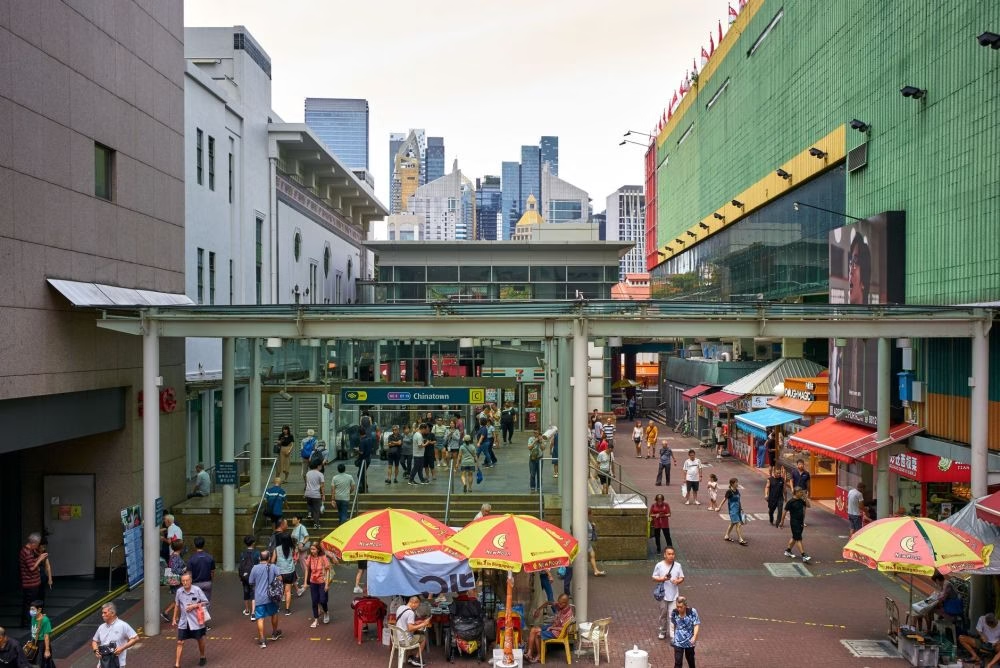
These transport developments are worth keeping in mind as you rethink your shopping routes post-Metro. With the CCL now complete, reaching parts of the southern CBD, including areas around Keppel and HarbourFront, is faster than before, which opens up different retail and dining options for commuters who previously had few alternatives to heading straight back to Orchard. Check the updated Circle Line MRT route map to see how the new stations fit into your usual travel pattern.
Who Does the Metro Closure Actually Affect Most?
Honestly, the shoppers who will feel this most keenly are the regulars: the office workers from the CBD who swing by Paragon Metro on their way to Orchard MRT after work, the older Singaporeans for whom Metro’s particular mix of mid-range fashion and housewares has been a long-standing habit, and the tourists who stumble in after alighting at Orchard and find its layout easier to navigate than the larger Japanese department stores nearby. For this last group especially, our guide to using the Singapore MRT as a first-time visitor can help them get their bearings once the familiar Metro signage disappears from Paragon’s facade.
Department store employees are also directly affected, and though Metro Singapore has not made a public statement about staff numbers or redeployment plans as of this writing, closures of this scale typically involve significant workforce changes. Those conversations are presumably ongoing between Metro’s management and its employees.
What This Means for Singapore Retail Alongside the MRT Network
The broader pattern here is worth naming directly. Singapore’s MRT network has steadily expanded over the decades, and mall development has historically followed rail connectivity very closely. Almost every major interchange station has a large shopping mall attached or directly adjacent. But having a mall next to an MRT station is no longer enough to guarantee a department store’s survival. The footfall is there. The conversion is the problem.
As of mid-2026, Singaporeans are spending more on experiences, food, and online shopping than on browsing physical department store floors. That shift, combined with landlords like CICT actively seeking higher-value tenants, means the department store format will keep contracting. Metro, Isetan, Takashimaya, and BHG are the names still standing, but each is recalibrating its proposition in its own way. Metro’s recalibration, it seems, involves a smaller footprint.
For a comprehensive look at all MRT stations and the malls and attractions nearest each, the Singapore MRT map for 2026 has the most current network overview, including the newly completed Circle Line stations.
Before You Tap In
If Metro Paragon is part of your regular commute routine, now is the time to scout alternatives so you’re not caught off guard when the shutters come down. The Orchard MRT corridor still has plenty of options within a short walk, and with the expanded MRT network as of July 2026, reaching other retail hubs across the city is faster than it’s ever been. Keep an eye on our blog for updates as Metro confirms closing dates and CICT reveals its redevelopment plans for the Paragon space.
FAQ
Keep exploring
- Circle Line Now Complete: CCL6 Opens July 2026
- Power Bank Fire at Woodlands MRT: What Happened
- Top 10 Must-Visit Attractions in Singapore and Their Nearest MRT Stations