
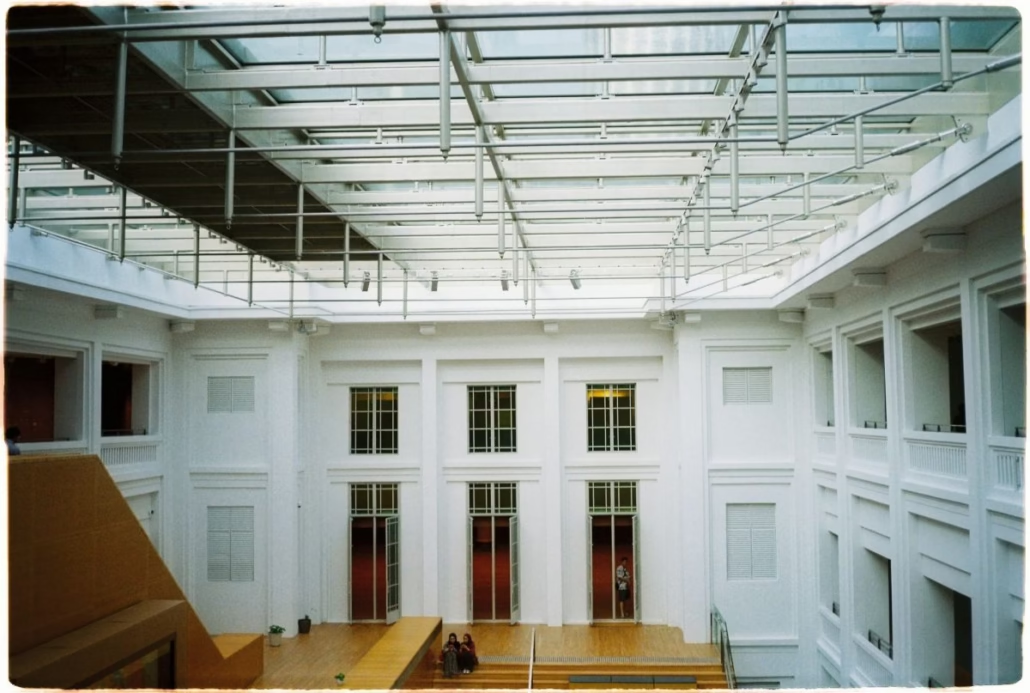
Why Tanjong Pagar Distripark Is the Arts Destination Everyone Is Talking About Right Now
Most Singaporeans know Tanjong Pagar for Maxwell Food Centre, its cluster of after-work bars, and the old PSA port land quietly transforming over the years. What fewer realise is that as of mid-2026, the area around Tanjong Pagar Distripark has become one of Singapore’s most talked-about arts destinations, with the Singapore Art Museum (SAM) firmly anchoring the cultural scene there.
- Why Tanjong Pagar Distripark Is the Arts Destination Everyone Is Talking About Right Now
- What Is Tanjong Pagar Distripark, and How Does It Connect to SAM?
- How Do You Get to Tanjong Pagar Distripark by MRT?
- What Can You Actually See and Do at SAM and the Distripark?
- How Does the Greater Southern Waterfront Connect to This Arts Scene?
- What Are the Practical Details You Need Before You Go?
- Is the MRT Network Reliable Enough for a Day Out Like This?
- What Else Is Happening in the Singapore Arts Scene Nearby?
- Before You Tap In
- FAQ
The timing could not be better. The Circle Line was completed in July 2026 with the opening of three new stations at Keppel, Cantonment, and Prince Edward Road. The southern waterfront, which once felt slightly disconnected from the main rail network, is now properly served. If you have not visited this part of Singapore in a while, the difference is striking.
This guide covers what you will find at Tanjong Pagar Distripark and SAM, exactly how to get there by MRT, what to expect when you arrive, and a few things most visitors miss.
What Is Tanjong Pagar Distripark, and How Does It Connect to SAM?
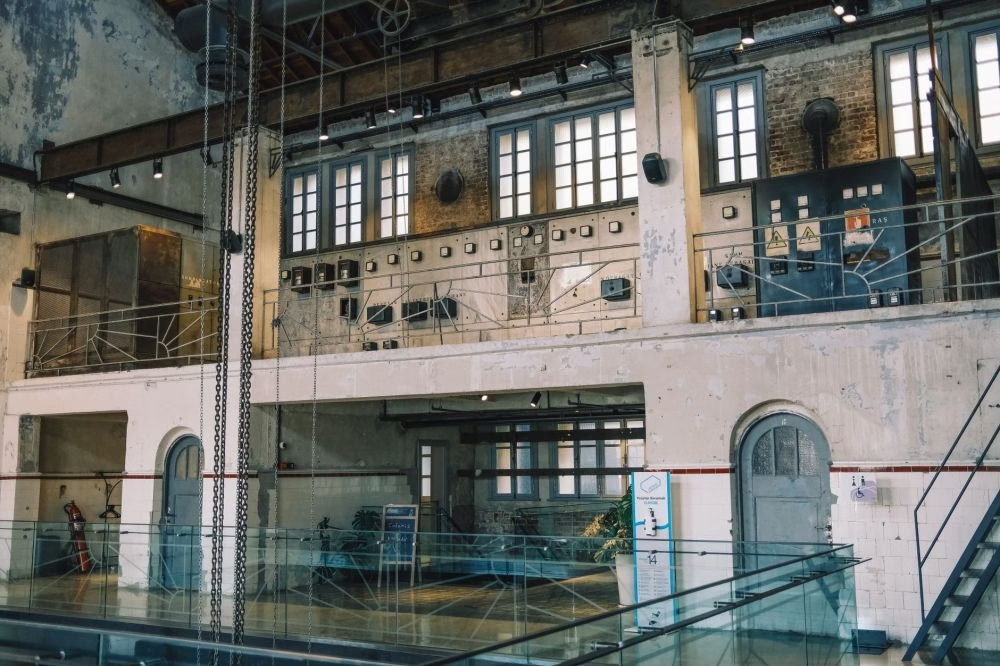
Tanjong Pagar Distripark is a cluster of former port warehouses in Singapore’s Greater Southern Waterfront corridor. The buildings are large, industrial in character, and carry that particular atmosphere that heritage repurposing produces: high ceilings, raw concrete, and natural light arriving at unexpected angles. It is the kind of space that artists and curators love precisely because it does not feel like a conventional gallery.
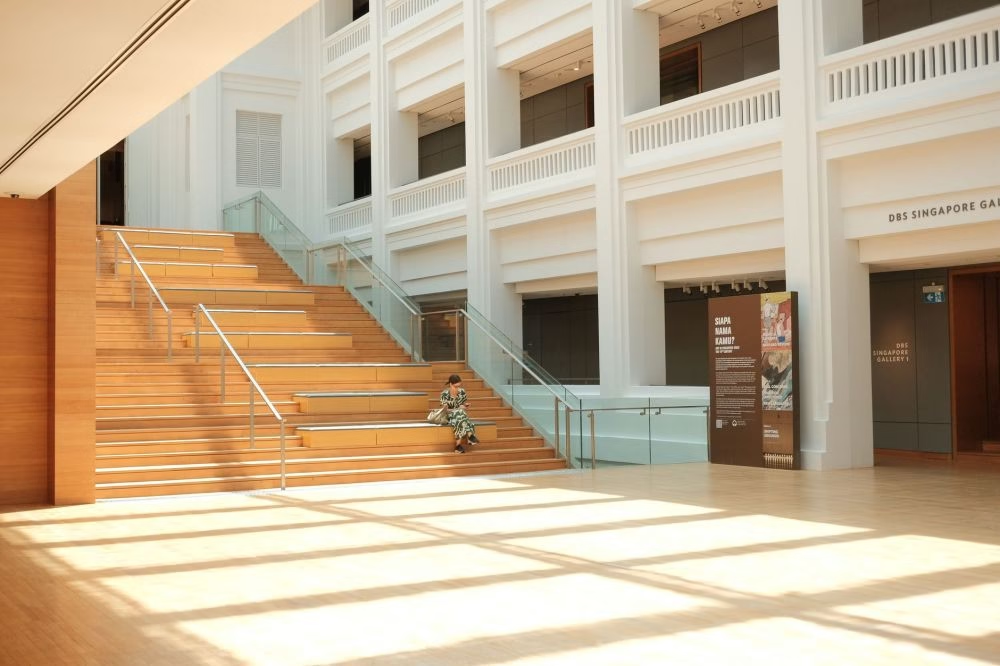
The Singapore Art Museum has been building its presence in the Distripark over recent years as part of a broader institutional evolution. SAM was originally housed in the old St Joseph’s Institution building on Bras Basah Road, but has expanded its programming footprint significantly. The Distripark allows SAM to present large-scale installations and site-specific works that would not fit in a traditional gallery. Think of it as SAM’s experimental arm, the place where the museum takes real risks.
As of July 2026, the Distripark is drawing strong visitor numbers. The combination of heritage architecture, ambitious contemporary art, and new MRT connectivity makes it a genuinely compelling day out.
How Do You Get to Tanjong Pagar Distripark by MRT?
You have two practical options by rail, and which one works best depends on where you are coming from.
Option 1: Keppel MRT (Circle Line, CC29)
This is the newer and more direct option for anyone coming from Harbourfront, Dhoby Ghaut, or central parts of the Circle Line. Keppel station opened as part of CCL Stage 6 in July 2026, and it is the closest station to the Distripark’s southern end. You can read more about the full CCL6 opening in our detailed article on the Keppel, Cantonment and Prince Edward Road MRT stations.
From Keppel, alight and follow the signage toward the Greater Southern Waterfront. The walk to the Distripark is around 10 minutes on foot, mostly flat. If you are travelling with young children or have mobility considerations, note that the path involves stretches without full shelter, so early morning or late afternoon visits are more comfortable in Singapore’s heat.
Option 2: Tanjong Pagar MRT (East-West Line, EW26)
If you are coming from the city centre, Raffles Place, or anywhere along the East-West Line, alight at Tanjong Pagar and use Exit A or Exit B, then walk south toward the waterfront. This walk is around 15 to 20 minutes and takes you through Tanjong Pagar’s shophouse streets, which is pleasant enough on its own. You will pass through the CBD fringe and start seeing the port warehouses as you approach the waterfront.
| Route | MRT Station | Line | Walk to Distripark | Best For |
|---|---|---|---|---|
| Via Keppel | Keppel (CC29) | Circle Line | ~10 min | Southside / CCL travellers |
| Via Tanjong Pagar | Tanjong Pagar (EW26) | East-West Line | ~18 min | City / EWL travellers |
| Via Harbourfront | Harbourfront (NE1/CC29A) | North East / Circle Line | ~20 min (taxi or bus) | Sentosa / VivoCity visitors |
For most people coming from the north of Singapore, the fastest MRT route is to take the Circle Line and change where needed. The full CCL now forms a complete loop, which makes journey planning considerably simpler than it was before July 2026.
What Can You Actually See and Do at SAM and the Distripark?
SAM’s programming at Tanjong Pagar Distripark focuses on contemporary Southeast Asian art, large-scale installations, and works that engage with the site itself. The museum has consistently championed artists from the region, and the Distripark’s industrial scale allows for commissions that push well beyond what any conventional white-cube gallery could accommodate.
Expect sculpture, video works, painting, and immersive environments spread across several warehouse blocks. The curation tends to be genuinely ambitious. This is not a gift-shop-first type of institution. SAM has a serious reputation in the regional art world, and the Distripark programming reflects that.
Beyond the formal gallery spaces, the surrounding Distripark area has developed its own informal creative ecosystem. You will find independent studios, small food and beverage operators, and occasional pop-up markets or performance events, particularly on weekends. It is worth arriving with a loose schedule rather than a tight itinerary, because the best parts of the Distripark experience often happen between the programmed exhibitions.
Admission pricing for SAM varies by exhibition and concession rates (students, seniors, and NS men typically pay less). Payment at ticketing counters accepts contactless bank cards alongside cash, and SimplyGo users will find the neighbourhood is well set up for card-tap culture. For the most current SAM admission details, check the Visit Singapore listings or SAM’s own website directly.
How Does the Greater Southern Waterfront Connect to This Arts Scene?
The Tanjong Pagar Distripark does not exist in isolation. It sits within Singapore’s Greater Southern Waterfront development corridor, which spans from Pasir Panjang to Marina East and is one of the largest urban transformation projects Singapore has undertaken. According to EdgeProp data from July 2026, the Greater Southern Waterfront tops homebuyer awareness among upcoming precincts, with MRT access cited as a key priority. Arts infrastructure is part of what makes these areas liveable, and the Distripark is increasingly recognised as an anchor of that cultural offer.
The completion of the Circle Line means you can now travel the entire southern arc of the CCL without a break in service. From Harbourfront, you move through Keppel, then Cantonment, then Prince Edward Road, connecting ultimately to Outram Park and the wider network. For arts visitors, this opens up a genuinely interesting half-day or full-day route: start at the Distripark, walk or take a short bus ride along the waterfront, and eventually connect back to town via the Thomson-East Coast Line (TEL) at Maxwell or the North East Line (NEL) at Outram Park.
For those who want to plan a broader arts and food itinerary around the MRT network, our Ultimate Singapore 3-Day Itinerary Using Only the MRT includes southern waterfront stops that pair well with a Distripark visit.
What Are the Practical Details You Need Before You Go?
A few things worth knowing before you leave home.
The Distripark area is not as signposted as more established tourist corridors. Google Maps will get you to the general vicinity, but the specific warehouse blocks that SAM programmes are best identified from SAM’s own visitor information. The Land Transport Authority (LTA) has signage at Keppel MRT pointing toward the waterfront, but once you exit the station you are navigating on foot through what is still a mixed port-residential-arts precinct.
Food options within the Distripark itself are limited. There are typically a handful of cafes and operators within the creative precinct, but these can be small and crowded on weekends. If you want a proper meal, Tanjong Pagar Plaza hawker centre is around 15 to 20 minutes on foot north of the Distripark, or you can take a short bus ride. Maxwell Food Centre, one of Singapore’s most famous hawker destinations, is in the same direction. Plan to eat before or after your arts visit rather than relying on finding something at the Distripark itself.
The area is mostly flat and accessible for wheelchair users between the MRT stations and the main Distripark warehouse buildings, though some internal gallery spaces may have uneven surfaces given the heritage nature of the buildings. It is worth contacting SAM directly if accessibility is a priority.
For ticketing and payment on the MRT, both EZ-Link cards and contactless bank cards work fine at Tanjong Pagar and Keppel stations. If you are visiting Singapore for the first time and weighing up your transit payment options, our comparison of the Singapore Tourist Pass, EZ-Link, and SimplyGo is a good starting point.
Is the MRT Network Reliable Enough for a Day Out Like This?
Yes. As of July 2026, Singapore’s MRT network has logged its third consecutive month of high reliability, with no major delays recorded since November 2025, according to Channel NewsAsia. The network is performing well above the mean kilometres between failure benchmark that operators target. You can read more about the current reliability picture in our article on MRT network reliability in 2026.
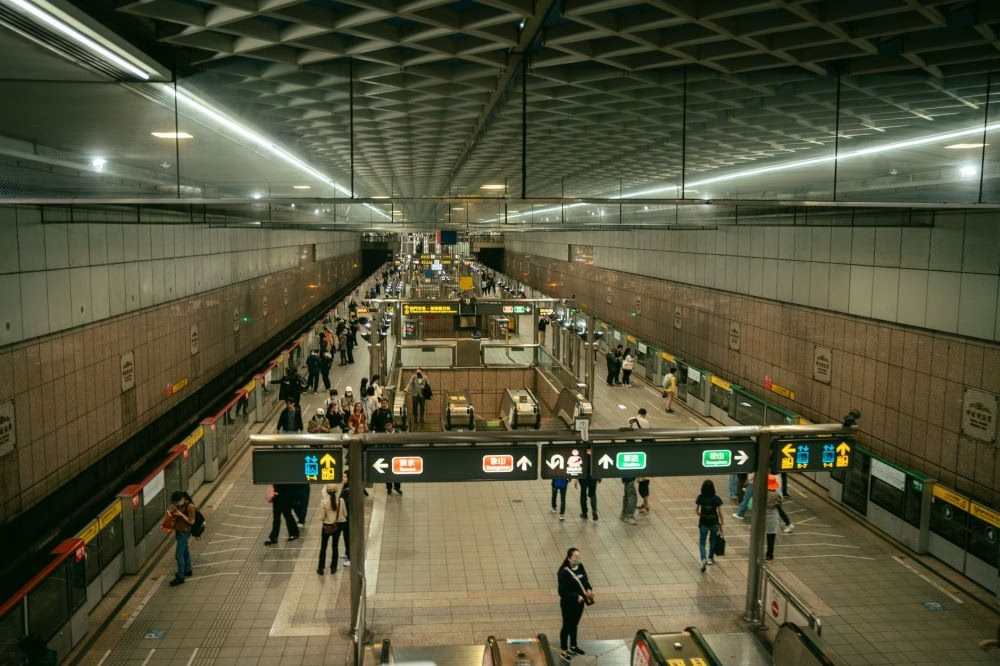
The new CCL6 stations, including Keppel, have been operating smoothly since their July 2026 opening. For first-time visitors to the new stations, the platform screen doors, air-conditioning, and wayfinding are all up to the standard you would expect from a new MRT station. The Circle Line stations in this stretch are underground, so they are fully sheltered regardless of weather.
One recent safety reminder worth noting: a power bank fire incident at Woodlands MRT in July 2026 was a good reminder for all commuters to check the condition of portable chargers before bringing them on the train. MRT staff responded quickly on that occasion, but it is a sensible habit regardless. Details are in our Woodlands MRT power bank fire article if you want the full picture.
What Else Is Happening in the Singapore Arts Scene Nearby?
The Tanjong Pagar and southern waterfront area is not the only part of Singapore with a busy arts calendar right now. The Bras Basah-Bugis precinct, reachable via the Downtown Line at Bras Basah or the Circle Line at Esplanade, remains a dense arts and culture corridor. The National Museum of Singapore, SAM’s Bras Basah campus, and the School of the Arts are all within comfortable walking distance of each other there.
For visitors who want to combine the Distripark with other top attractions across the island, our list of Singapore’s top attractions and their nearest MRT stations covers the full spread, from Gardens by the Bay to the Singapore Botanic Gardens.
The broader arts scene in Singapore is in an interesting moment. Major institutions are expanding into unconventional spaces, heritage buildings are being repurposed at pace in the southern waterfront corridor, and new MRT connectivity is making previously awkward-to-reach precincts genuinely accessible. The Distripark is probably the clearest single example of all three trends converging at once.
Before You Tap In
The Tanjong Pagar Distripark and SAM combination is one of the more rewarding arts outings in Singapore right now, and the opening of Keppel MRT on the Circle Line has made it significantly easier to reach by public transport. Check SAM’s current programme before you go, factor in a hawker meal either side of your visit, and give yourself enough time to wander the Distripark precinct without rushing. For the full picture of how Singapore’s MRT network connects to places like this across the island, our complete list of MRT stations in Singapore and the interactive Singapore MRT map are the best places to plan your route.
FAQ
Keep exploring
- CCL6 Complete: Keppel, Cantonment & Prince Edward Road MRT
- 15 Eats to Try at Circle Line's New CCL6 Stations
- Top 10 Must-Visit Attractions in Singapore and Their Nearest MRT Stations