
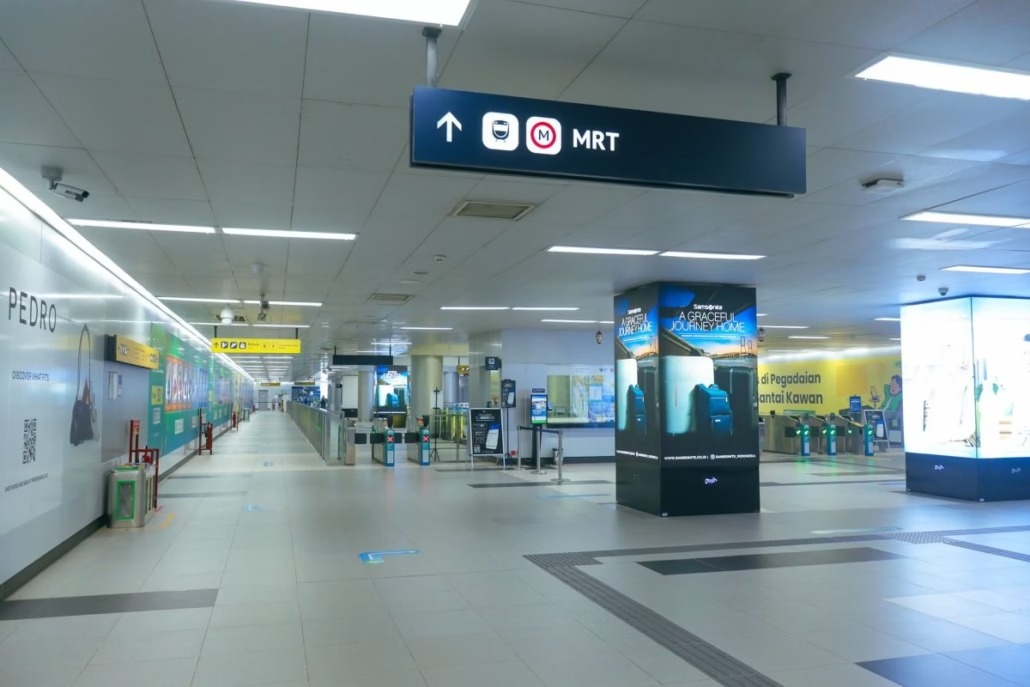
The next time you’re waiting for a train, the screens around you might be showing a lot more than just the next arrival time. On 9 July 2026, Mediacorp, Moove Media and SBS Transit signed a formal agreement to display content across MRT stations and bus interchanges in Singapore. It’s a move that quietly reshapes the media landscape for millions of daily commuters.
In this guide
- Who Are the Three Parties and What Does Each One Do?
- Which MRT Stations and Bus Interchanges Are Included?
- What Content Will Commuters See?
- Why Does This Matter for Singapore’s Out-of-Home Media Market?
- How Does This Fit Into the Commuter Experience at MRT Stations?
- What About SMRT Stations?
- Does This Change Your Daily Commute?
- What Happens Next?
- Before You Tap In
- FAQ
Who Are the Three Parties and What Does Each One Do?
This partnership brings together three organisations with very different roles. Mediacorp is Singapore’s national broadcaster, producing news, entertainment and lifestyle content across television, radio and digital. Moove Media is the out-of-home (OOH) advertising arm that manages media sales and operations across public transport. SBS Transit runs bus services and three MRT lines: the North East Line (NEL), the Downtown Line (DTL) and the Circle Line (CCL).
Moove Media is the crucial piece here. The company already manages advertising panels across buses and train stations, so it has the infrastructure and commercial relationships in place to make this work at scale. Pair that with Mediacorp’s content library and SBS Transit’s physical network, and you get something genuinely different from a standard advertising contract.
Which MRT Stations and Bus Interchanges Are Included?
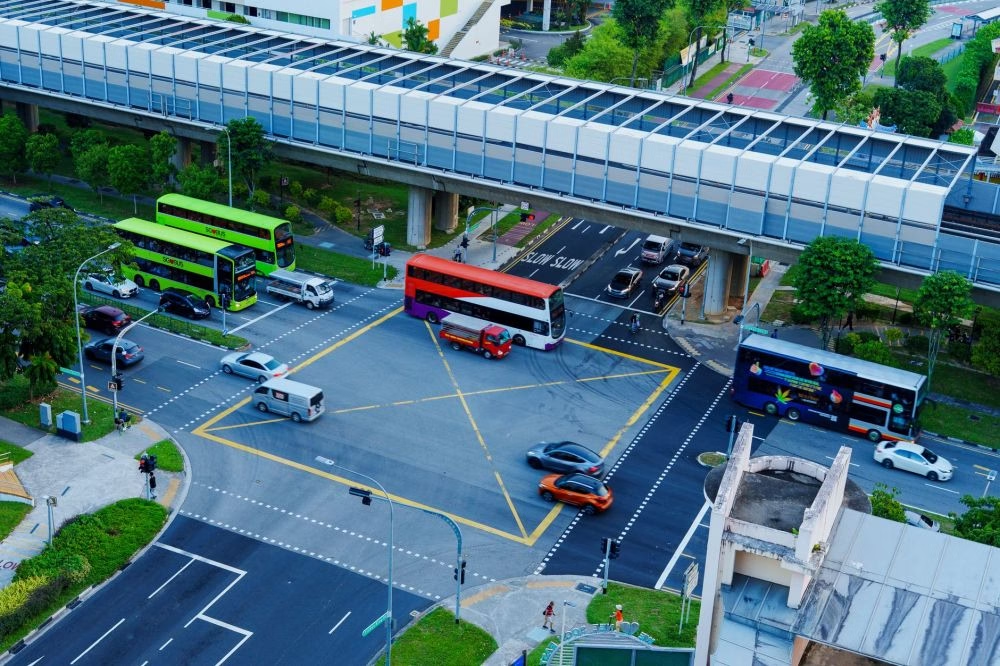
SBS Transit operates stations across three lines, so the content footprint is substantial. The North East Line runs from HarbourFront all the way up to Punggol, passing through dense residential areas like Hougang, Sengkang and Woodleigh. The Downtown Line stretches from Bukit Panjang in the northwest to Expo in the east, cutting through Bugis, Chinatown and the CBD. The Circle Line only recently became fully complete with the opening of its three Stage 6 stations on 4 July 2026, and now forms an unbroken loop around the city.
Beyond MRT stations, the agreement covers bus interchanges across the island, from Tampines to Jurong East to Clementi. These are genuinely high-traffic spaces. On a typical weekday morning, you’ll see hundreds of commuters flowing through each interchange during the peak rush between around 7.30am and 9.00am. Screens in these locations have captive audiences in a way that a mobile ad or a social media post simply cannot match.
What Content Will Commuters See?
Based on reporting by Channel NewsAsia on 9 July 2026, the agreement covers displaying Mediacorp content at these transit locations. That spans a broad range of material. Mediacorp produces news bulletins, lifestyle programming, public service announcements and entertainment content across English, Mandarin, Malay and Tamil, reflecting Singapore’s multicultural population.
Transit screens in Singapore have typically shown advertising, public transport advisories and general news tickers. This agreement suggests a more structured content partnership where Mediacorp’s produced programming, not just advertisements, could appear in these spaces. Short-form news clips, upcoming programme highlights, public health messaging, and commercial spots could all feature. The exact content format and scheduling hasn’t been publicly detailed yet, so the full experience will become clearer as the rollout happens.
What’s clear is that Moove Media’s role as OOH partner means there’s a commercial advertising dimension. Brands advertising with Mediacorp or Moove Media could see their campaigns extended into the physical transit environment, reaching commuters at exactly the moment they’re standing still with nothing better to look at.
Why Does This Matter for Singapore’s Out-of-Home Media Market?
Out-of-home advertising at transit hubs has been growing in Singapore for years. The MRT system alone carries well over three million passenger trips on a typical weekday across all lines and operators. That’s a reach figure most media buyers find hard to ignore. Add in the recent expansion of the rail network, including the three new CCL Stage 6 stations, and the audience pool keeps growing.
| SBS Transit MRT Line | Key Stations Along the Line | Approximate Station Count |
|---|---|---|
| North East Line (NE) | HarbourFront, Dhoby Ghaut, Serangoon, Punggol | 16 stations |
| Downtown Line (DT) | Bukit Panjang, Bugis, Chinatown, Expo | 34 stations |
| Circle Line (CC) | HarbourFront, Dhoby Ghaut, Serangoon, one-north | 33 stations (post-CCL6) |
That’s around 83 stations across three lines, not counting bus interchanges. For Mediacorp, it’s a meaningful expansion beyond traditional broadcast and streaming. For Moove Media, it deepens the value they can offer advertisers. For SBS Transit, it generates additional non-fare revenue from the station environment.
How Does This Fit Into the Commuter Experience at MRT Stations?
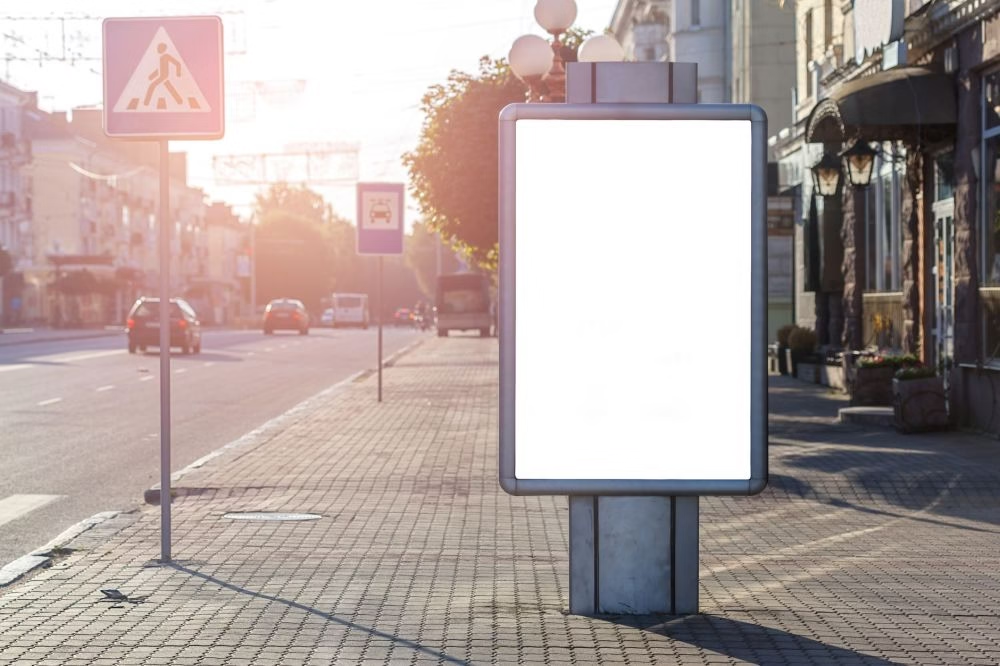
Content at MRT stations isn’t new, but quality and relevance have been hit or miss. Anyone who’s stood on a platform watching the same three slides about courtesy campaigns loop endlessly knows the feeling. A structured content partnership with a national broadcaster suggests a genuine effort to make those screens worth watching.
This also arrives at an interesting moment for Singapore’s rail network. The Circle Line only completed its loop on 4 July 2026 with three new Stage 6 stations, and the Downtown Line has been running adjusted operating hours through to September 2026. You can read more about the CCL’s completion and what it means for commuters in our full coverage of the Circle Line Stage 6 opening. With more commuters now using an expanded network, having meaningful content at stations feels more relevant than ever.
What About SMRT Stations?
This agreement is specifically with SBS Transit, not SMRT. SMRT operates the North South Line (NSL), the East West Line (EWL), the Thomson-East Coast Line (TEL) and the Bukit Panjang LRT. Stations on those lines, including busy hubs like Jurong East, City Hall, Orchard and Woodlands, are not part of this deal as announced.
That’s a significant chunk of the network outside the scope of the current agreement. Whether a similar arrangement exists or is being planned for SMRT-operated stations hasn’t been publicly confirmed as of 11 July 2026. For commuters who primarily use the North South Line or the Thomson-East Coast Line, the screens at your regular stations may look the same for now.
Does This Change Your Daily Commute?
Honestly, the immediate impact is minimal. You’ll still tap in and out with your EZ-Link card, your SimplyGo account or a contactless bank card as usual. Fares aren’t affected. Train frequencies aren’t affected. This is fundamentally about what appears on screens while you wait, not how the transport system operates. If you want the latest on fares and ticketing options, our MRT fares and ticketing guide has all the current figures.
Where you might notice a difference is in the quality and variety of what’s on those screens. If the agreement delivers on its promise, commuters could catch a news headline or short programme clip during a wait, rather than staring at a blank wall or scrolling endlessly on their phones. It’s a small quality-of-life improvement, but across three million daily trips, small things add up.
There’s also a public service angle. Mediacorp produces significant volumes of public messaging, from health campaigns to emergency advisories. Direct access to screens at major transit nodes means time-sensitive public information can reach a very large audience quickly. That’s genuinely useful, and it’s the kind of soft benefit that doesn’t always get mentioned in business coverage of these announcements.
What Happens Next?
The agreement was signed on 9 July 2026, but a signing ceremony is just the beginning. Rolling out content across 83-plus MRT stations and multiple bus interchanges takes time. Display hardware needs assessment and potential upgrades. Content scheduling systems need integration. Commercial advertising inventory needs planning and sales. A realistic timeline for commuters to notice meaningful change at their regular station is probably several months from now, though specific rollout dates haven’t been announced.
According to SBS Transit’s publicly stated priorities, improving the passenger experience at stations is an ongoing focus. This content agreement fits neatly into that direction. For the Land Transport Authority (LTA), which oversees public transport standards, having quality, curated content at transit nodes rather than gaps or irrelevant filler aligns with the broader effort to make public transport genuinely attractive.
Keep an eye on updates from Mediacorp and Moove Media over the coming months for rollout specifics. And if you want to stay across all Singapore MRT and LRT developments as they happen, our blog covers new agreements, line updates and commuter tips as they break.
Before You Tap In
The Mediacorp, Moove Media and SBS Transit content agreement is a quiet but meaningful development in how Singapore’s transit environment will look and feel for commuters on the NEL, DTL and CCL. It won’t change your journey time or your fare, but it signals a more intentional approach to what happens in the spaces between your home and your destination. For a network that tens of thousands depend on every single day, that attention to detail matters. Check our latest coverage on the expanded Circle Line to see how the network is shaping up in 2026, and use our interactive Singapore MRT map to plan your next trip across the newly completed loop.
FAQ
Keep exploring
- Circle Line Stage 6 Opens: CCL Now Complete After 30 Years
- New Circle Line Stations: Shorter Rides for 10,000+ Commuters
- Fares, Ticketing & Practical Info: Your 2026 Singapore MRT Guide