
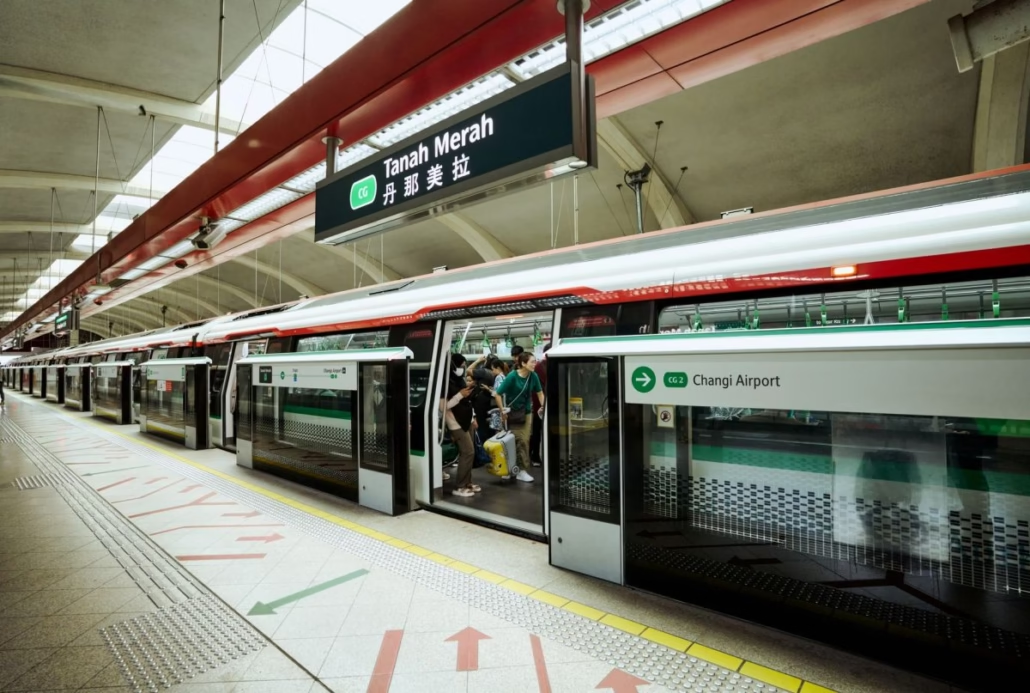
Ask any Singapore property buyer what makes or breaks a purchase decision, and you’ll hear the same thing nine times out of ten: the MRT. A survey released by EdgeProp.sg on 23 July 2026 puts hard numbers behind what most of us already sense on the ground. The Greater Southern Waterfront (GSW) tops homebuyer awareness among all major planning zones in Singapore, and the two factors buyers say are non-negotiable are MRT access and freehold tenure.
- Why Is the Greater Southern Waterfront the Most-Watched Property Zone Right Now?
- MRT Access: Why It Tops the Homebuyer Priority List
- Freehold Tenure: The Factor Buyers Refuse to Drop
- How Does the CCL6 Completion Change the GSW's Transport Story?
- How Does GSW MRT Access Compare to Other Major Precincts?
- What Does MRT Reliability Mean for GSW Buyers Today?
- What Are the Practical Transport Options Within the GSW Corridor?
- Beyond Transport: What Else Is Shaping GSW Homebuyer Interest?
- Before You Tap In
- FAQ
Why Is the Greater Southern Waterfront the Most-Watched Property Zone Right Now?
The Greater Southern Waterfront stretches 2,000 hectares from Pasir Panjang in the west to Marina East in the east. It’s arguably the largest urban transformation project Singapore has undertaken in a generation. When the Port of Singapore Authority’s container terminals at Tanjong Pagar, Keppel and Brani eventually relocate to Tuas, the freed-up waterfront land will accommodate tens of thousands of new homes, commercial spaces, parks and public amenities over the coming decades.
That scale drives awareness. But awareness alone doesn’t explain why buyers are placing the GSW at the top of their watchlists in mid-2026. The real catalyst is timing: the transport infrastructure is finally catching up with the vision.

The Land Transport Authority (LTA) officially opened three new Circle Line stations on 12 July 2026, completing a fully circular line after roughly three decades of phased construction. Those three stations are Keppel (CC30), Cantonment (CC31) and Prince Edward Road (CC32). All three sit squarely within or adjacent to the Greater Southern Waterfront corridor. If you want to understand what suddenly made the GSW feel real to buyers rather than aspirational, those three station openings are your answer. You can read the full breakdown of the new stations at our article on CCL6: Keppel, Cantonment and Prince Edward Road MRT stations.
Getting around Singapore? Find any station on the interactive MRT map, or save the PDF map to use offline.
MRT Access: Why It Tops the Homebuyer Priority List
MRT proximity is the single most important locational factor for Singapore homebuyers, according to the EdgeProp.sg survey. The preference has only grown stronger over time, particularly since the pandemic when hybrid working arrangements made the daily commute feel more deliberate and therefore less forgivable when slow.
From a practical standpoint, the maths is straightforward. Singapore’s distance-based fare system means living within walking distance of a station saves a commuter a meaningful amount every month compared to relying on feeder buses. A short walk to tap in beats a 15-minute bus wait every time, especially on a humid afternoon. Properties within 400 to 500 metres of a station also tend to command a price premium, which means buyers are protecting their asset value.
The Circle Line now forms a complete loop connecting Harbourfront (CC29 adjacent), the CBD fringe, the Botanic Gardens, Serangoon, Dhoby Ghaut and Marina Bay. For GSW residents, this means one-interchange access to virtually every major employment node in Singapore. Change at Dhoby Ghaut for the North-East Line (NEL) or the North South Line (NSL). Change at Bayfront for the Downtown Line (DTL). The connectivity from Keppel or Cantonment is genuinely strong, and that is what buyers are responding to.
Freehold Tenure: The Factor Buyers Refuse to Drop
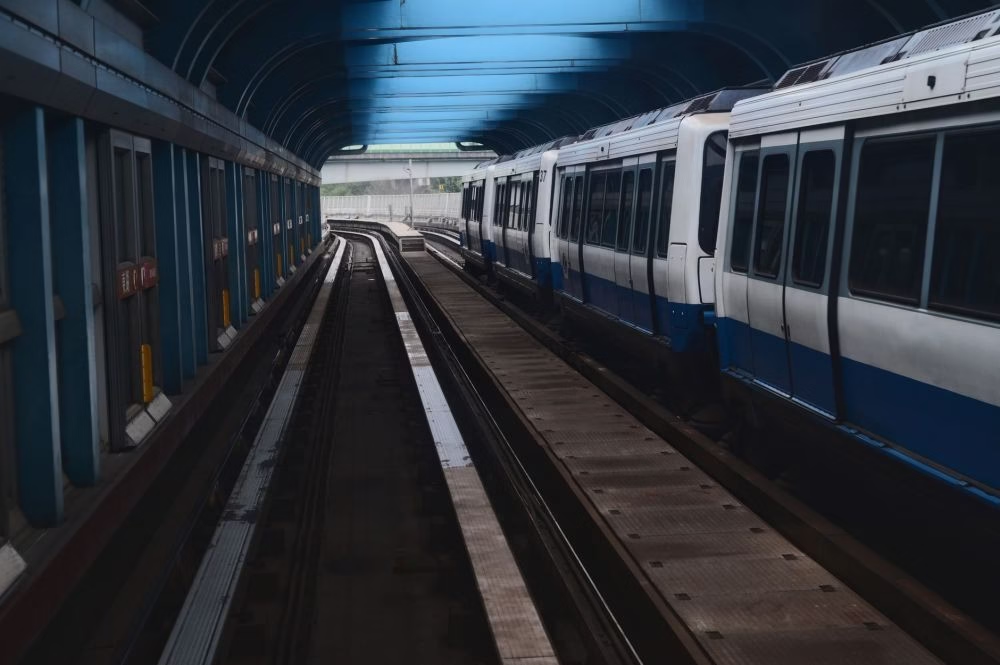
Freehold status ranks second in the survey, and in a market where the vast majority of new launches are 99-year leasehold, this creates real tension. Land near the Greater Southern Waterfront is largely state-owned, which means new residential supply in the zone will almost certainly be leasehold. So why does freehold remain so dominant in buyer preferences?
The answer sits at the intersection of wealth preservation and generational planning. Many Singapore buyers, particularly those purchasing in the S$2 million and above bracket, are thinking about estate planning. A freehold property can theoretically be held, sold or passed down without the lease decay that gradually erodes leasehold values as tenure approaches its final 30 years. Banks also become noticeably less willing to finance a property once its remaining lease falls below around 30 years, which affects both resale liquidity and rental demand.
The practical implication for the GSW is nuanced. Buyers who want freehold and GSW access may need to look at existing freehold stock in Tanjong Pagar, Outram or the Harbourfront vicinity rather than waiting for new launches within the redevelopment zone itself. Older freehold condominiums near Tanjong Pagar MRT on the East-West Line (EWL) or near Havelock on the Thomson-East Coast Line (TEL) could become increasingly sought after as the GSW narrative matures.
How Does the CCL6 Completion Change the GSW’s Transport Story?
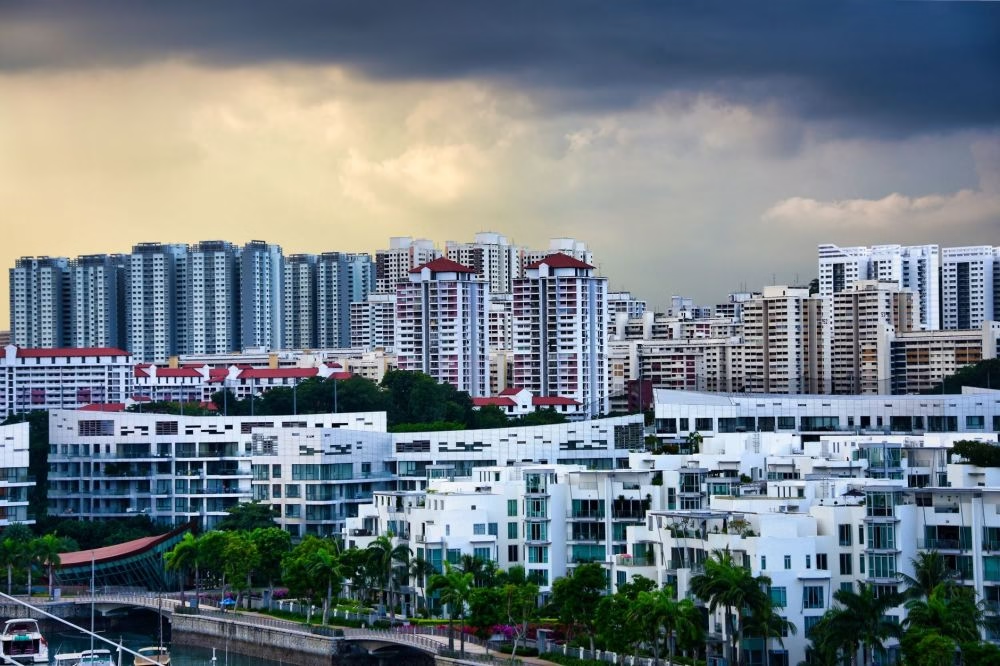
The completion of Circle Line Stage 6 in July 2026 is a turning point for the Greater Southern Waterfront. Before CCL6 opened, the nearest MRT access to much of the waterfront redevelopment area was Harbourfront on the North-East Line, already serving VivoCity, Sentosa and the St James precinct. Practical access to the interior of the GSW corridor required a bus connection or a fairly long walk.
Now, Keppel (CC30) sits at the threshold of the former container terminal land, Cantonment (CC31) provides a new node for the Tanjong Pagar district’s southern fringe, and Prince Edward Road (CC32) adds coverage between Cantonment and HarbourFront. According to LTA, the three new stations are expected to benefit over 10,000 commuters daily with shorter journey times. The Circle Line is now truly complete after decades of phased openings, and for the GSW, this timing couldn’t have been better. Our full write-up on the shorter rides the CCL6 stations deliver has all the numbers.
For context, consider a resident living near Keppel. Before CCL6, reaching Raffles Place on the EWL required either a bus or a walk to Tanjong Pagar. Today, tapping in at Keppel and alighting at Raffles Place (via Dhoby Ghaut) takes around 20 minutes. That’s a commute that actually works for an office worker.
How Does GSW MRT Access Compare to Other Major Precincts?
It helps to put the GSW’s transport connectivity in context against other major residential precincts that buyers frequently compare.
| Precinct | Nearest MRT Lines | Key Stations | Est. Travel to Raffles Place |
|---|---|---|---|
| Greater Southern Waterfront | CCL, NEL, EWL | Keppel, Cantonment, Harbourfront, Tanjong Pagar | ~18-25 min |
| Jurong Lake District | EWL, (future JRL) | Jurong East, Chinese Garden | ~30-35 min |
| Tengah (Eco Town) | (future JRL) | Planned Tengah stations | ~40+ min (bus-dependent currently) |
| Woodlands North (RTS corridor) | NSL, (future RTS) | Woodlands, Woodlands North | ~45-55 min |
| Punggol Digital District | NEL, Punggol LRT | Punggol, LRT feeders | ~40-45 min |
Travel times above are approximate as of July 2026 and will vary depending on time of day and exact origin within each precinct. The GSW’s central location and multi-line coverage give it a clear travel-time advantage over newer towns. For buyers working in the CBD, that advantage is hard to quantify in dollar terms but very easy to feel on a Monday morning.
What Does MRT Reliability Mean for GSW Buyers Today?
One concern that lingered over Singapore’s MRT network for years was reliability. Major disruptions in previous decades left a lasting impression on buyers who remember queueing for replacement buses at peak hour. That context makes the network’s current performance genuinely relevant to a property purchase decision.
As of July 2026, the MRT network has logged its third consecutive month of high reliability, with no major delays recorded since November 2025, according to reporting by CNA. The network has been operating above the two-million train-kilometres-per-incident benchmark, which is the standard LTA uses to measure operational excellence. Our coverage of the third consecutive month of MRT reliability explains what that benchmark means in practice.
For a GSW buyer, this matters. The appeal of living close to Keppel or Cantonment is predicated on being able to tap in, sit down and reach the office reliably every morning. If the lines serving the waterfront were prone to disruption, the proximity premium would erode quickly. Right now, the reliability data supports the investment case.
What Are the Practical Transport Options Within the GSW Corridor?
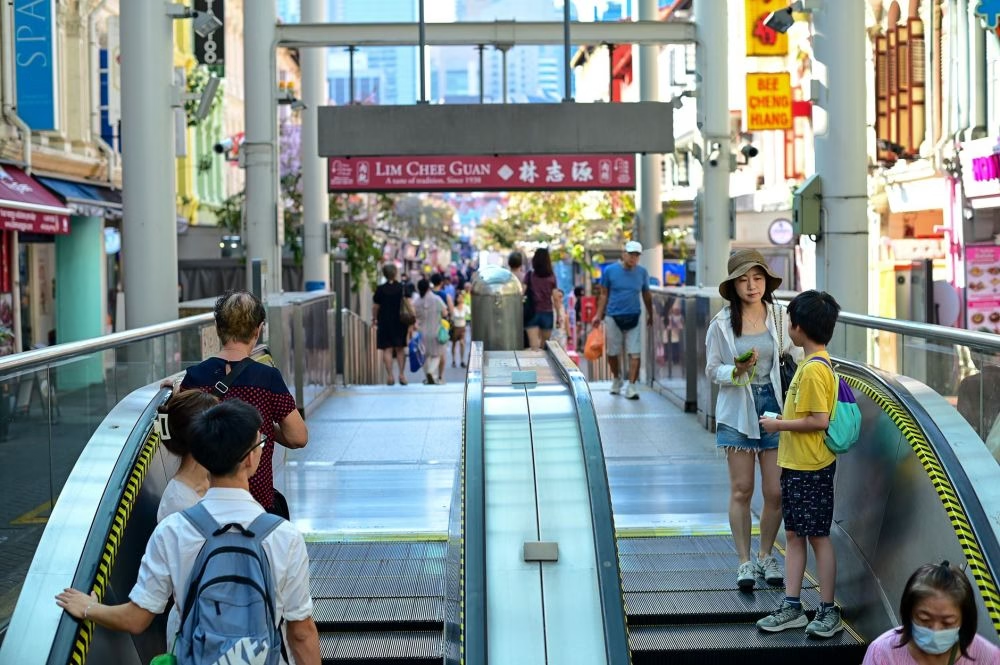
Beyond the three new Circle Line stations, the GSW corridor is served by a broader transport web that buyers should map out before committing. Harbourfront (NE1 / CC29) remains the major interchange for the North-East Line, giving direct access to Outram Park, Chinatown, Clarke Quay, Dhoby Ghaut and Serangoon without a change. Tanjong Pagar (EW26) on the East-West Line connects directly to City Hall, Raffles Place and the Changi Airport branch via Tanah Merah.
Bus services along Keppel Road and Telok Blangah Road provide surface coverage for the stretches between stations. The waterfront promenade also accommodates cycling paths, increasingly relevant as more GSW residents adopt active mobility for short-distance trips to the park connector network or to Labrador Nature Reserve.
Looking ahead, the Cross Island Line (CRL) will add another layer of connectivity to Singapore’s southern and central regions when it opens in phases from the late 2020s. While the CRL doesn’t directly serve the GSW’s core zone, its interchange stations at Jurong Lake District and the eastern corridors will reduce travel times for GSW residents who work outside the CBD. For a full picture of how the lines connect, the Singapore MRT lines overview is the cleanest starting point.
Beyond Transport: What Else Is Shaping GSW Homebuyer Interest?
The survey results and the transport story explain a lot, but they’re not the whole picture. The GSW is also riding a wave of cultural and lifestyle infrastructure investment. The Tanjong Pagar Distripark, being repurposed as a creative arts and culture hub, signals the precinct’s ambition to attract residents who want more than a commute. Our guide to the Tanjong Pagar Distripark and SAM arts precinct has more detail on what is already open to the public.
There’s also the sheer visual appeal of waterfront living. Singapore’s existing waterfront precincts at Marina Bay and Sentosa have consistently commanded premium pricing. The GSW promises something similar but at larger scale and with more genuine neighbourhood character, including preserved heritage assets from the old port areas. That combination of infrastructure, lifestyle and scarcity is exactly what drives the awareness numbers the EdgeProp.sg survey captured.
Buyers should also track the pace of the Keppel Club site’s redevelopment and the phased release of white sites along the waterfront. These will define the GSW’s residential density and the eventual community mix. Getting in early, as many surveyed buyers are clearly considering, means buying into an area that is still being defined. That’s both the opportunity and the risk.
Before You Tap In
The Greater Southern Waterfront is at the rare intersection of a once-in-a-generation urban transformation and a just-completed transport network. The CCL6 stations that opened on 12 July 2026 aren’t just new lines on a map; they’re the physical infrastructure that turns a long-promised precinct into commutable reality. If MRT access and land tenure are your top two priorities, and the survey shows they are for most Singaporeans, the GSW corridor deserves serious attention right now. Check the full Circle Line map to plan your next site visit, and use our complete list of MRT stations in Singapore to pinpoint exactly which station puts you closest to the development you are evaluating.
FAQ
Keep exploring
- Circle Line Stage 6 Opens: CCL Now Complete After 30 Years
- Tanjong Pagar Distripark & SAM: Singapore Arts Guide