
Last updated . Facts checked against LTA announcements.
Why Did a Singapore DJ Play MRT Sounds at Tomorrowland?
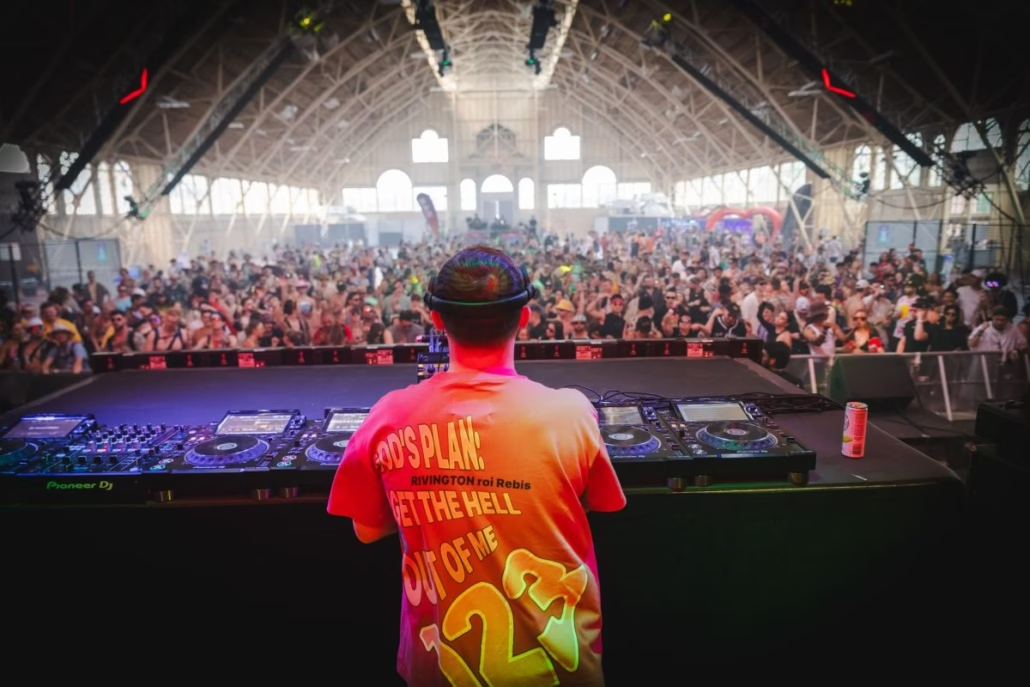
When the familiar two-tone doors are closing chime rang out across a festival stage in Boom, Belgium, thousands of kilometres from home, something clicked. A Singapore DJ brought the MRT to Tomorrowland Belgium during their set in August 2026, weaving station announcements and recognisable local sounds into the festival beats. The crowd reacted. The internet noticed.
- Why Did a Singapore DJ Play MRT Sounds at Tomorrowland?
- Which Sounds Did the DJ Actually Use?
- Why Do MRT Jingles Hit So Hard for Singaporeans?
- Tomorrowland 2026: What the Stage Moment Looked Like
- How Does This Compare to Other Times Singapore's MRT Went Viral?
- What Does the MRT Network Sound Like in 2026?
- What Does This Moment Mean for Singapore's Creative Community?
- Could We See More Local Transport Sounds in International Music?
- Before You Tap In
- FAQ
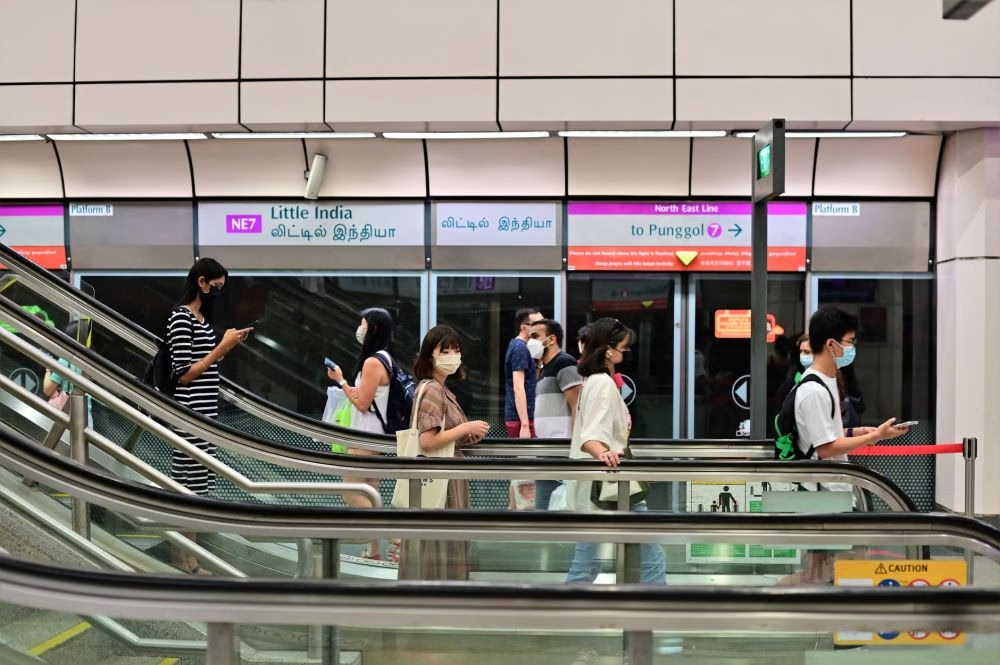
You hear that chime every single day. On the North South Line heading into town during the morning crush. On the East West Line on the way back to Tampines or Jurong after work. On the Downtown Line cutting through Bukit Timah. These sounds are so tightly woven into daily life that hearing them on a massive outdoor festival stage in Europe hits completely differently.
Getting around Singapore? Find any station on the interactive MRT map, or save the PDF map to use offline.
Which Sounds Did the DJ Actually Use?
Any regular commuter would have picked out the samples immediately. The “doors are closing, please stand clear of the doors” announcement is the most recognisable, used across SMRT and SBS Transit-operated lines throughout the network. The DJ also reportedly layered in other familiar audio, the kind of sounds that form the invisible soundtrack of Singapore life.
Beyond the door chimes, there is a whole library of sounds every time you ride. Station arrival announcements. The specific tone sequences that differ slightly between older and newer lines. The PA chime before an announcement at interchanges like Dhoby Ghaut or Raffles Place. Even the ambient hum of a packed train during the 8.30am peak has a texture any Singaporean recognises instantly.
This was not just novelty. It was a deliberate creative choice to root a globally appealing electronic music set in something hyper-local. That contrast, between a festival drawing large crowds to rural Belgium and a two-tone chime from an underground station in Toa Payoh or Bishan, is exactly why the clip spread so fast.
Why Do MRT Jingles Hit So Hard for Singaporeans?
Singapore’s MRT network carries millions of journeys every week. As of 2026, it spans over 200 kilometres across six main lines and three light rail systems. That scale means these audio cues are genuinely universal, not in the way a pop song is, but the way a smell or texture is, baked into muscle memory through sheer repetition.
For Singaporeans living or travelling abroad, familiar local sounds trigger something visceral. Like a whiff of kaya toast, or the humidity hitting you as you step off a plane at Changi. Hearing the MRT door chime in a foreign context is funny and warm and a little melancholy all at once.
This is not entirely new territory for local creatives. Singapore’s Art in Transit programme has treated the MRT as a canvas for local artistic expression for years, with artworks installed at stations across the network to reflect community stories and Singapore’s cultural life. Using MRT sounds as raw creative material fits naturally into that tradition of treating public transport as cultural space.
The MRT carries particular emotional weight too. It is not just how you get from Jurong East to Changi. It is where you stand silently next to a stranger at 7am, where you wait for passengers to alight before you board, where you give up your seat without being asked. These unspoken social rituals, shaped partly by the network’s own audio cues, tie those sounds to a shared civic identity.
Tomorrowland 2026: What the Stage Moment Looked Like
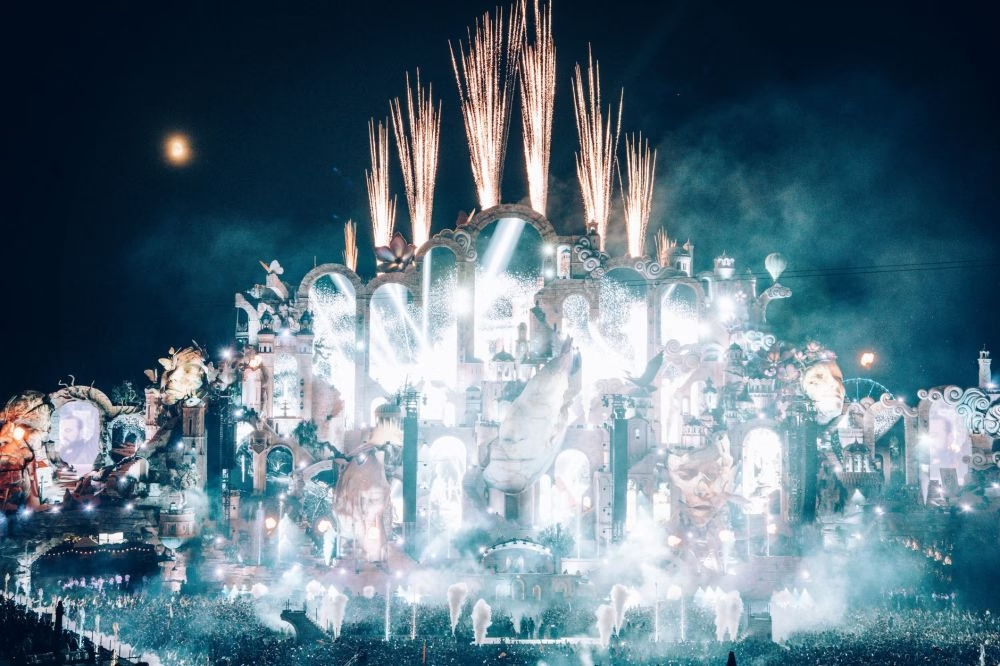
Tomorrowland Belgium is one of the world’s biggest electronic dance music festivals, held annually in the town of Boom. For a Singaporean DJ to earn a set there, then deliberately foreground local sounds within it, is genuinely significant. It signals confidence, a decision to lean into specificity rather than smooth things over for a generic international crowd.
The clip circulating from 13 August 2026 showed the crowd responding with clear energy to the MRT audio drop. Part of that came from Singaporeans and Southeast Asians in the crowd, but international festivalgoers responded too, picking up on the incongruity and humour before settling into the groove. Specific, honest creative choices often land harder with people who have no personal connection to the reference, because the specificity itself is compelling.
How Does This Compare to Other Times Singapore’s MRT Went Viral?
The MRT has produced its share of viral moments over the years. One that spread warmly across social media was when the Land Transport Authority posted a birthday shoutout for Cayden, a young boy with a serious love of trains. You can read more about that LTA birthday shoutout moment here. These flashes work because they reveal an emotional attachment to the network that goes well beyond getting from A to B.
The DJ moment is different in scale. Tomorrowland is a global stage, and MRT sounds reaching that audience, even briefly, represents a kind of cultural export that nobody planned through a campaign. It happened because one creative person made an honest choice.
| Viral MRT Moment | Platform | Approximate Reach | Year |
|---|---|---|---|
| LTA birthday shoutout for Cayden | Social media | Widely shared locally | 2025 |
| MRT door chime at Tomorrowland Belgium | Festival plus social media | International | 2026 |
| Art in Transit station artwork features | Press and online | Local and regional | Ongoing |
| Facial recognition trial at Punggol Coast | News and social media | Local | 2026 |
Each moment reveals a different facet of how deeply the MRT sits in Singapore’s public consciousness. The Tomorrowland moment stands apart because it happened on foreign soil, in an environment where nobody expected to hear a Singaporean train announcement.
What Does the MRT Network Sound Like in 2026?
The network has grown a great deal since its 1987 beginnings. Circle Line Stage 6 opened in July 2026, adding Keppel, Cantonment and Prince Edward Road stations to close the loop into a full circle. The Thomson-East Coast Line continues its phased rollout, and the Cross Island Line is being built out in stages through to the late 2030s.
Each new line brings a slightly updated approach to audio design. The TEL uses a noticeably more contemporary announcement voice than the North South Line audio from the 1980s and 1990s. In that sense, the network’s soundscape has become an accidental archive of Singapore’s transport history. You can track the decades through the tones.
For a full picture of where every station sits on the network today, the complete list of MRT stations in Singapore is a useful reference, especially as new stations continue to open on the TEL and CRL.
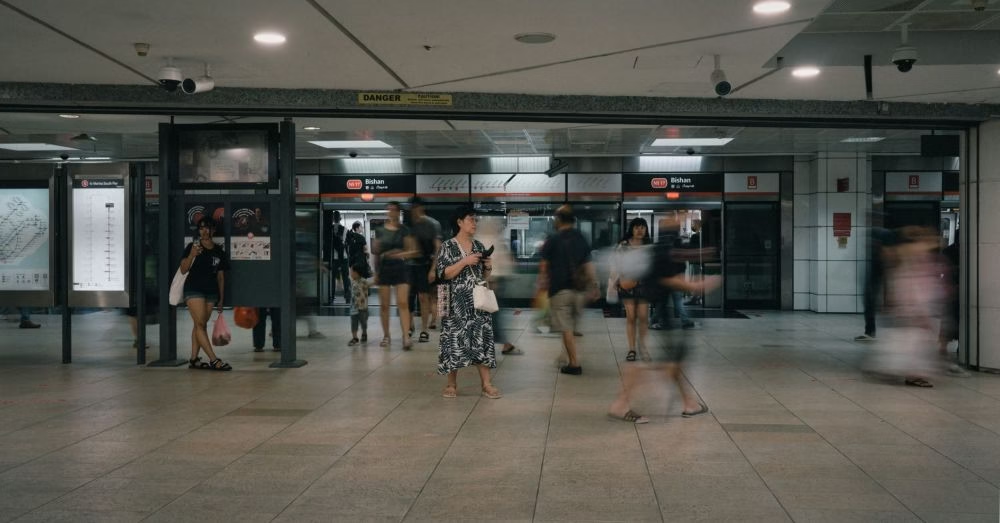
What Does This Moment Mean for Singapore’s Creative Community?
Local electronic music has been building momentum for years, but Singaporean artists taking their work to the world’s biggest stages remains relatively rare. When it happens with something this specifically local at its core, it matters. It suggests that breaking through internationally is not about becoming generic, but about being more specific.
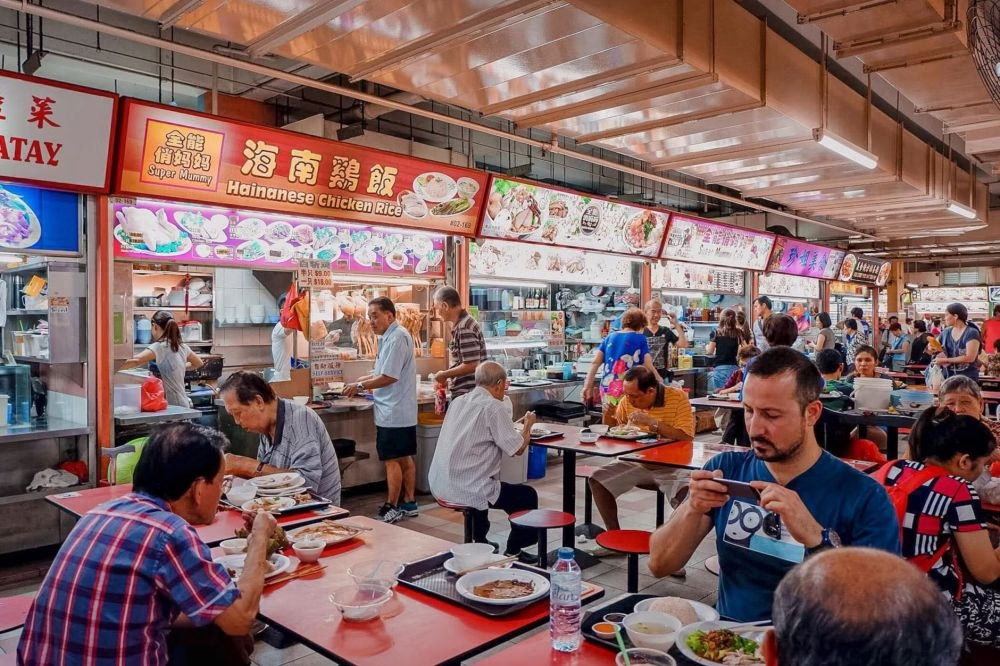
The MRT jingle set also lands in a broader cultural moment. Singapore’s creative industries have been working to project local identity outward, from hawker culture’s UNESCO recognition to the growing presence of local designers and musicians on international platforms. A DJ dropping the “doors are closing” chime at Tomorrowland sits right in the middle of that conversation.
There is also a practical curiosity here for anyone interested in sound design in public infrastructure. The tones used across the MRT network are not accidental. They are chosen to be clearly audible above platform noise, distinct enough to cut through without alarming, and consistent enough to become automatic triggers for commuter behaviour. That a DJ found them usable as musical material says something interesting about the quality of the original design.
Could We See More Local Transport Sounds in International Music?
It is genuinely plausible. The Tomorrowland moment has likely prompted other local artists to think about how Singapore’s sonic environment could feed into their work. Beyond the MRT, Singapore has a rich landscape of public audio: the old National Library lift tone, hawker centre announcement systems, the ice-cream uncle’s bicycle bell, the karang guni horn. Any of these could work as raw material for the right creative.
For transport sounds specifically, the MRT’s audio design is distinctive because it has stayed remarkably consistent across decades while also evolving with each new line. That consistency is what makes it instantly recognisable to anyone who has lived here. It is also what gave a Tomorrowland crowd, most of whom have never tapped in at Orchard or alighted at Bugis, an immediate sense that they were hearing something specific, something that meant something to somebody.
That is what good art does. Even when the reference is a train door chime.
Before You Tap In
Next time you hear “doors are closing, please stand clear” at your nearest station, take a half-second to notice it properly. That sound just played at Tomorrowland. For a closer look at how the MRT network sounds, looks, and works across all its lines, browse the full Singapore MRT line guides on this site. If you are curious about how public transport culture expresses itself through art and creativity, the Art in Transit programme guide is well worth your time.
FAQ
For official updates on the rail network, check the Land Transport Authority (LTA) website.
Keep exploring
- ‘Next Stop, IS7 Cayden’: LTA Birthday Shoutout Goes Viral
- Singapore MRT Art in Transit Programme Explained
- Circle Line Now Complete: CCL6 Opens July 2026