
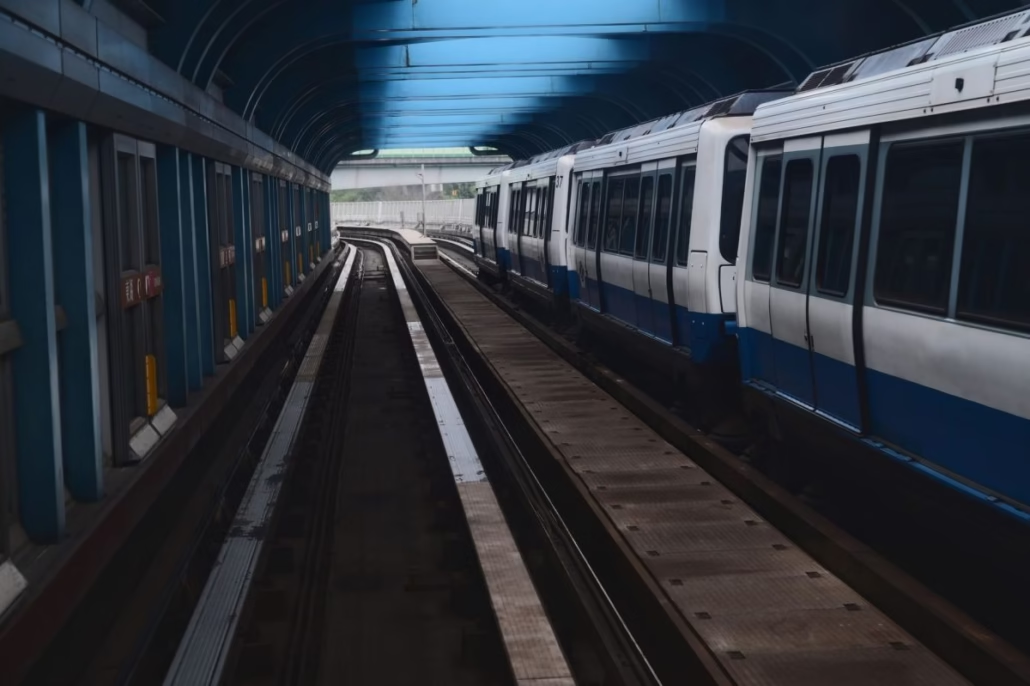
What are the three new Circle Line MRT stations that just opened?
Singapore’s three newest MRT stations, Keppel (CC28), Cantonment (CC29) and Prince Edward Road (CC30), opened to the public in July 2026 as part of Circle Line Stage 6 (CCL6). This moment finally closes the loop on the Circle Line (CCL), a project that’s been incomplete since it first opened decades ago. For commuters in the southern corridor, this is what they’ve been waiting for.
- What are the three new Circle Line MRT stations that just opened?
- Why did it take so long to complete the Circle Line loop?
- What is the history behind Keppel MRT station?
- What makes Cantonment MRT station historically significant?
- What is the story behind Prince Edward Road MRT station?
- How do the new CCL6 stations change journey times for commuters?
- What can you eat and do around the three new stations?
- What else is happening across Singapore's MRT network right now?
- Are the CCL6 stations accessible and easy to use?
- Before you tap in
- FAQ
But this isn’t just another transport milestone. Each station sits in a neighbourhood packed with history, and understanding that context explains why these locations matter, what’s being built around them, and what your commute will actually feel like.
Why did it take so long to complete the Circle Line loop?
The Circle Line was always meant to form a complete ring, but engineering and land-use challenges in the southern part of Singapore kept pushing the closing segment back. When the CCL first opened its central and eastern segments in 2009 and 2010, the stretch connecting HarbourFront southward through the former Keppel Distripark remained just a plan on paper. The Land Transport Authority had to work around active port operations, reclaimed land with tricky soil conditions, and the long-term vision for what would become the Greater Southern Waterfront.
That waterfront transformation is now in full swing. As we’ve covered separately, MRT access has become a top priority for buyers eyeing the Greater Southern Waterfront, which makes sense when you see how dramatically these three new stations change connectivity for the entire strip. The CCL6 stations were effectively planned hand-in-hand with the area’s redevelopment.
What is the history behind Keppel MRT station?
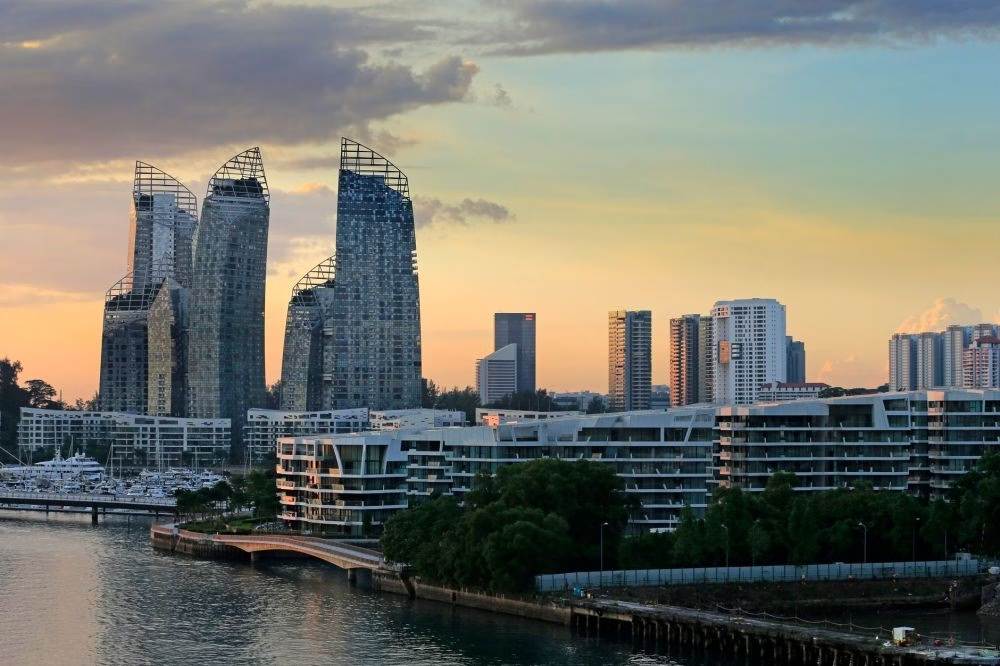
Keppel takes its name from Admiral Henry Keppel, the British naval officer whose ships first used the harbour in the 1840s. For most of the 20th century, this area was all about heavy industry: shipyards, dry docks, container terminals and the gritty infrastructure that made Singapore one of the world’s busiest ports. The Keppel Distripark, a massive warehouse complex, sat here until it was gradually wound down to make room for the Greater Southern Waterfront project.
Step out at Keppel today and the change is striking. Old warehouses have been replaced by construction hoardings, and new waterfront housing, parks and commercial space are visible everywhere. The station sits close to the future Keppel Bay precinct. It’s also the closest rail station to the Singapore Cable Car lower terminal at Mount Faber, which used to require a bus or private hire vehicle from HarbourFront. That last-mile problem is now considerably shorter.
What makes Cantonment MRT station historically significant?
Cantonment occupies a stretch of road that’s been central to Singapore’s civic and military history since the colonial era. The word “cantonment” itself refers to a military quarters or garrison, and Cantonment Road was indeed flanked by barracks and British administrative buildings throughout the 19th and early 20th centuries. Tanjong Pagar, just a short walk north, was one of the earliest Chinese immigrant settlements and is now a conservation area crammed with pre-war shophouses.
The station also sits metres from Tanjong Pagar Railway Station, the grand 1932 art-deco terminal that served as the southern terminus of the Keretapi Tanah Melayu (KTM) railway until the line closed in 2011. That building has since been gazetted as a national monument and is being repurposed. There’s something quietly poetic about a brand-new MRT station opening just metres from a railway terminal that closed 15 years ago. Rail has come full circle here in the most literal sense.
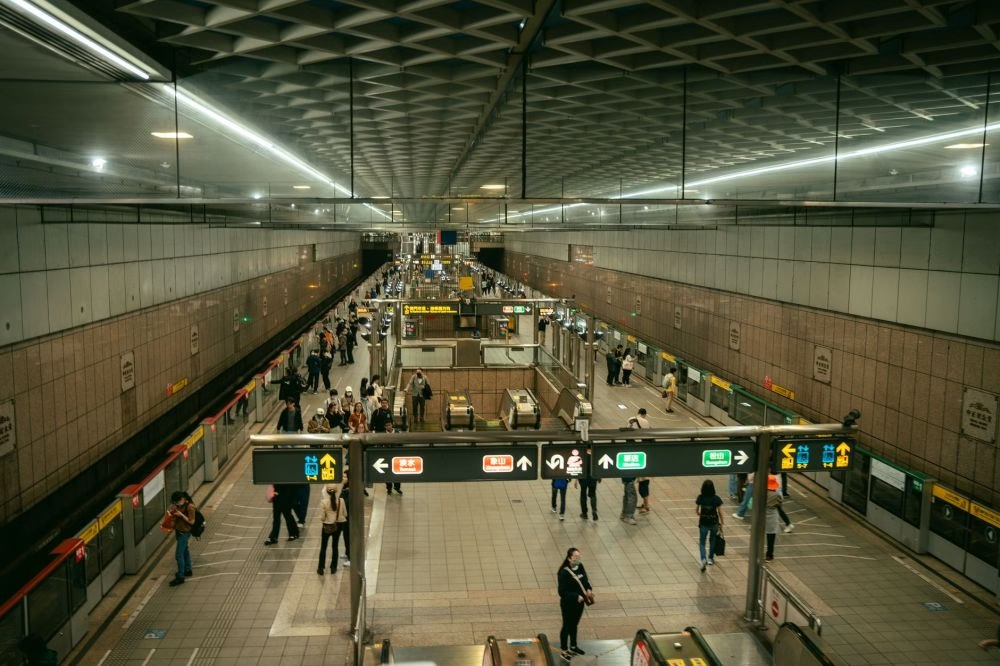
For commuters, Cantonment fills a real gap. The nearest previous CCL station was one segment away, and Tanjong Pagar on the East-West Line (EWL) was the closest option for residents here. Now, workers heading toward one-north, Buona Vista or the Botanic Gardens don’t need to cross into the CBD first. That’s a meaningful time saving for a significant number of daily commuters.
What is the story behind Prince Edward Road MRT station?
Prince Edward Road takes its name from the road itself, which was named after King Edward VII following his 1875 visit to Singapore as Prince of Wales. The road cuts through a part of the city that’s long been sandwiched between the Cantonment area to the west and the Chinatown and Tanjong Pagar heritage zones to the north. Historically, this corridor housed light industry, workers’ housing and the kind of unglamorous urban fabric that often gets overlooked in Singapore’s story.
Today, the area around Prince Edward Road is changing fast. The Tanjong Pagar Distripark, where the Singapore Art Museum’s SAM at Tanjong Pagar has set up a significant presence, is within easy reach. If you haven’t explored that arts cluster yet, our guide to Tanjong Pagar Distripark and SAM is a good place to start. The arts scene anchored by the Distripark will only grow as the Greater Southern Waterfront matures, and Prince Edward Road station is the natural rail gateway to it.
How do the new CCL6 stations change journey times for commuters?
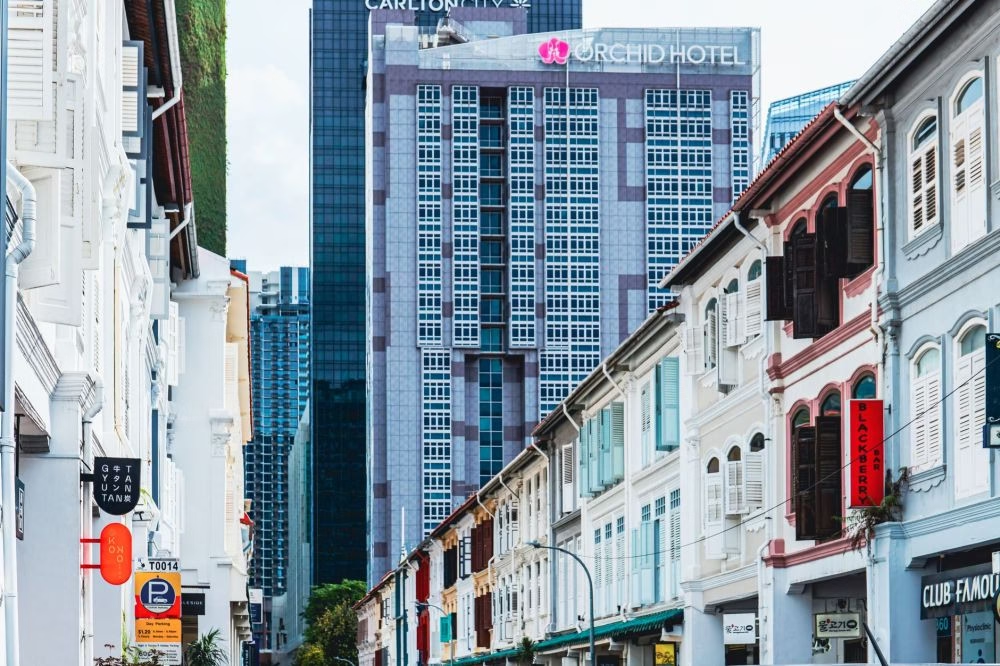
According to the LTA, CCL6 reduces journey times for more than 10,000 commuters who previously had to take longer, roundabout routes through the CBD or HarbourFront. The biggest winners are residents and workers in the Cantonment Road, Kampong Bahru and former Keppel industrial corridors, who used to rely on buses or walk considerable distances to the nearest MRT stop.
Here’s how selected journeys look before and after CCL6, as of August 2026:
| Journey | Before CCL6 | After CCL6 |
|---|---|---|
| Cantonment to one-north | ~25 min via Tanjong Pagar (EWL) | ~18 min direct on CCL |
| Keppel to Dhoby Ghaut | Bus + MRT, ~35 min | ~20 min on CCL |
| Prince Edward Road to Botanic Gardens | ~30 min via EWL interchange | ~22 min on CCL |
| HarbourFront to Bishan | CCL open-loop, ~34 min | ~28 min on completed loop |
These are approximate times based on typical off-peak travel. Distance-based fares on the CCL apply as usual. Adult fares for short hops of two or three stations typically run between S$0.92 and S$1.19 when you tap in with SimplyGo or a contactless bank card. For the full fare breakdown, check our 2026 Singapore MRT fares and ticketing guide.
What can you eat and do around the three new stations?
Plenty. Tanjong Pagar has always punched above its weight for food, and the CCL6 stations put several beloved hawker centres within a short walk. Cantonment Road itself has a cluster of coffeeshops and eateries, and Maxwell Food Centre is close enough for a genuine lunchtime visit. For something newer, the Tanjong Pagar Distripark area has a growing spread of cafes and concept restaurants that have followed the arts crowd in. Our roundup of the best cafes near the new Circle Line CCL6 stations is worth bookmarking.
Beyond food, the new stations open up the southern waterfront parks and the upcoming Keppel Bay waterfront promenade, which is still being developed but already walkable in sections. The Art in Transit programme has also brought new artworks into each of the three CCL6 stations, continuing a tradition that makes Singapore’s MRT one of the most visually interesting metro systems in the region. Watch out for the commissioned pieces as you alight; they’re specific to each station’s local history and worth a few minutes of your time.
What else is happening across Singapore’s MRT network right now?
CCL6 is part of a broader period of expansion across the network. As of August 2026, the Cross Island Line (CRL) is actively under construction, with Phase 3 covering four additional stations in the western corridor. SMRT has recently teamed up with a Chinese rail operator in a joint bid to operate the CRL once it opens, as we reported in our article on the SMRT and Chinese rail operator joint CRL bid. Meanwhile, the LTA is trialling facial recognition at fare gates at Punggol Coast, as covered in our piece on the Punggol Coast facial recognition fare trial. The network is clearly in an active phase of both physical expansion and technology upgrades.
SMRT’s recent financials reflect this momentum. The operator reported rail revenue up 5.6 per cent in its latest results, with profit after tax nearly doubling. The completed CCL loop will add to those figures through higher ridership. For commuters, that means the operator has the resources to maintain and improve service quality, which matters when you’re relying on the trains every morning.
Are the CCL6 stations accessible and easy to use?
Yes. All three stations are built to the same accessibility standards as other modern MRT stations in Singapore, with lifts at every entrance, tactile flooring, and priority queuing lanes at the fare gates. Each station has multiple exits, and the exit numbering follows the same convention as the rest of the network. When in doubt, look for the large overhead maps just inside the fare gates; they show which exit faces which street.
For a full list of all MRT and LRT stations with their accessibility features, the complete Singapore MRT stations directory on this site is regularly updated. You can also check operating hours for the CCL and every other line in our Singapore MRT operating hours guide, since first and last train times vary slightly by station and direction.
Before you tap in
The three new Circle Line stations at Keppel, Cantonment and Prince Edward Road are open and fully operational as of August 2026. Whether you’re a southern-corridor resident finally getting direct rail access, a visitor exploring the Greater Southern Waterfront, or just curious about these neighbourhoods, the best move is to tap in and see for yourself. Check our interactive Singapore MRT map for the latest network overview, and browse the blog for ongoing coverage of developments across the network.
FAQ
Keep exploring
- Circle Line Stage 6 Opens: CCL Now Complete After 30 Years
- 15 Eats to Try at Circle Line's New CCL6 Stations
- CCL6 Complete: Keppel, Cantonment & Prince Edward Road MRT