
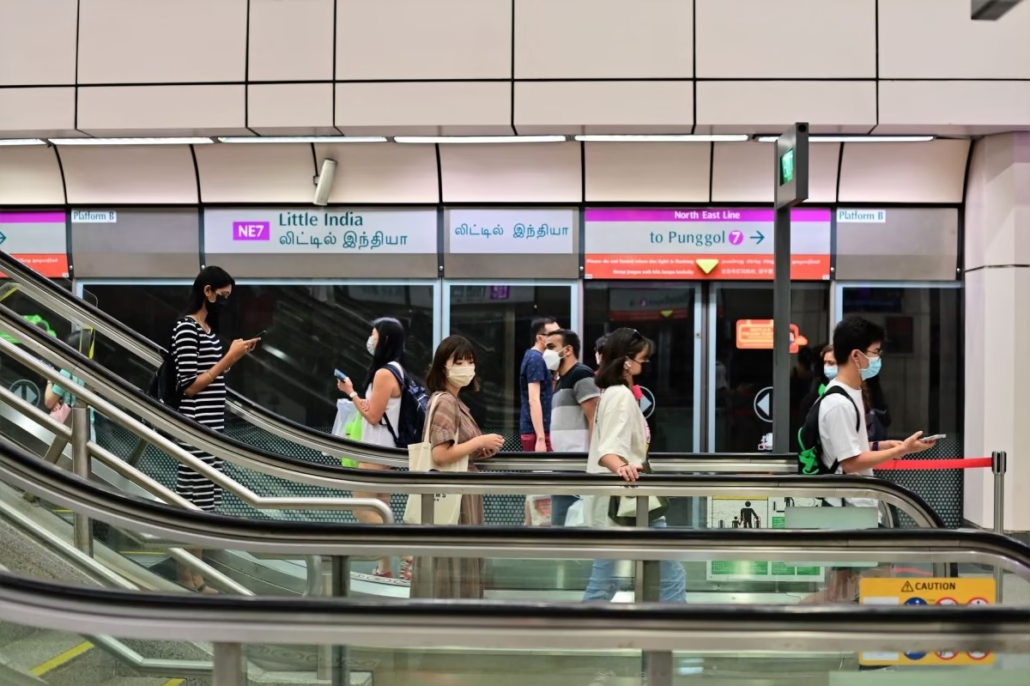
Remember 2017? A single breakdown on the North-South Line could wreck your entire morning, strand you at Bishan, and guarantee you’d miss that 9am meeting. Fast forward nine years, and the story has flipped completely. On 17 July 2026, the LTA announced that Singapore’s MRT network hit a milestone that’s never happened before: it maintained a mean kilometres between failure (MKBF) above 2 million train-kilometres for three consecutive months straight.
- What Does "2 Million Train-Kilometres" Actually Mean?
- Which Lines Are Performing Best?
- How Does This Compare to Previous Years?
- Is AI Behind the Improvement?
- What the CCL Completion Adds to the Picture
- What Does This Streak Mean for Everyday Commuters?
- What's Next for MRT Reliability?
- Should You Be More Confident in the MRT Right Now?
- Before You Tap In
- FAQ
What Does “2 Million Train-Kilometres” Actually Mean?
The 2-million train-kilometre mark is how the LTA measures MRT performance. It’s the average distance trains travel collectively before a significant incident occurs. To picture it: 2 million kilometres is roughly 50 laps around Earth’s equator. It’s genuinely massive.
What matters in real terms is the specific threshold LTA publicly reports: delays exceeding 30 minutes affecting more than 10 trains. Since November 2025, there hasn’t been a single one. That’s over eight months of disruption-free service at that severity level, the longest clean run since records started in 2011. For you tapping in at Tampines or Jurong East each morning, it means trains that actually arrive and depart when they’re supposed to.
Which Lines Are Performing Best?
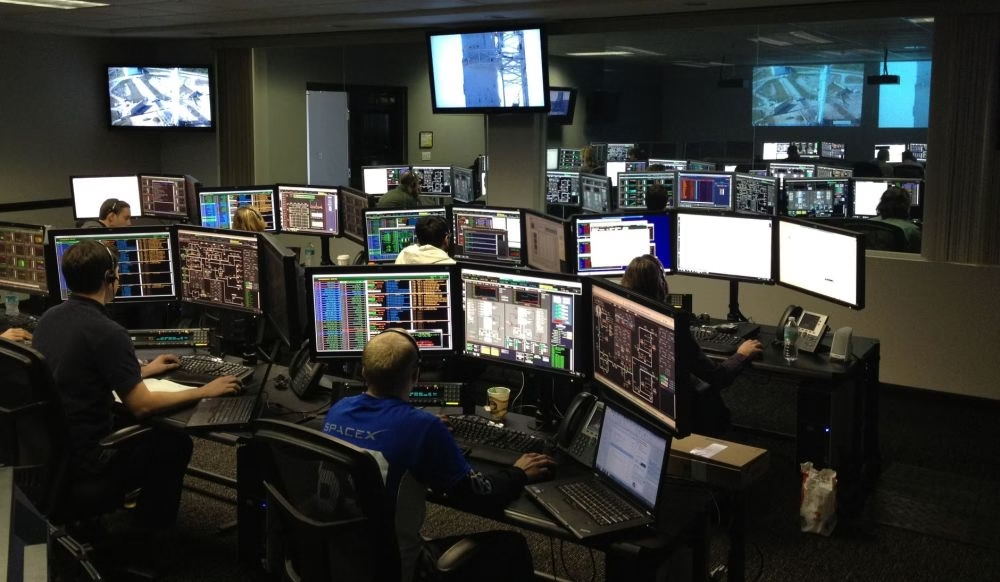
All six MRT lines are contributing to this sustained reliability. The network runs the North-South Line (NSL), East-West Line (EWL), North East Line (NEL), Circle Line (CCL), Downtown Line (DTL), and Thomson-East Coast Line (TEL). The LTA hasn’t published individual line breakdowns for July 2026, but the aggregate result tells you no single line is dragging the average down.
Historically, the older NSL and EWL required serious maintenance investment after rough patches in the mid-2010s. Newer lines like the DTL and TEL were built with modern rolling stock and signalling technology, so they’ve typically posted stronger MKBF figures. The CCL, which just completed with Stage 6 opening in July 2026, now forms a continuous loop. That reduces crowding stress on older lines and spreads load more evenly.
How Does This Compare to Previous Years?
The contrast with the troubled years is striking. Here’s how the MKBF benchmark has shifted over time, based on publicly available LTA figures:
| Period | Approximate MKBF | Notable Context |
|---|---|---|
| 2011-2012 | Around 300,000 km | Major NSL/EWL disruptions |
| 2015-2016 | Around 500,000 km | Sleeper rail replacement ongoing |
| 2019-2020 | Around 1,000,000 km | New trains, signalling upgrades |
| 2022-2023 | Around 1,500,000 km | Post-COVID recovery period |
| May-July 2026 | Above 2,000,000 km | Record streak; no 30-min delays since Nov 2025 |
This improvement didn’t happen by accident. The LTA and operators SMRT and SBS Transit have spent years pouring money into replacing ageing components, upgrading signalling systems, and deploying predictive maintenance technology that catches problems before they cascade into visible service disruptions.
Is AI Behind the Improvement?
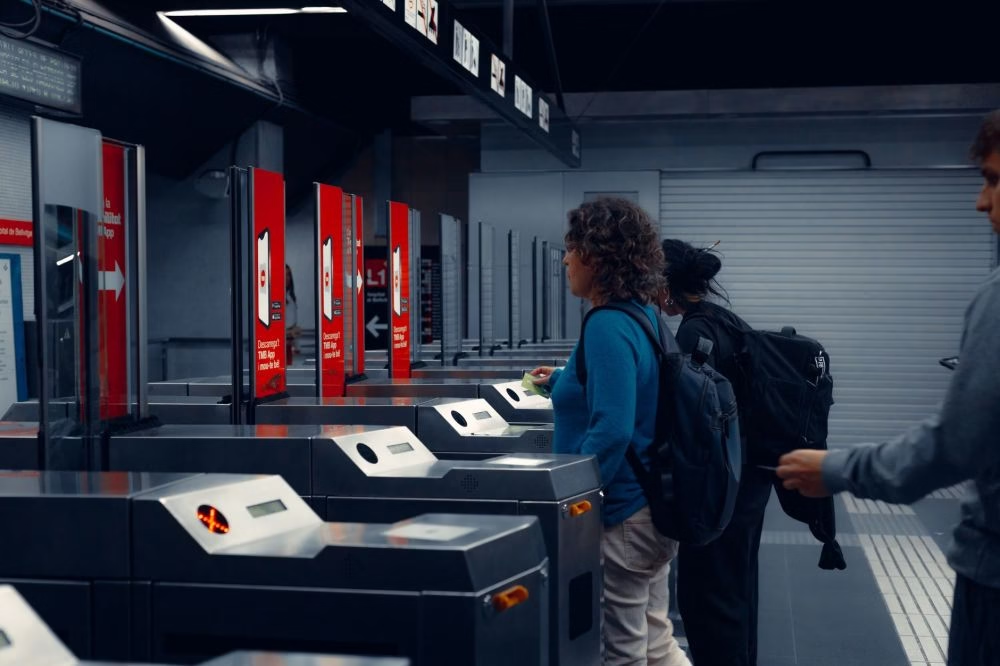
Partly. Singapore has been actively putting artificial intelligence to work on the MRT network, something we covered in detail in our article on Singapore’s AI metro network initiatives. Sensors embedded in track infrastructure and rolling stock now feed data into machine-learning models that flag anomalies well before they’d cause service disruptions. Maintenance teams increasingly fix things that haven’t broken yet, rather than scrambling after a failure occurs.
This approach is especially valuable on the older NSL and EWL, where infrastructure is most complex. Instead of purely scheduled maintenance windows, technicians get dispatched based on actual condition data. It’s a significant operational shift, and the reliability numbers show it’s working.
What the CCL Completion Adds to the Picture
The Circle Line’s completion with CCL6, which opened to the public on 4 July 2026 and includes Keppel, Cantonment, and Prince Edward Road stations, is more than just coverage. A complete loop changes how load distributes across the entire network. Commuters who previously had to travel into town and back out can now take a more direct circular route, cutting crowding at key interchanges like Dhoby Ghaut, Raffles Place, and Harbourfront.
Less crowding at busy interchanges means fewer platform incidents, fewer door-hold situations, and less overall system stress. It’s a structural reliability gain, not just a coverage win. For more on what the three new CCL6 stations offer, our breakdown of Keppel, Cantonment and Prince Edward Road MRT stations has all the details.
What Does This Streak Mean for Everyday Commuters?
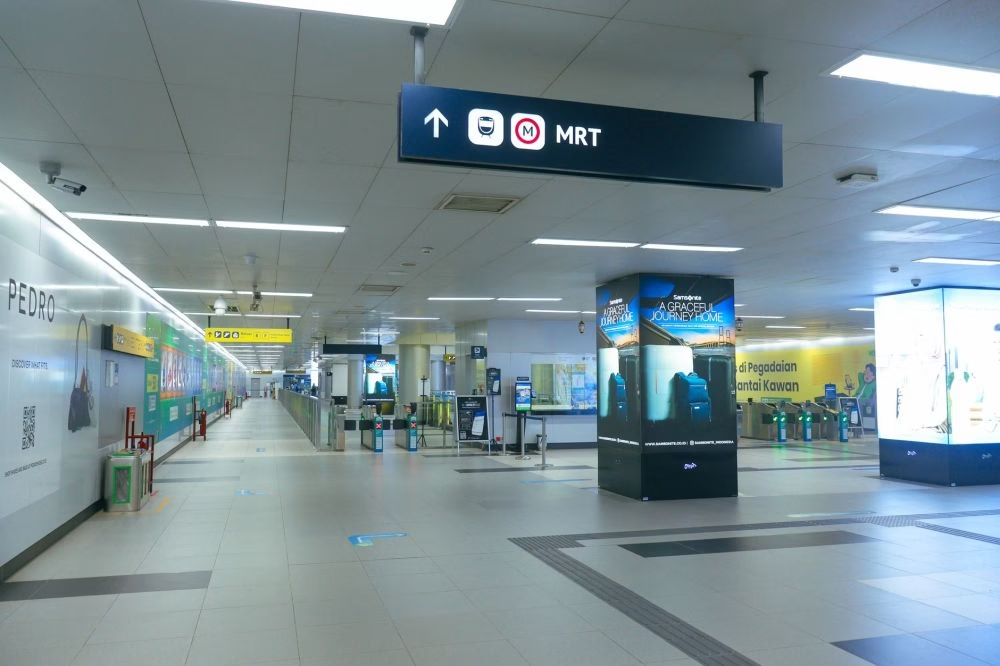
For someone tapping in at a heartland station like Woodlands, Bedok, or Buona Vista each morning, three months of strong reliability means something very practical: you can actually time your journey again. When the network was unreliable, savvy commuters built in generous buffers. Now many find the published schedules are trustworthy enough to plan around.
That said, no network running millions of train-kilometres monthly is entirely immune to isolated incidents. A stray object on the track, a passenger holding doors, a brief signalling glitch: these still happen. The 2-million MKBF figure measures severity and frequency of significant disruptions, not the complete elimination of every hiccup. That distinction matters for managing your expectations.
For tourists and first-timers, this reliability record makes the MRT an even stronger choice over taxis or ride-hailing apps. If you’re planning your first trip, the ultimate 2026 Singapore MRT guide for first-time visitors walks you through payment options to knowing which exit to take at major attractions. And if you’re weighing payment choices, our comparison of the Singapore Tourist Pass, EZ-Link, and SimplyGo covers everything.
What’s Next for MRT Reliability?
Sustaining a streak is harder than starting one. The LTA and operators know that 2 million MKBF now sets the floor expectation, not a ceiling to chase. The next pressure points are already visible: the Thomson-East Coast Line’s continued rollout toward Sungei Bedok, the eventual opening of Cross Island Line (CRL) Phase 1 stations, and ongoing renewal of older NSL and EWL assets.
There’s also scheduled maintenance to watch. Major engineering works like track replacement or signalling upgrades on older lines typically require weekend night windows with full or partial closures. These are planned in advance, so they don’t count against MKBF figures the way unplanned breakdowns do. But they do affect weekend commuters and late-night travellers. Check our page on MRT operating hours for first and last train times across all lines.
A contract worth S$33 million was awarded to Lum Chang Creations in July 2026 for MRT-related works, showing that capital investment continues even during this strong performance period. Public announcements haven’t detailed exactly what the contract covers, but it reflects the LTA’s stance: don’t let good reliability become an excuse to ease off maintenance investment.
Should You Be More Confident in the MRT Right Now?
Honestly, yes. The data as of July 2026 supports it. A clean run of over eight months without a single delay exceeding 30 minutes, across a network covering well over 200 kilometres and serving millions of daily journeys, is genuinely impressive. It’s the kind of performance London or Sydney commuters would envy.
That doesn’t mean either the operators or the public can afford complacency. Networks that coast on good results without continued investment tend to slip backwards. But right now, if you’ve been reluctant to trust the MRT because of disruptive years past, this is as good a time as any to rely on it again. The reliability is real, it’s measured, and it’s verified by an independent authority through LTA’s formal performance reporting.
Before You Tap In
If today’s numbers have you thinking more carefully about your journeys, check out our complete list of MRT stations in Singapore to plan your route, or pull up the latest interactive map for a real-time view of the full network. Three months above 2 million train-kilometres is a record worth knowing about, and genuinely good news for the trains you ride every day.
FAQ
Keep exploring
- Singapore Puts AI to Work on the Metro Network
- Circle Line Stage 6 Opens: CCL Now Complete After 30 Years
- Singapore MRT Operating Hours: First Train, Last Train, and Peak Hours Explained