
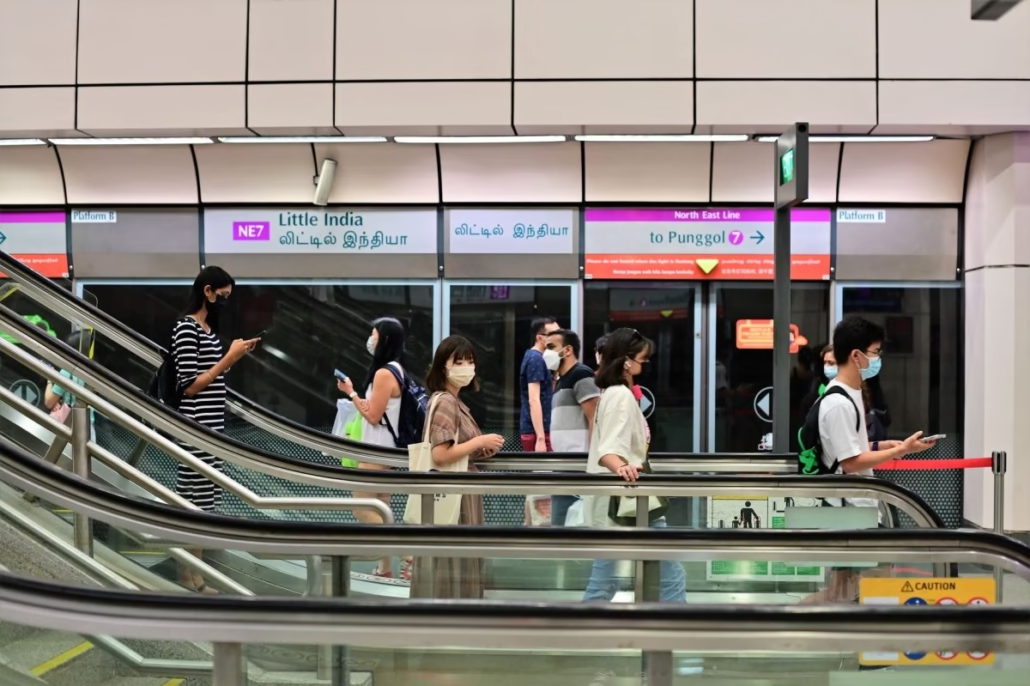
It only takes seconds for a commute to go very wrong. On the evening of 29 July 2026, a power bank in a commuter’s backpack began emitting smoke on a train at Buangkok MRT station, triggering an evacuation and a swift response from station staff. Nobody was hurt, but the incident raised concerns about a growing hazard on Singapore’s trains.
- What happened at Buangkok MRT on 29 July 2026?
- Why do power banks catch fire or emit smoke?
- Is Buangkok MRT station prone to incidents?
- How does this compare to the Woodlands MRT incident?
- What should you do if you smell smoke on the MRT?
- What are the rules around carrying power banks on Singapore public transport?
- Will this happen more often as power banks become more common?
- Practical power bank safety tips for Singapore commuters
- What happens to train services after an evacuation?
- Before you tap in
- FAQ
Just eight days earlier, a power bank caught fire at Woodlands MRT on the Thomson-East Coast Line (TEL), with staff putting it out before any serious damage occurred. Two incidents in under two weeks is a pattern worth taking seriously.
What happened at Buangkok MRT on 29 July 2026?
According to reports by The Straits Times and AsiaOne, the incident unfolded when a power bank inside a commuter’s backpack began smoking while the train was at the station. Passengers in the affected coach were evacuated onto the platform as a precaution. SMRT staff responded promptly, no fire broke out, and no injuries were reported.
Buangkok is station NE15 on the North East Line (NEL), operated by SBS Transit. It serves the Sengkang new town and functions as a busy interchange for commuters heading onto the Sengkang LRT network. During evening peak, NEL trains are packed, which makes any smoke-related incident particularly alarming in an enclosed coach.
The quick evacuation and staff response appear to have prevented something far worse. The power bank didn’t ignite into a full flame, making this a close call rather than a full-blown fire. Still alarming enough to bring that section of the platform to a halt, though.
Why do power banks catch fire or emit smoke?
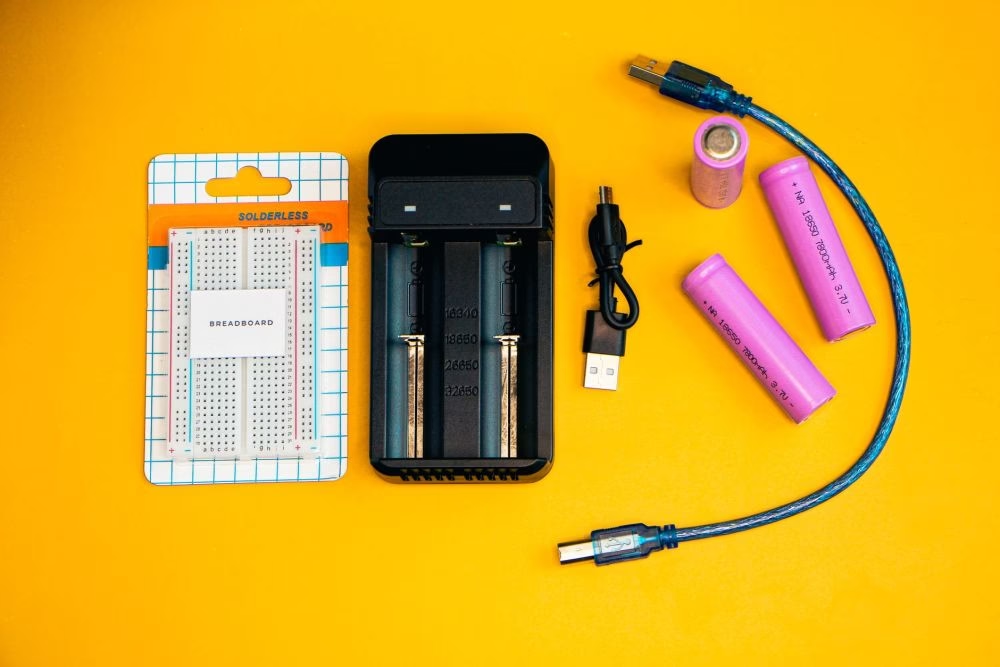
Power banks use lithium-ion or lithium-polymer cells. When they fail, they can undergo thermal runaway, where the battery generates heat faster than it can dissipate it, leading to swelling, smoke, and in the worst cases, fire or explosion.
Physical damage from being dropped or crushed in a bag is one of the most common triggers. Counterfeit or substandard power banks that lack proper protection circuits are another major risk. Overcharging, particularly overnight, accelerates cell degradation. Even quality brands from reputable makers can fail if used heavily over several years.
Singapore’s Land Transport Authority (LTA) and SMRT have not issued a formal ban on power banks as of July 2026, but both have urged commuters to exercise caution with lithium-ion devices in transport settings. You can check the latest advisories on the LTA’s official website.
Is Buangkok MRT station prone to incidents?
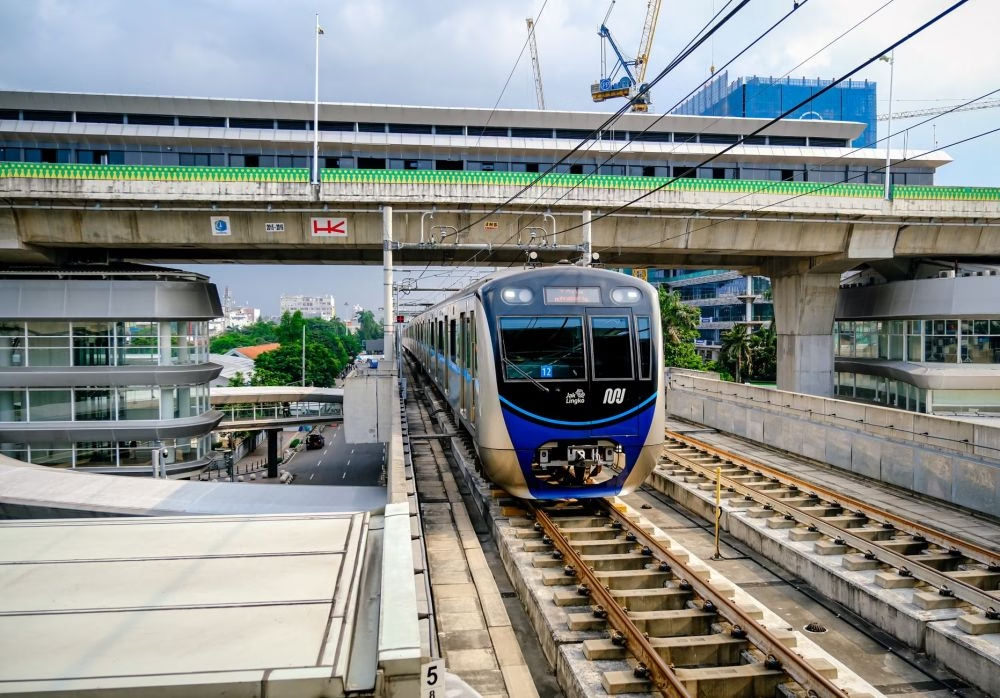
Buangkok itself isn’t particularly incident-prone. It’s a straightforward above-ground station on the NEL, serving a large HDB population in Sengkang. The station sits near Compassvale, one of the larger estates in the north-east. During peaks, it handles significant commuter volumes, especially from residents alighting here before transferring to the Sengkang LRT.
The real issue isn’t the station itself. It’s the growing number of power banks commuters carry daily, often without thought about whether their device is actually safe.
How does this compare to the Woodlands MRT incident?
The Woodlands MRT power bank fire on 21 July 2026 is directly comparable. In that case, the power bank actually caught fire, and station staff physically put it out. You can read the full details in our earlier coverage: Power Bank Fire at Woodlands MRT: What Happened.
Here’s how the two incidents stack up:
| Detail | Woodlands MRT (21 Jul 2026) | Buangkok MRT (29 Jul 2026) |
|---|---|---|
| MRT Line | Thomson-East Coast Line (TEL) | North East Line (NEL) |
| Operator | SMRT | SBS Transit |
| Severity | Fire (put out by staff) | Smoke emission (no ignition) |
| Evacuation | Yes | Yes |
| Injuries | None reported | None reported |
| Device location | Not specified | Inside commuter’s backpack |
Two lithium-ion power bank incidents at Singapore MRT stations within eight days isn’t coincidence. It points to a broader issue that transport authorities may need to address more formally in the months ahead.

What should you do if you smell smoke on the MRT?
Alert the train captain or station staff immediately using the emergency intercom inside the coach. Every NEL train has an intercom panel near the doors. Don’t attempt to handle someone else’s bag yourself unless you’re certain what you’re dealing with. Move away from the smoke source and head towards the nearest door.
If you’re on a platform, find the nearest station staff member or use the help point along the platform wall. SMRT and SBS Transit staff are trained to respond to fire and smoke incidents and carry basic firefighting equipment on site.
Don’t record a video before getting yourself and those around you to safety. It happens more often than it should.
What are the rules around carrying power banks on Singapore public transport?
As of July 2026, there’s no outright ban on power banks aboard Singapore MRT trains. The Civil Aviation Authority of Singapore (CAAS) has restricted power banks in aircraft hold luggage for years, allowing only cabin carry-on of units under a specified watt-hour rating. A similar framework for land transport hasn’t been publicly announced, though recent incidents may accelerate that conversation.
Current guidance from transport authorities is straightforward: carry power banks in good condition, avoid damaged units, and don’t charge devices via power banks in confined public spaces. Our North East Line guide has the full list of stations and travel tips for daily commuters on that corridor.
For broader context, Singapore’s MRT network has been recording strong operational metrics recently, with the network maintaining reliability above two million train-kilometres for consecutive months in 2026. Read more in our piece on MRT reliability milestones this year. A single power bank incident doesn’t undo that track record, but it does highlight that the biggest risks on our trains today often come from what commuters bring on board, not from the trains themselves.
Will this happen more often as power banks become more common?
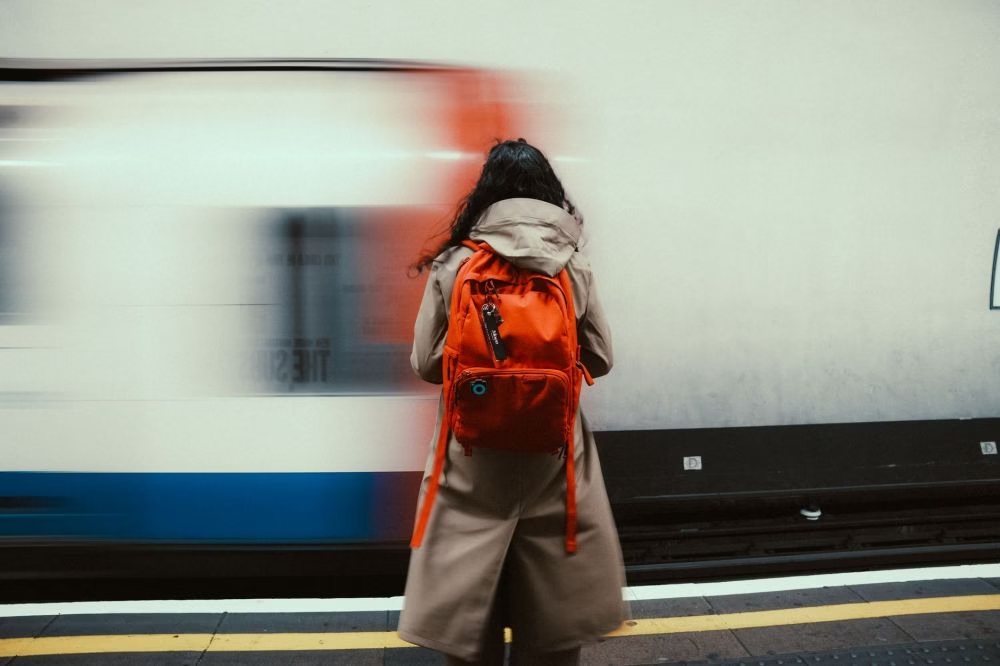
Almost certainly, yes. Power banks are now as common a commuter accessory as earphones or an umbrella. Walk through any carriage on the North South Line or Downtown Line during peak hour and you’ll spot at least a handful of people with cables running from their bags to their phones. That won’t change.
What can change is how commuters think about device maintenance. A power bank that’s two or three years old, has been dropped a few times, and still gets used every day is a potential hazard. You can’t check the internal condition of a battery cell without specialised equipment, so the rule is simple: if it looks swollen, gets warm when not in use, or charges unusually slowly or quickly, retire it.
Singapore’s AI-assisted metro monitoring systems, rolled out in recent years, primarily track train performance and platform conditions. They can’t yet detect thermal anomalies inside passengers’ bags. That gap means human awareness remains the most important safeguard right now. For more on how technology is being applied to the network, see our article on Singapore putting AI to work on the metro network.
Practical power bank safety tips for Singapore commuters
Here’s what you can do right now, before your next commute:
- Check for physical swelling. Run your fingers along the flat sides of your power bank. Any bulging means the cell is compromised. Dispose of it at a designated e-waste collection point, not in your household bin.
- Buy from reputable brands with safety certification. Look for units with proper safety markings. Cheap, unbranded units from online marketplaces are disproportionately represented in battery incidents.
- Don’t charge your power bank overnight, every night. Many people do, and it degrades cells faster over time.
- Store it outside your bag when not in use. A power bank loose in a bag can get compressed or struck by other items. A dedicated pouch helps.
- Know the emergency procedures. Every MRT station has help points and trained staff. The full list of MRT stations and their layouts is on our site if you want to familiarise yourself with where help points are located.
What happens to train services after an evacuation?
When passengers are evacuated from a train at a station, the affected service typically holds at that station until the platform is cleared and staff confirm it’s safe to proceed. On the North East Line, which runs on a driverless, automated system, station-level staff coordination is particularly important during such events. Delays can ripple through the line depending on how quickly the situation resolves.
No significant service disruption was reported after the Buangkok incident on 29 July 2026, which suggests it was contained quickly. If you want to stay on top of real-time disruptions, Google Maps now provides live MRT disruption alerts as of mid-2026, making it easier to catch delays before you tap in at the fare gate.
Before you tap in
Two power bank incidents at Singapore MRT stations in eight days is a reminder that commuter safety isn’t just about trains and infrastructure. It’s about what each of us brings on board. Before your next journey, take thirty seconds to check the power bank in your bag. Stay updated on MRT safety and service changes by browsing our Singapore MRT Maps blog or checking the interactive MRT map for full network coverage.
FAQ
Keep exploring
- Power Bank Fire at Woodlands MRT: What Happened
- MRT Reliability Above 2 Million Train-km for Third Month
- Singapore Puts AI to Work on the Metro Network