
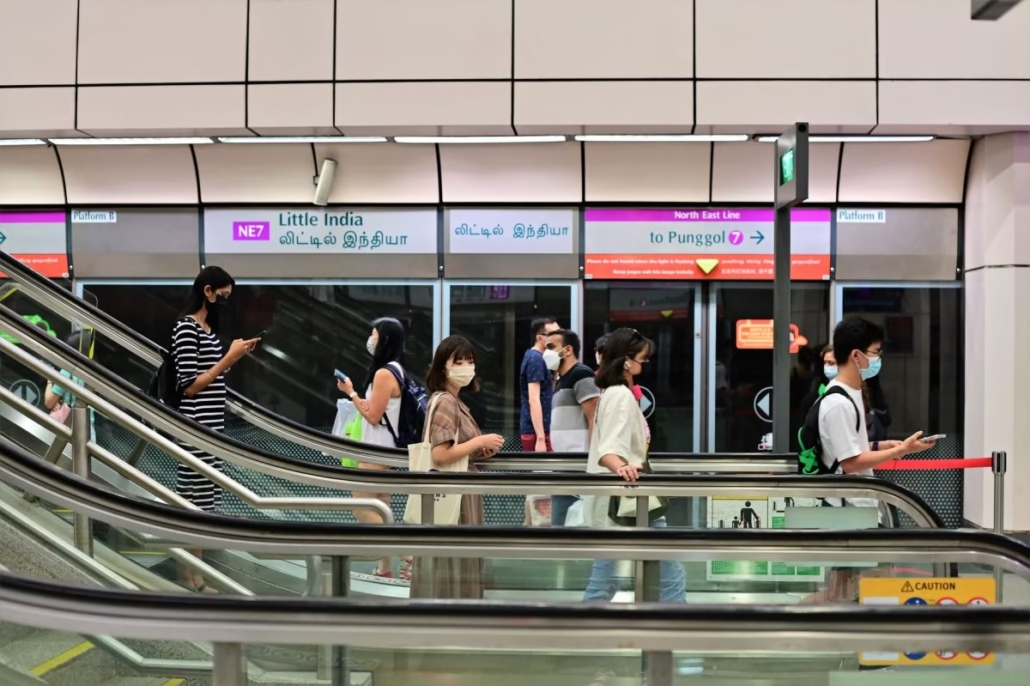
A backpack brushed against another commuter inside a Singapore MRT train on 14 July 2026. That was all it took. Within seconds, a verbal confrontation broke out, a video landed on Stomp, and the clip was being forwarded in group chats before most people had even reached their office.
- What happened in the MRT backpack incident?
- Why do MRT etiquette disputes keep happening?
- Is there an official rule about bags on the MRT?
- Could timing have made this worse?
- How should you handle it if a bag hits you on the MRT?
- What if you are the one with the backpack?
- Is MRT commuter behaviour actually getting worse?
- What can SMRT and LTA do differently?
- Before you tap in
- FAQ
If you ride the MRT every day, you know the feeling. The train is packed, someone swings around without looking, and their bag catches you square in the arm. Once is fine. Twice is annoying. Three times and you’re biting your tongue. So what actually happened this time, and what can every commuter learn from it?
What happened in the MRT backpack incident?
According to Stomp’s report from 14 July 2026, a passenger wearing a large backpack was standing in a moving carriage when the bag made contact with another commuter nearby. Words were exchanged. Things escalated quickly, with one party telling the other, “Your bag is the problem”, a line that became the headline and, honestly, sums up the frustration countless silent commuters feel every single day.
The exact line and station haven’t been officially confirmed. What’s clear from the footage, shared widely online, is that neither party was willing to back down initially, and other commuters nearby looked visibly uncomfortable. A bystander eventually stepped in to calm things down.
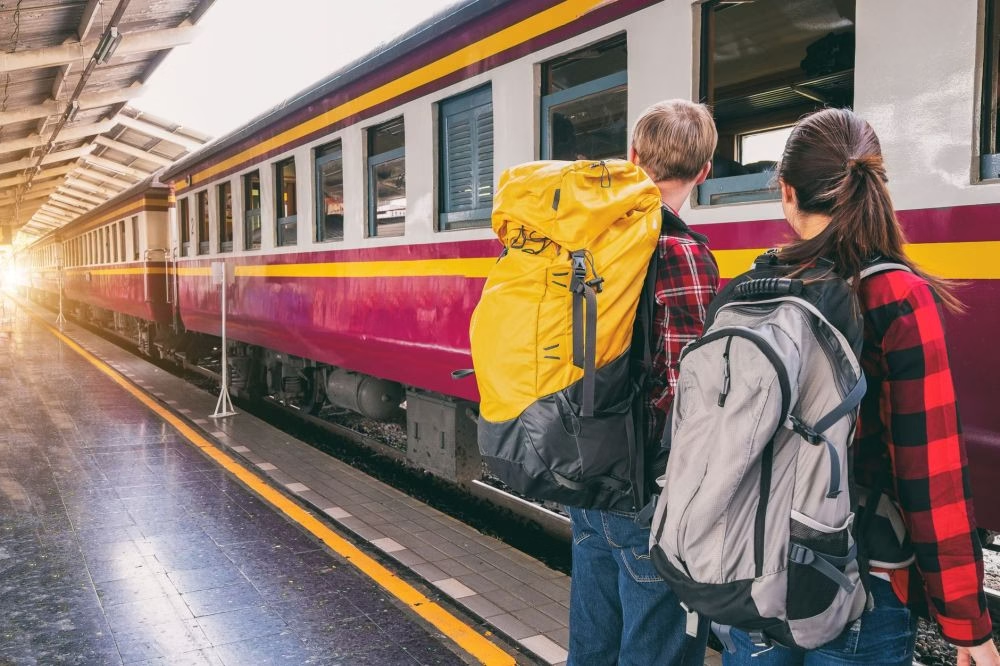
This isn’t a one-off. Stomp has documented dozens of similar disputes over the years, ranging from arguments about bag placement to confrontations over priority seats. What makes this clip stand out is how quickly it escalated from a small physical irritant into a full verbal argument. It’s a window into just how compressed and high-pressure the daily commute feels for many people.
Why do MRT etiquette disputes keep happening?
Singapore’s MRT network carries an enormous number of trips daily across the North South Line (NS), East West Line (EW), Circle Line (CC), Downtown Line (DT), Thomson-East Coast Line (TE), and North East Line (NE). During morning peak hours, typically between 7.30am and 9.00am, and evening peak hours between 5.30pm and 7.30pm, carriages on busy interchanges like Raffles Place, Dhoby Ghaut, and Jurong East can feel genuinely suffocating.
Put dozens of tired, warm, and time-pressured commuters into a small metal tube together, and small irritants become large ones very fast. A backpack swinging into someone is, objectively, a minor inconvenience. But in the context of an already stressful commute, it can feel like the final straw. That’s precisely what seems to have happened here.
There’s also something worth acknowledging about awareness. Many people who wear backpacks on trains genuinely don’t realise how much space those bags occupy, or that they’re brushing against people as they shift their weight. It’s not always deliberate. But the effect is the same either way.
You can check current MRT operating hours and peak-hour schedules at our Singapore MRT operating hours guide to plan your travel outside the worst crush periods if your schedule allows it.
Is there an official rule about bags on the MRT?
The Land Transport Authority (LTA) and SMRT don’t have a specific bylaw mandating that commuters remove their backpacks. However, the official courtesy guidelines, which SMRT and the LTA regularly promote through station signage and campaigns, clearly encourage passengers to be mindful of the space their belongings occupy. This falls under commuter etiquette rather than enforceable law.
The distinction matters. You can’t be fined for keeping your backpack on your back. But you can absolutely be called out by a fellow commuter, and as this Stomp video shows, that call-out can spiral into something far more unpleasant for everyone in the carriage.
What are the actual rules commuters must follow?
Here’s a quick look at what’s a firm rule versus what’s a courtesy expectation on the Singapore MRT:
| Behaviour | Status | Consequence |
|---|---|---|
| Eating or drinking | Prohibited by law | Fine of up to S$500 |
| Durians on the MRT | Prohibited by law | Fine of up to S$500 |
| Flammable or hazardous items | Prohibited by law | Fine and prosecution possible |
| Wearing backpack on back | Not prohibited, courtesy issue only | No official fine; social friction |
| Occupying priority seat when able-bodied | Discouraged but not illegal | Social pressure; no fine |
| Blocking train doors | Strongly discouraged; can obstruct service | Possible LTA action if causing disruption |
The gap between what’s legally enforceable and what’s simply expected socially is where most MRT confrontations live. Both parties in the 14 July incident were, technically, not breaking any law. That doesn’t mean either party was entirely in the right.
Could timing have made this worse?
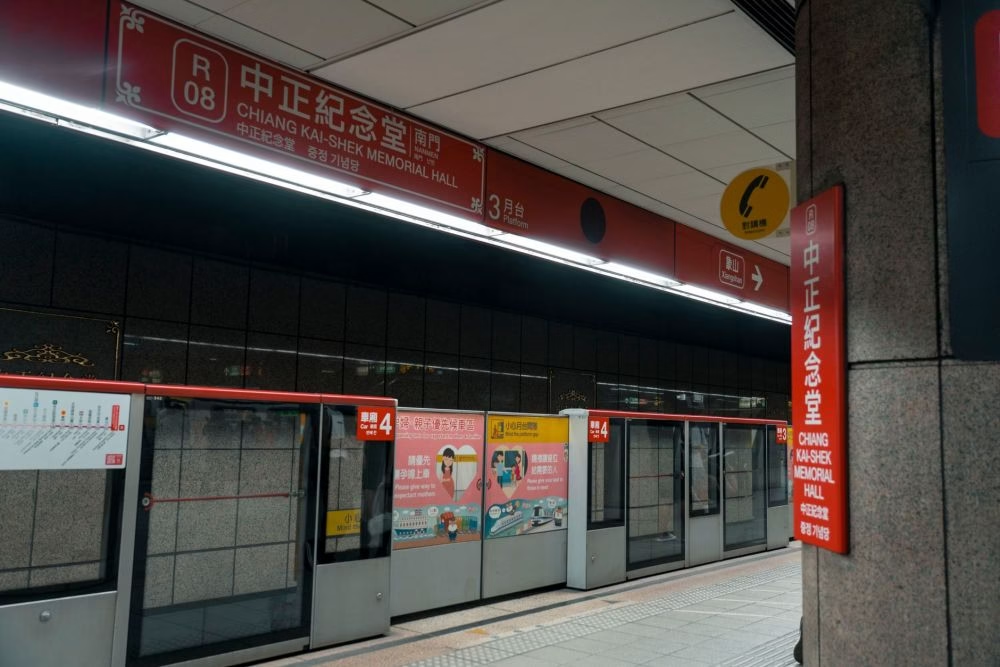
The confrontation occurred on 14 July 2026, just two days after the Circle Line (CCL) finally completed its full loop with the opening of the three new CCL6 stations: Keppel, Cantonment, and Prince Edward Road. You can read everything about those new stations in our CCL6 complete coverage.
The first full weekday on the completed Circle Line MRT was 13 July, and passenger curiosity was high. New commuters exploring the extended line, tourists checking out the new stops near the Greater Southern Waterfront, and regular commuters adjusting to route changes all meant slightly busier-than-usual conditions on parts of the network that week. It’s not confirmed whether the confrontation happened on the Circle Line specifically, but context matters.
There was also something else happening that week. Multiple reports noted that MRT trains were quieter than expected on some lines due to what one office worker described as “World Cup fever”, many commuters working from home or adjusting schedules around match timings. So the network was simultaneously busier in some places and emptier in others. In the packed pockets, any annoyance would have been amplified.
How should you handle it if a bag hits you on the MRT?
This is genuinely useful advice. If someone’s bag brushes you on a crowded train, the most effective thing you can do is say calmly and quietly: “Excuse me, your bag is hitting me, could you hold it in front?” That phrasing is specific, non-accusatory, and gives the other person a clear action to take. Most people respond well to that. They often genuinely didn’t realise.
What tends to escalate situations is accusatory language, a raised voice, or repeating yourself before the other person has had a chance to respond. If someone reacts badly to a polite request, the best outcome is usually to move to another part of the carriage if space allows, or simply wait out the journey. Arguing in a confined moving space with nowhere to go rarely ends well.
What if you are the one with the backpack?
Nobody wants to be the person whose bag starts a confrontation that ends up on Stomp. The simplest prevention is habit. As soon as you board and the doors close, swing your bag to the front or place it between your feet if there’s floor space. On the Downtown Line and Thomson-East Coast Line, where stations run deeper underground and trains tend to accelerate and brake more noticeably, this also prevents your bag from swinging forward and hitting someone when the driver brakes.
If someone asks you to adjust your bag and you genuinely didn’t know you were causing a problem, a simple apology and a shift in position goes a long way. Defensiveness in that moment is what turns a two-second exchange into a two-minute argument captured on someone’s phone.
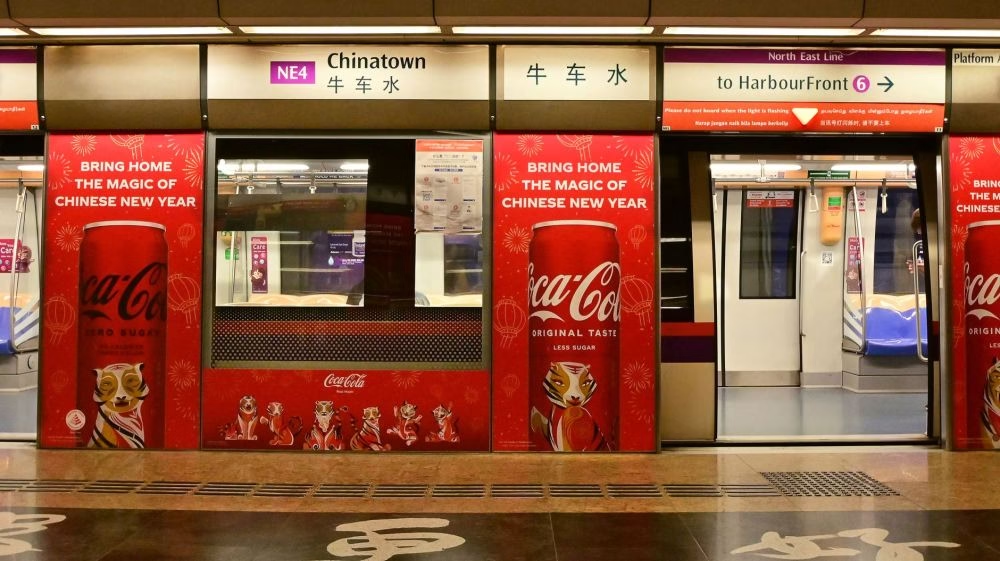
It’s also worth thinking about bag choice. If you’re commuting on a crowded line every day, a slim-profile backpack or a sling bag puts a lot less pressure on the people around you than a hiking-style 30-litre pack. That’s just practical.
Is MRT commuter behaviour actually getting worse?
It’s tempting to say yes every time a Stomp video goes viral, but the picture is more nuanced. The Land Transport Authority (LTA) has been running courtesy campaigns on the network for years, and anecdotally, behaviours like queue-jumping and rushing into trains before passengers alight have improved significantly in the past decade. The fact that a backpack-brush incident makes the news at all arguably suggests that truly serious misconduct is rarer than the headlines imply.
What has changed is the camera. Every commuter now has a smartphone, which means every heated exchange is a potential viral clip. That visibility cuts both ways: it creates accountability, but it also encourages some people to perform outrage for an audience rather than de-escalate quietly.
Separately, Singapore’s MRT network is investing heavily in smart systems. As of July 2026, Singapore is actively deploying AI across the metro network for everything from crowd monitoring to predictive maintenance. Better crowd management tools could, over time, reduce the extreme density that makes small irritants feel so unbearable.
What can SMRT and LTA do differently?
There’s an argument that signage and campaigns only go so far. Some transit systems around the world have experimented with courtesy announcements specifically about bags during peak hours. Tokyo’s metro, for example, has long used audio reminders for passengers to remove backpacks in crowded carriages. Whether Singapore’s operators choose to formalise this further is a policy question, but the demand from commuters for clearer norms seems to be there.
On the infrastructure side, the completion of the Circle Line in July 2026 gives more commuters alternative routing options, which should reduce crowding on the most congested sections of the East West Line and North South Line over time. More route choices mean trains that are slightly less packed, which means fewer opportunities for bags to become confrontations. You can see how the network now looks on our updated full list of MRT stations in Singapore.
Longer term, the Cross Island Line (CRL), currently under construction, will add even more capacity and route diversity. Every additional line takes pressure off the existing ones. That’s cold comfort for the commuter who got hit by a backpack this week, but it’s part of the picture.
Before you tap in
The MRT backpack confrontation that went viral on 14 July 2026 isn’t really about one bag or one argument. It’s about what happens when a large number of people share a small space under pressure every single day, without always thinking about how their habits affect those around them. Small adjustments, holding a bag in front, standing clear of the doors, speaking calmly if something bothers you, cost nothing and prevent a lot. If you want to brush up on the full picture of commuting smart in Singapore, our MRT fares, ticketing and practical info guide is a solid next read, and our interactive Singapore MRT map will help you plan a route that avoids the busiest interchanges at the worst times of day.
FAQ
Keep exploring
- Boys Who Broke Into MRT Train Cabin: What Happened
- Singapore MRT Operating Hours: First Train, Last Train, and Peak Hours Explained
- Fares, Ticketing & Practical Info: Your 2026 Singapore MRT Guide