Last updated . Facts checked against LTA announcements.
A Glimpse into the History of Singapore Botanic Gardens
The gardens were founded in 1859 by an agri-horticultural society during the British colonial period. What began as a place for shared public enjoyment gradually grew into a serious research and conservation centre. The gardens also played a key role in shaping Singapore into a Garden City under the late Prime Minister Lee Kuan Yew.
One of the gardens’ most significant contributions was research into rubber cultivation, work that helped turn rubber into one of Southeast Asia’s most important crops. Today the Singapore Botanic Gardens serves millions of local and international visitors each year as a centre for research, education, conservation and recreation.
Getting around Singapore? Find any station on the interactive MRT map, or save the PDF map to use offline.
A Journey Through Nature
Covering over 82 hectares, the gardens are organised into several distinct zones, each offering its own experience. Here are the main attractions worth your time.
-
The National Orchid Garden
The National Orchid Garden is the centrepiece of any visit to Singapore Botanic Gardens. It is home to more than 1,000 species and around 2,000 hybrids, displayed across carefully landscaped themed areas. The Cool House is particularly worth a stop, recreating a high-altitude environment where rare exotic orchids thrive.
-
The Rainforest
Within the gardens sits a 6-hectare fragment of primary rainforest, far older than the gardens themselves. Ancient trees tower above you while thick undergrowth closes in on either side. The Rainforest Trail gives a real sense of what Singapore’s landscape looked like before widespread development, and it is well worth the walk for anyone interested in nature.
-
The Evolution Garden
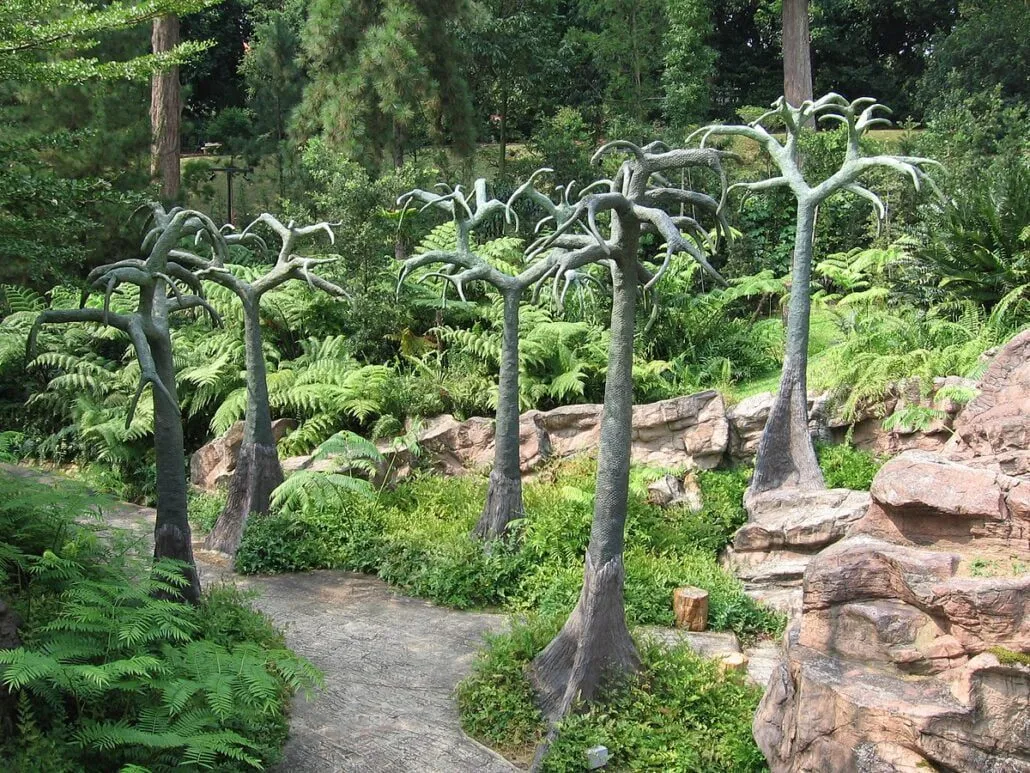
The Evolution Garden takes you through the history of plant life on Earth, from the age of ferns and mosses right through to the present day. Rock formations, water features and carefully arranged plant displays tell the story in a way that is easy to follow and genuinely engaging. It is one of the more educational corners of the gardens, and children tend to find it interesting too.
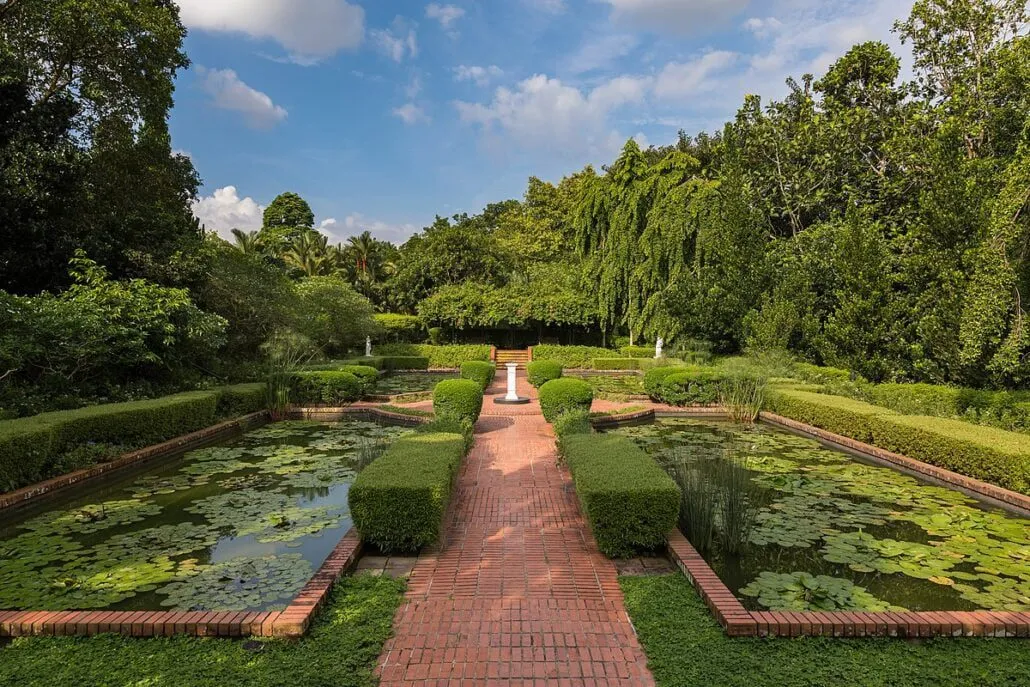
Sundial Garden in Singapore Botanic Gardens
Source: Wikipedia
Singapore Botanic Gardens, Evolution Garden
Source: Wikipedia-
The Healing Garden
The Healing Garden spans 2.5 hectares and focuses on medicinal plants, ranging from herbs used in traditional medicine to species with more modern therapeutic uses. It is divided into themed sections that show how different plants have been applied to human health across cultures and centuries. The atmosphere is calm and quiet, making it a good spot to slow down and read the interpretive signage properly.
-
The Ginger Garden
The Ginger Garden is free to enter and sits close to one of the gardens’ main entrances. It features more than 250 species from the ginger family, including familiar culinary varieties such as turmeric and cardamom. Waterfalls, ponds and sculptures are spread throughout the landscaped grounds, and the water lily pond is home to the Giant Amazon Water Lily, which is well worth seeing up close.
-
The Botany Centre and Tanglin Gate
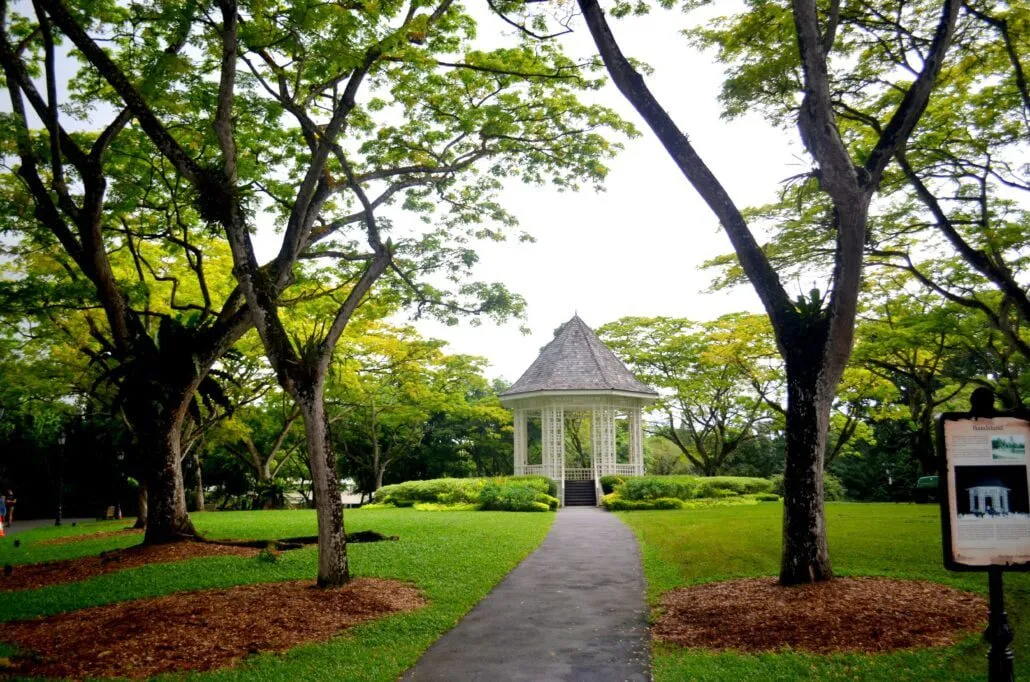
Tanglin Gate is the oldest entrance to the Singapore Botanic Gardens and leads you straight into the heart of the greenery. The Heritage Museum and Library of Botany and Horticulture are both located here. The Heritage Museum traces the history of the gardens and celebrates the people who shaped it, while the library holds an extensive collection of botanical books, journals, and rare manuscripts.
-
Swan Lake
Swan Lake is one of the most peaceful spots in the gardens. It is home to a pair of mute swans, gifted to the gardens by the city of Amsterdam. The surrounding green space is well suited to a quiet sit-down, a picnic, or some unhurried photography.

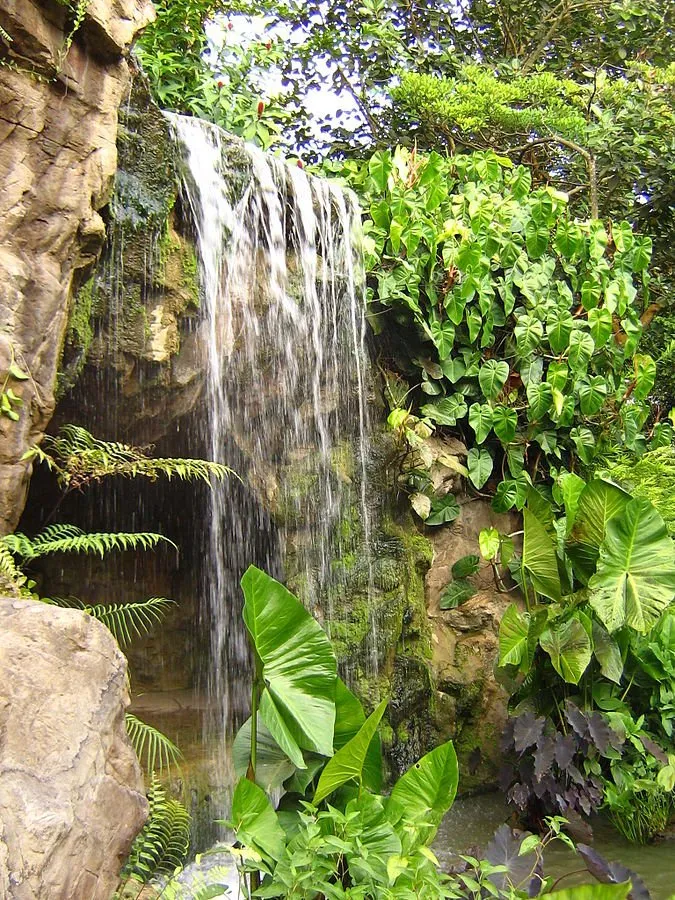
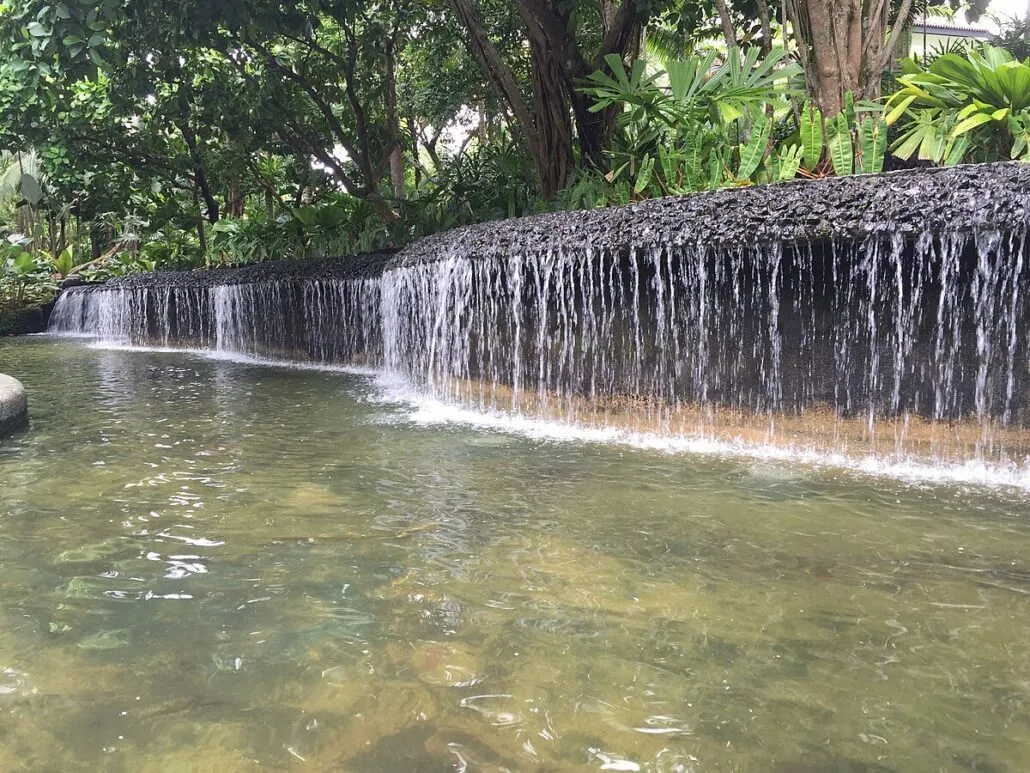
Singapore Botanic Gardens waterfall
Source: Wikipedia-
Jacob Ballas Children’s Garden
The Jacob Ballas Children’s Garden gives younger visitors a hands-on way to learn about the natural world. There is a treehouse, water-play areas, and plenty of space to climb and dig. The garden also runs educational programmes and workshops, which makes it a solid choice for a family day out.
-
The Eco-Garden and Eco-Lake
The Eco-Garden showcases sustainable planting, focusing on species that need little water and minimal upkeep. Eco-Lake supports a variety of wildlife including fish, herons, and turtles, and is part of a broader water conservation effort within the gardens. Together, they offer a practical illustration of how natural ecosystems can be maintained within an urban setting.
-
Symphony Lake and Palm Valley
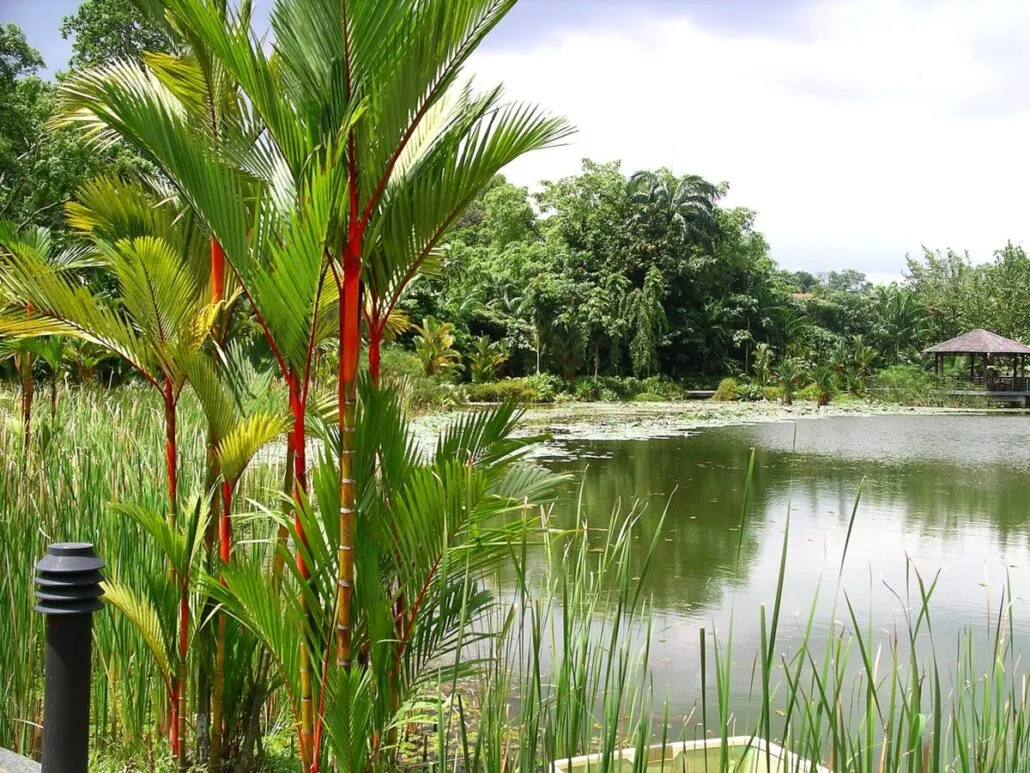
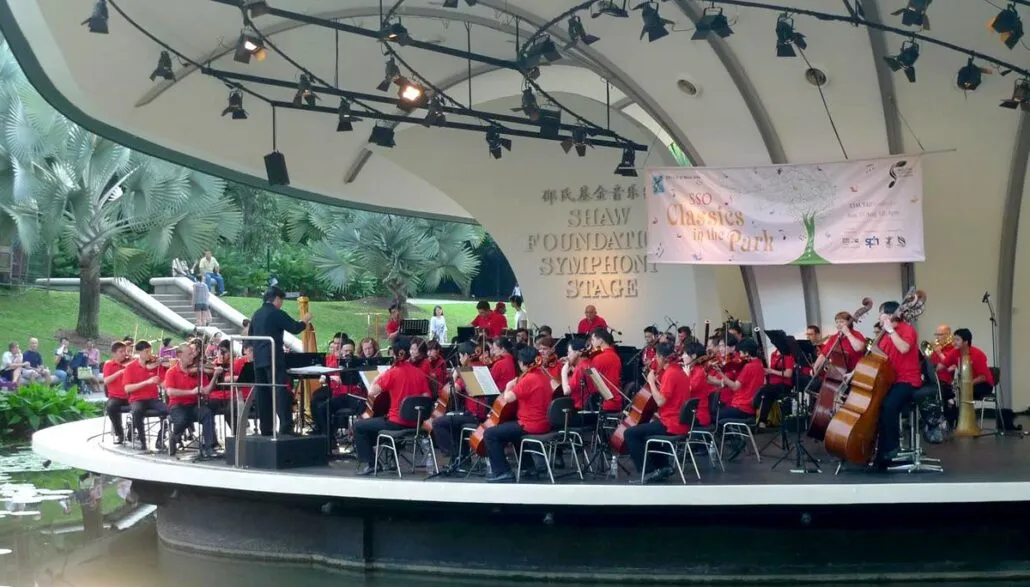
Palm Valley is a wide open lawn shaded by tall palms and centred on Symphony Lake. The Shaw Foundation Symphony Stage here hosts free outdoor concerts throughout the year, so you may well turn up to find live music drifting across the water. It is a popular spot for picnics and lazy afternoons on the grass, and draws families and couples looking for a quiet escape.
Symphony Lake Singapore Botanic Gardens
Source: Wikipedia
Singapore Symphony Orchestra Concert in Park
Source: Wikipedia-
The Fragrant Garden
The Fragrant Garden is planted with species chosen for their scent rather than their looks. Jasmine, ylang-ylang and frangipani all feature, filling the air with distinct perfumes as you walk through. Visit in the morning or late afternoon, when the fragrances tend to be strongest.
-
The Bonsai Garden
The Bonsai Garden is a quiet corner of the gardens that rewards a slow visit. It displays bonsai trees that have been carefully tended over many years, and the craftsmanship on show is genuinely impressive. Take your time here and you will get a real sense of the patience these miniature trees demand.
-
The Sun Garden
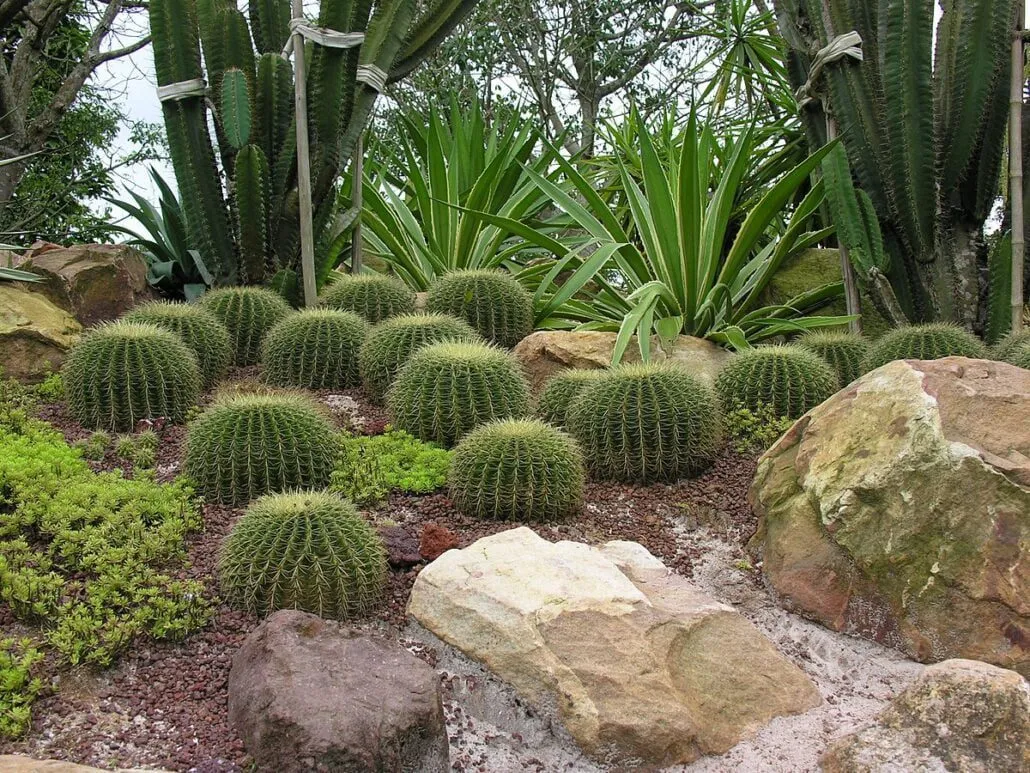
The Sun Garden brings together a focused collection of arid-adapted plants, including a wide range of cacti and succulents. Many of the species on display are unusual or rarely seen in this part of the world. If you have an interest in botany or horticulture, it is worth a look for its distinctive landscape alone.
Sun Garden Singapore Botanic Gardens
Source: WikipediaSustainable Practices at the Singapore Botanic Gardens
The gardens take their environmental responsibilities seriously, with several ongoing initiatives:
- Water conservation: Rainwater is collected through a network of ponds and streams, reducing the need for irrigation.
- Energy efficiency: Solar panels and energy-efficient lighting help cut electricity use across the grounds.
- Waste management: Organic waste is composted into fertiliser, and recycling programmes are in place to reduce landfill.
- Biodiversity conservation: The gardens cultivate threatened plant species and support habitats for local wildlife.
Visiting the Singapore Botanic Gardens: Practical Information
Here is what you need to know before you go.
-
Opening Hours
The gardens are open daily from 5 am to midnight. The National Orchid Garden has its own hours: 8:30 am to 7 pm, with last entry at 6 pm.
-
Admission Fees
The main gardens are free to enter. There is a separate admission charge for the National Orchid Garden. Concession rates apply for seniors, students and children. Check the official National Parks Board website for the current fee breakdown before you visit.
Water flowing Botanic Gardens
Source: Wikipedia-
Getting There
- MRT: The most convenient option is Botanic Gardens station, served by both the Circle Line and the Downtown Line, with direct access to the Bukit Timah Gate.
- Bus: Several bus services stop near the various garden entrances.
- Taxi or car: Parking is available at the Tyersall Gate and Nassim Gate entrances.
-
Tips for Visitors
- Wear comfortable shoes: The grounds are large and you will cover a fair bit of ground on foot.
- Bring water: Singapore is warm and humid, so stay hydrated throughout your visit.
- Check the weather: An overcast morning is often more comfortable for walking than the midday heat.
- Respect the wildlife: Do not feed or disturb any animals, and keep to the paths.
- Take your time: There is a lot to see. A relaxed pace makes the visit far more enjoyable.
Conclusion
The Singapore Botanic Gardens is far more than a patch of greenery in a dense city. It is a living collection of ecosystems, and its UNESCO World Heritage status since 2015 reflects how seriously Singapore takes its natural and cultural heritage. From the National Orchid Garden to the Rainforest trails, every part of the gardens offers something genuinely different. It is worth more than one visit.
Frequently asked questions
Which MRT lines serve Botanic Gardens station?
Botanic Gardens station is served by both the Circle Line and the Downtown Line. The Circle Line is operated by SMRT, while the Downtown Line is operated by SBS Transit. Both lines stop at the same station, giving you a choice of routes depending on where you are travelling from.
Is Singapore Botanic Gardens a UNESCO World Heritage Site?
Yes, Singapore Botanic Gardens was inscribed as a UNESCO World Heritage Site in 2015. It is the first and only tropical botanic garden in the world to receive this status, recognised for its outstanding contribution to science, education and conservation over more than 150 years.
Is the Singapore Botanic Gardens free to visit?
The main gardens are free to enter and open daily from 5 am to midnight. The National Orchid Garden has a separate admission charge, with concession rates for seniors, students and children. Check the National Parks Board website for current fees before you go.
How long should I spend at Singapore Botanic Gardens?
Most visitors find that two to four hours covers the main areas comfortably, though you could easily spend a full day if you want to explore every garden. The grounds cover over 82 hectares, so a relaxed pace is better than rushing through. A return visit to catch areas you missed is well worth it.
Are there free concerts at Singapore Botanic Gardens?
Yes, free outdoor concerts are held regularly at the Shaw Foundation Symphony Stage beside Symphony Lake in Palm Valley. You may arrive to find a performance already under way, particularly on weekends. Check the National Parks Board or Singapore Botanic Gardens website for the current schedule before visiting.
-
-