
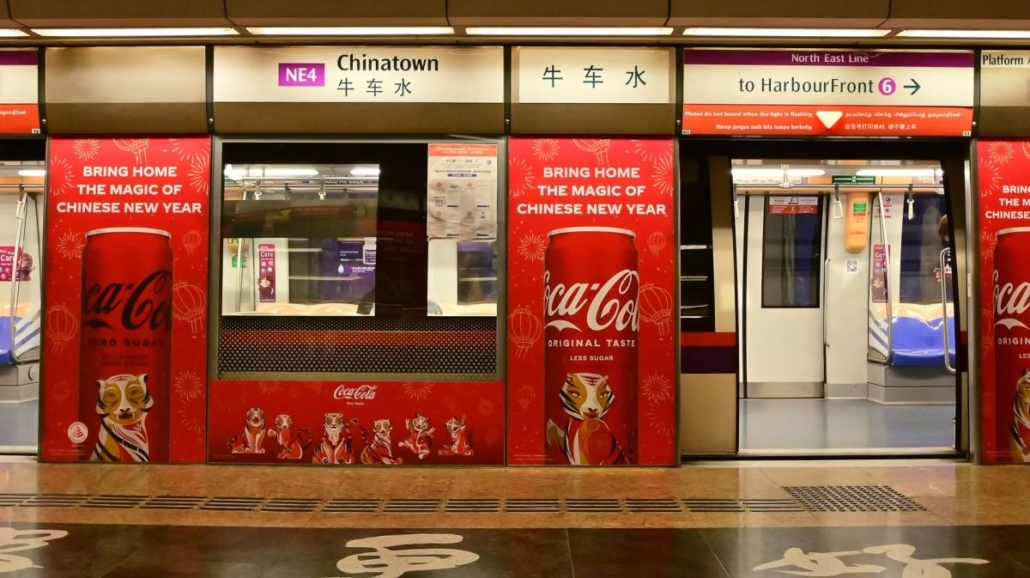
After more than 30 years, commuters in the Southern Corridor watched every other district get better rail access. That wait is over. The three new Circle Line Stage 6 stations, Keppel (CC29), Cantonment (CC30) and Prince Edward Road (CC31), opened for public preview on 4 July 2026 and are now fully operational.
In this guide
- What Is CCL6 and Why Does It Matter?
- Keppel Station (CC29): What to Expect
- Cantonment Station (CC30): The Deepest of the Three
- Prince Edward Road Station (CC31): The One That Changes the Most for Queenstown Residents
- How Do Fares Work at the New CCL6 Stations?
- What Does the Completed Circle Line Mean for Your Commute?
- Operating Hours and Frequency at CCL6 Stations
- Is the Area Around the Stations Worth Visiting Right Now?
- Before You Tap In
- FAQ
We walked through all three stations before the official opening. Here is what you actually need to know: which exits to use, what the neighbourhood feels like, how much fares cost, and whether these stations fit your commute.
What Is CCL6 and Why Does It Matter?
CCL6 completes the Circle Line after construction spanning more than two decades. The CC now forms a continuous ring linking Dhoby Ghaut, Bishan, Serangoon, Paya Lebar, Bayfront and HarbourFront with no dead-end terminus. For a full visual, our Circle Line MRT guide has an up-to-date interactive map.
Before CCL6, getting between HarbourFront and Dhoby Ghaut meant taking the North East Line or East-West Line and transferring at least once. Now you ride a single line all the way around. For someone travelling between one-north and Marina Bay, the time saving is real.
The three new stations close a final 4-kilometre gap and will benefit over 10,000 commuters daily with shorter rides.
Keppel Station (CC29): What to Expect
Keppel is the first of the three new stations coming from HarbourFront, sitting in one of Singapore’s most actively redeveloped pockets. The area stretching towards Tanjong Pagar and the former railway station is mid-transformation. Right now, the immediate surroundings are still a little sparse at street level, but give it two or three years and this will be unrecognisable.
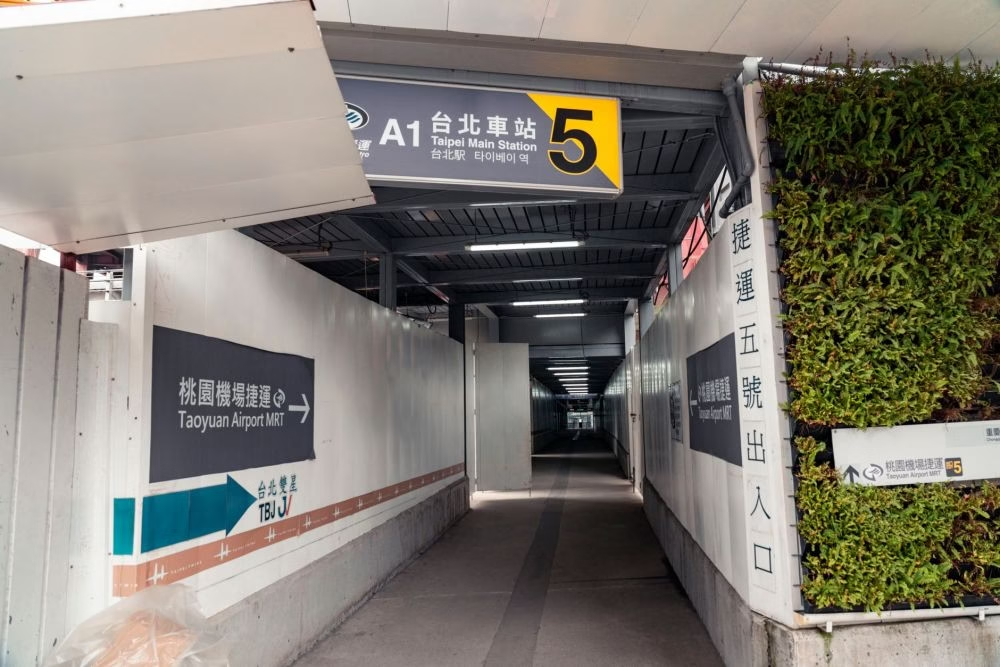
The station itself is clean and well-signed. Platform screen doors are in place as you’d expect. The concourse is spacious with lifts and escalators positioned sensibly. If you’re carrying luggage or travelling with a pram, the layout is straightforward.
Amenities are still developing, but Tanjong Pagar Plaza hawker centre is a short walk for a proper meal. Buses already serve the area well, so connectivity on the ground is solid even before the new station’s full impact kicks in.
Cantonment Station (CC30): The Deepest of the Three
Cantonment is architecturally the most interesting of the three and requires the longest escalator ride. This station sits deep underground, and you’ll feel the descent. If you get impatient on escalators, you’ll notice it here. That said, it’s not dramatically longer than the deeper stations on the Thomson-East Coast Line, so nothing you haven’t handled before.
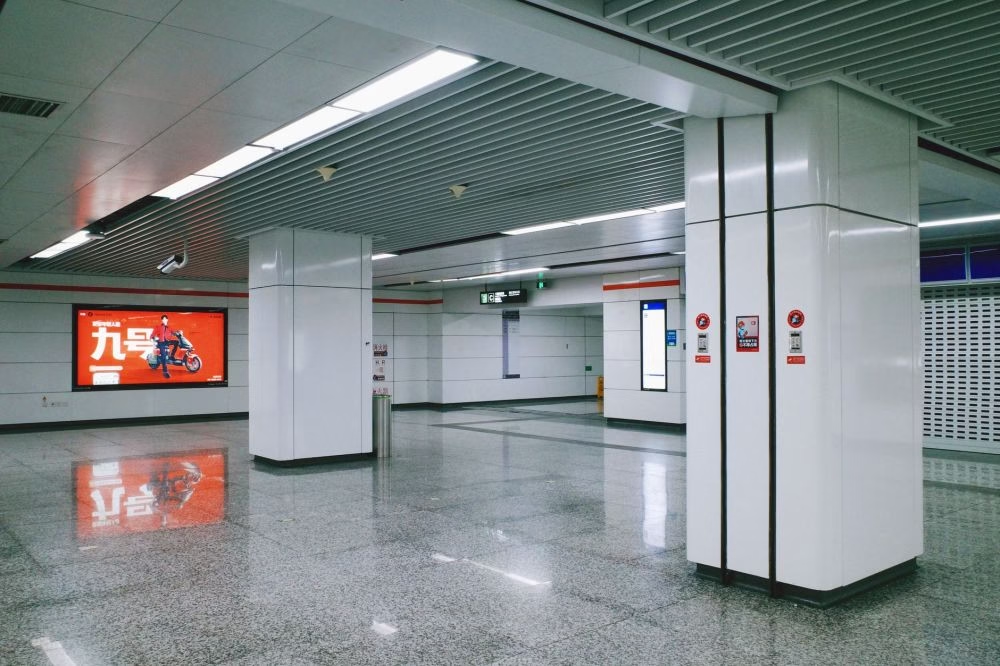
The station serves the Cantonment Road and Chinatown fringe, giving residents and workers in that belt a new option that previously meant a bus or a walk to Outram Park or Tanjong Pagar. It’s also convenient access for people heading to the Singapore Police Force Cantonment Complex, just a short walk from the exits.
Wayfinding inside is clear. The Circle Line’s yellow signage runs throughout, and directional signs to nearby streets are posted at exits. With several HDB blocks and older shophouses nearby, this station will genuinely serve residents rather than just act as a commuter throughpass.
Prince Edward Road Station (CC31): The One That Changes the Most for Queenstown Residents
Prince Edward Road arguably makes the biggest difference to daily life in its immediate neighbourhood. It serves a pocket of Queenstown that was never particularly well-connected by rail. Previously, residents faced a walk to Queenstown on the East-West Line or a bus to Outram Park. Neither was especially convenient for people living closer to the Prince Edward Road corridor.
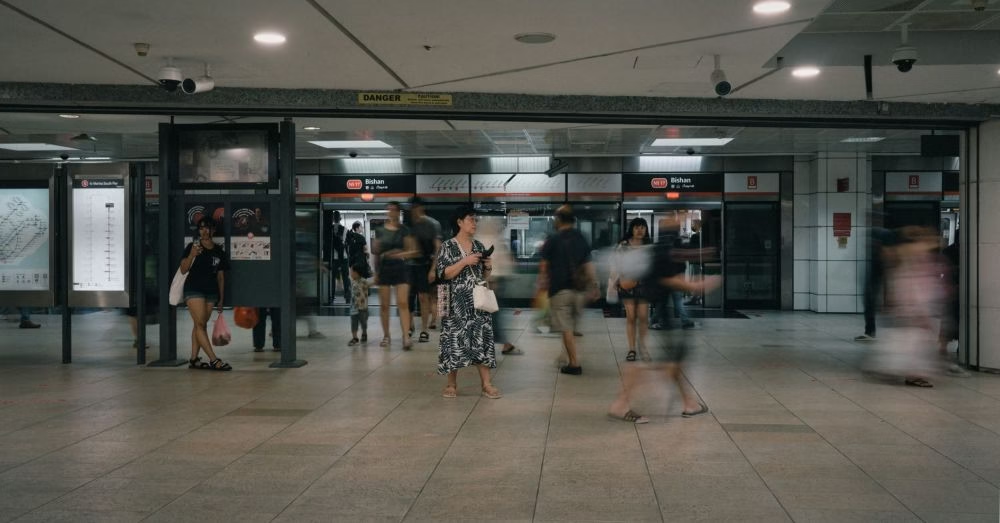
The station entrance blends into the existing streetscape without jarring. Inside, it follows the same pattern as the other two CCL6 stations: clean finishes, good lighting and clear signage. The platform is underground and well-proportioned. Even during the preview crowds on 4 July, it didn’t feel cramped.
Queenstown residents are proud of their neighbourhood. The HDB estates here are among Singapore’s oldest, and many residents have lived here for decades. Having a new MRT station within walking distance is a significant quality-of-life improvement. The hawker centre at Queenstown MRT has always been a local favourite, and while it was previously a short bus ride away, Prince Edward Road station now gives residents an alternative rail entry into the network. Our full list of MRT stations in Singapore shows how the rest of the network connects this area.
How Do Fares Work at the New CCL6 Stations?
Fares at all three CCL6 stations follow Singapore’s standard distance-based structure under SimplyGo. There are no special surcharges for the new stations. You tap in and tap out as normal, and your fare is calculated on total distance travelled.
Here’s a rough guide to typical adult fares as of July 2026. Concession cardholders, including students and seniors, pay reduced rates. Always check the LTA website for the most current fare tables, as these are subject to periodic revision.
| Journey Example | Approx. Adult Fare | Approx. Travel Time |
|---|---|---|
| Keppel to Dhoby Ghaut | S$1.50, S$1.80 | Around 20 min |
| Cantonment to Bayfront | S$1.40, S$1.70 | Around 15 min |
| Prince Edward Road to Bishan | S$1.80, S$2.20 | Around 30 min |
| Keppel to HarbourFront | S$1.19, S$1.40 | Around 5 min |
| Prince Edward Road to Marina Bay | S$1.60, S$1.90 | Around 20 min |
All three stations accept EZ-Link cards, NETS FlashPay, contactless credit and debit cards, and SimplyGo-linked accounts. If you’re a visitor trying to figure out the best payment option, our guide on Singapore Tourist Pass vs EZ-Link vs SimplyGo breaks it down. For a broader look at ticketing, including mobile wallets, the article on how to pay for the Singapore MRT covers everything.
What Does the Completed Circle Line Mean for Your Commute?
With the Circle Line now a complete loop, you can travel between any two points on the CC without doubling back or transferring to another line mid-journey. That’s a genuine structural improvement, not just a symbolic one. Over 10,000 commuters a day will benefit from shorter journey times now that CCL6 is open.
The biggest winners are people who were previously forced through Outram Park on the North East Line to reach HarbourFront, or who had to detour through the city centre just to connect to the southern part of the network. The CC now handles that trip directly.
The completed loop also adds redundancy. If there’s a disruption on the North-South or East-West Line, the Circle Line now provides an alternative path around a larger portion of the city. That matters far more on disruption day than it does now. Our article on how the new Circle Line stations mean shorter rides for over 10,000 commuters has more on specific journey time improvements.
Operating Hours and Frequency at CCL6 Stations
The three new stations operate on the same schedule as the rest of the Circle Line. First trains typically depart around 5.30am, and the last trains run close to midnight, though exact timings vary slightly by station and direction. Our guide on Singapore MRT operating hours has the full breakdown across the network.
Train frequency during peak hours is typically every three to five minutes. Off-peak, expect intervals of around six to eight minutes. These figures are standard for any established MRT line, and the new CCL6 stations are integrated into the same timetable and signalling system as the rest of the CC, so there are no frequency gaps at the new stations.
One thing to note: the rest of the MRT network is undergoing scheduled maintenance adjustments right now. For instance, the Downtown Line (DTL) is operating on adjusted hours on Fridays and Saturdays from 10 July to 5 September 2026. If your journey involves transferring to the DTL, check current schedules before you travel. More on Downtown Line timetables is available on our dedicated page.
Is the Area Around the Stations Worth Visiting Right Now?
Honestly, it depends what you’re looking for. The Greater Southern Waterfront transformation is still years from completion, so visitors hoping to find a polished waterfront promenade outside Keppel station are a bit early. Construction activity in that corridor is very real and very visible.
That said, the surrounding neighbourhoods have genuine character. Cantonment and the Chinatown fringe have heritage shophouses, good coffee and interesting streets that reward a slow walk. Prince Edward Road connects you to the older, quieter parts of Queenstown, which feel different from the newer HDB towns further north.
For anyone building an itinerary around the MRT, the completed Circle Line now makes it easier to string together the southern half of the city without constant transfers. Our 3-day Singapore MRT itinerary has been updated to reflect the new CCL6 stations for anyone planning a trip.
Before You Tap In
The three CCL6 stations are open, properly signed and fully integrated into the MRT network as of 10 July 2026. Whether you’re exploring a new commute route, visiting the southern part of the city, or simply curious about what 30-plus years of planning finally looks like in person, these stations are worth the trip. Check our updated Circle Line overview for the complete station list and connections, and grab the latest Singapore MRT map PDF to carry with you.
FAQ
Keep exploring
- Circle Line Stage 6 Opens: CCL Now Complete After 30 Years
- New Circle Line Stations: Shorter Rides for 10,000+ Commuters
- Circle Line Stage 6 Public Preview: Free Rides on 4 July 2026