
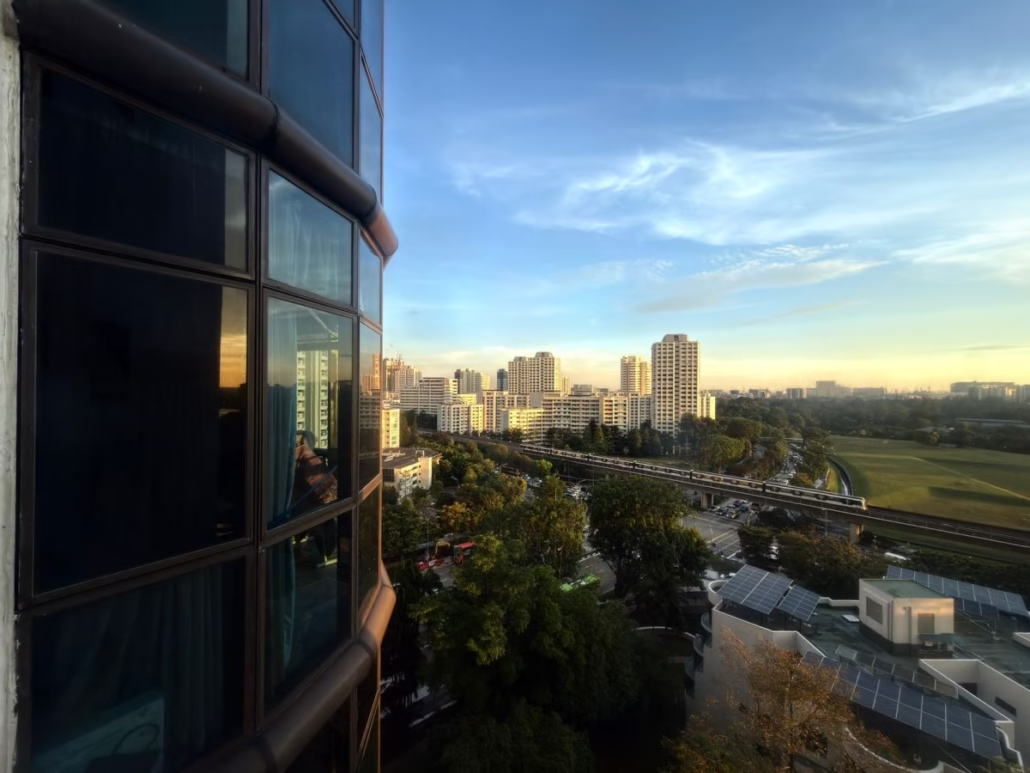
What Is URA Actually Proposing for Upper Changi?
The Urban Redevelopment Authority (URA) is reviewing land density limits around MRT stations in Upper Changi, potentially clearing the way for significantly more homes to be built in the area. As of September 2026, this review is ongoing, with URA weighing whether current plot ratio caps still fit a neighbourhood that’s now well-connected to the rail network.
- What Is URA Actually Proposing for Upper Changi?
- Which MRT Stations Are We Talking About?
- Why Would URA Raise Density Limits Near MRT Stations?
- How Does This Connect to the Civil Servants and Unannounced Stations Controversy?
- What Could Higher Density Actually Look Like on the Ground?
- What Does This Mean If You're Thinking of Buying in Upper Changi?
- How Does Upper Changi Compare to Other Transit-Oriented Precincts?
- Are There Any Concerns About Raising Density Here?
- The Bigger Picture: Singapore's Transit-Led Housing Strategy
- Before You Tap In
- FAQ
If you live in Upper Changi or you’ve been eyeing property there, this matters. A change in density limits isn’t just bureaucratic shuffling. It shapes how your neighbourhood looks in ten years, what your commute becomes, and potentially what your property is worth.
So why is URA looking at this now, and what does it actually mean for your daily commute? Let’s break it down.
Which MRT Stations Are We Talking About?
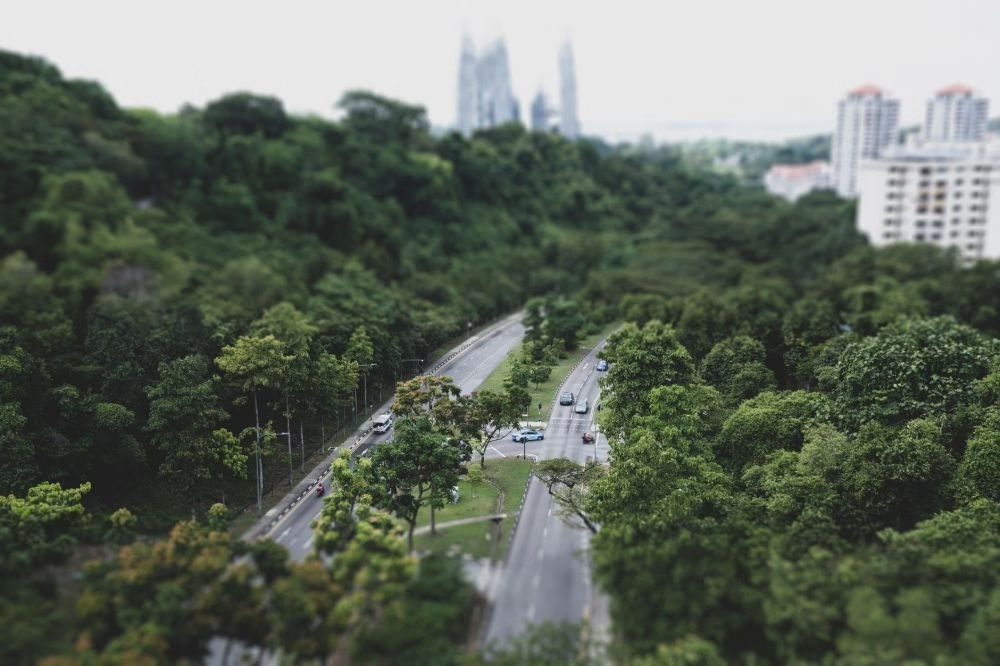
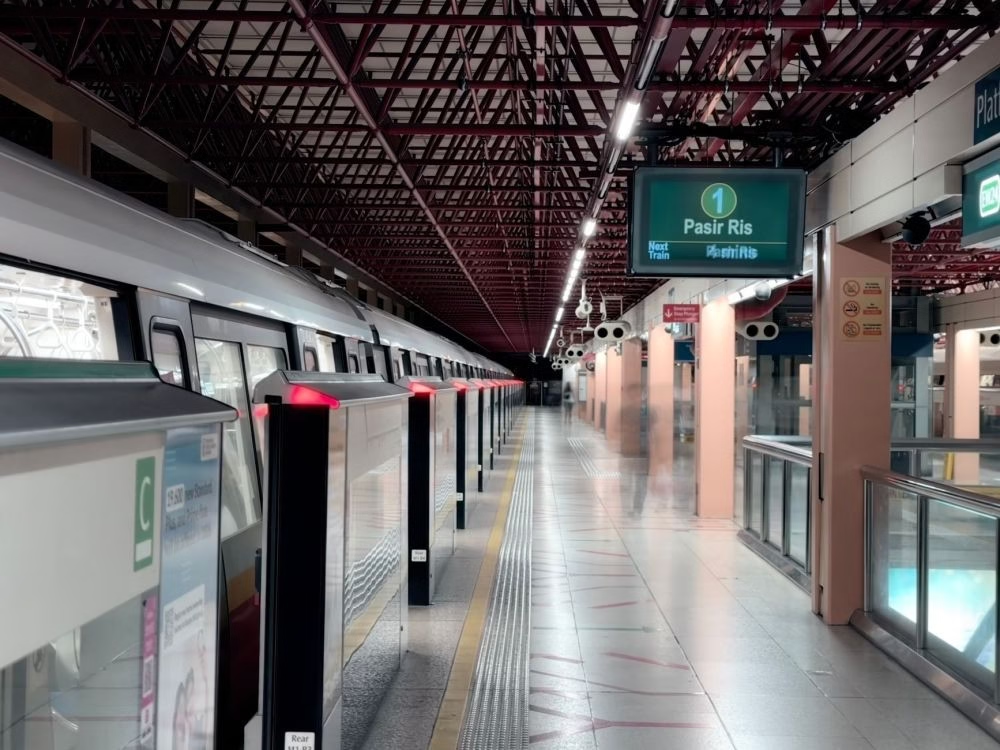
The Upper Changi area is served by stations on the Thomson-East Coast Line (TEL), specifically Upper Changi (TE31) and the nearby Expo (TE31 interchange with the East-West Line). Upper Changi MRT sits along the Thomson-East Coast Line, which has rapidly become one of Singapore’s most strategically important rail corridors since its phased opening began in 2020.
The East-West Line (EWL) also serves this corridor at Expo and Changi Airport, giving the area genuine multi-line rail access. You can check the full picture of all MRT stations in Singapore to understand how Upper Changi fits within the broader network.
Upper Changi MRT is comparatively quiet by Singapore standards, but that’s precisely the point. The surrounding land hasn’t been built up at the density you’d expect given how strong the rail connectivity already is. URA’s review appears to be addressing that gap head-on.
Why Would URA Raise Density Limits Near MRT Stations?
Singapore’s planning philosophy has long tied housing density to transit access. The logic is straightforward: put more residents close to MRT stations, fewer people drive, public transport ridership becomes sustainable, and the infrastructure investment in rail pays off faster. The Land Transport Authority (LTA) built a world-class network precisely so that land around stations can support denser, more liveable communities.
Upper Changi, however, has historically had relatively low-density zoning compared to other rail-connected neighbourhoods. This is partly legacy planning from before the TEL was confirmed for the area, and partly because of proximity to Changi Airport and its land-use constraints. Now that the TEL is operational and the eastern corridor has matured, URA is revisiting whether those older limits still make sense.
Globally and locally, the pattern is clear. Transit-oriented development, which clusters homes, offices and amenities around rail stations, cuts car dependency and makes cities function more efficiently. Singapore has done this well at Bishan, Jurong East and Tampines. The question now is simple: why not Upper Changi?
How Does This Connect to the Civil Servants and Unannounced Stations Controversy?
You can’t talk about housing near MRT stations in Singapore in September 2026 without acknowledging the parallel controversy swirling around. A study alleged that civil servants disproportionately purchased homes near MRT stations before those stations were publicly announced, prompting a government review, as reported by CNA on September 14, 2026. The Business Times covered related questions about what informed home-buying decisions near unannounced stations on September 17.
This is a separate issue from URA’s density review, but they share the same underlying context: property values near MRT stations in Singapore carry a significant premium, and decisions about where rail goes and how much can be built around it matter enormously to ordinary Singaporeans trying to get on the property ladder.
We’ve covered both the home-buying decisions near unannounced MRT stations and the civil servants controversy in separate articles if you want the full picture on those threads.
The URA density review is a reminder that planning information genuinely moves property markets. A change in plot ratio around Upper Changi stations will affect supply, and potentially prices, in ways that matter to anyone with a stake in the area.
What Could Higher Density Actually Look Like on the Ground?
In practice, raising the plot ratio near Upper Changi MRT stations could take several forms. The most likely outcome is a mix of private condominiums, executive condominiums and possibly new HDB Build-To-Order (BTO) flats built closer to the station exits, replacing lower-density landed housing or underutilised commercial land.
Singapore has run this playbook before. Around Tengah and the Jurong Lake District, planners have used transit access to justify higher plot ratios, creating walkable precincts where residents can reach the fare gates in under ten minutes on foot. The aim is always the same: shorten the distance between where people sleep and where the train is.
| Station | Line(s) | Current Character | Potential Under Review |
|---|---|---|---|
| Upper Changi (TE31) | TEL | Low-rise, low density | Higher-density residential |
| Expo (TE31 / EW29) | TEL + EWL | Convention, commercial | Mixed-use intensification |
| Changi Airport (CG2) | EWL (Changi branch) | Airport precinct | Constrained by aviation zones |
Expo is particularly interesting because it’s an interchange between the TEL and the East-West Line, which already makes it a significant node. Any density uplift around Expo would likely focus on mixed-use developments that complement the Singapore Expo convention centre rather than pure residential towers.
What Does This Mean If You’re Thinking of Buying in Upper Changi?
A URA density review is a signal, not a guarantee. The review could conclude that current limits are appropriate, or it could recommend a phased increase tied to infrastructure upgrades. Either way, the fact that URA is looking at this area tells you it’s on the growth radar.
For prospective buyers, a few practical things stand out. First, higher density zoning typically increases land value for existing landowners, but it also means more supply coming onto the market over time, which moderates price growth. Second, new developments near the station will almost certainly increase morning peak crowding at Upper Changi MRT, so if you already commute from here, expect busier platforms in the years ahead.
How Does Upper Changi Compare to Other Transit-Oriented Precincts?
Singapore has several mature examples of high-density living built around MRT access. Bishan and Ang Mo Kio along the North-South Line (NSL) are textbook cases where dense HDB estates grew up around stations and have aged well. Tampines, served by the EWL and the Downtown Line (DTL), is another model of how density and transit work together at scale.
Upper Changi is different because it sits at the eastern end of the network, relatively far from the CBD, in an area historically defined by Changi Airport, Changi Business Park and low-rise residential. The TEL changed that. The line now connects Upper Changi to the central business district (CBD) in a straight shot, making the commute time competitive with many inner-city addresses.
A trip from Upper Changi MRT to Marina Bay on the TEL takes around 30 to 35 minutes, depending on the time of day. Honestly, that’s not bad at all for a neighbourhood that still feels genuinely low-density and quiet. If higher-density zoning brings more amenities, better hawker options and a proper town centre feel to the area, many residents would likely see that as a net positive.
The full MRT line network shows just how well Upper Changi is positioned relative to the rest of Singapore when you factor in the TEL’s reach.
Are There Any Concerns About Raising Density Here?
Yes, and they’re worth taking seriously. The Upper Changi area sits within Changi Airport’s flight path corridors, which impose height restrictions on new buildings. Any density uplift will have to work within those limits, which may push developments toward mid-rise rather than high-rise formats.
There’s also the question of road infrastructure. The area isn’t as well-served by expressways as, say, the Jurong or Tampines regional centres. More residents means more trips, and not everyone will take the MRT for every journey. Bus feeder services, cycling paths and the capacity of roads like Upper Changi Road East will all need to be considered alongside any zoning changes.
Finally, the existing landed housing estates in the area have residents who’ve specifically chosen low-density living. A significant uplift in plot ratios around the station catchment will bring construction noise, increased traffic and a changed neighbourhood character. Those trade-offs are real, and URA will need to manage community expectations carefully.
Singapore’s approach to urban planning has generally been methodical and evidence-based, so it’d be surprising if any density changes here were rushed. The review is better read as the start of a conversation than as a done deal.
The Bigger Picture: Singapore’s Transit-Led Housing Strategy
Upper Changi isn’t an isolated case. Singapore has been systematically identifying areas near existing and planned MRT stations where density can be raised without compromising livability. The Cross Island Line (CRL), currently under construction, will create new transit-oriented development opportunities across the island. You can read more about the Cross Island Line and what it means for Singapore in our dedicated guide.
The philosophy is consistent: build the rail first, then let density follow. It’s the opposite of the car-centric suburban model, where roads are widened to catch up with sprawl. Singapore’s approach requires planners to be confident enough in rail ridership projections to rezone land years before the full population is in place.
The TEL has already demonstrated strong ridership growth since opening. With the line now complete through to Bedok South and beyond, the eastern stations including Upper Changi are genuinely integrated into the daily commute patterns of a growing number of Singaporeans. Raising density here is, in that sense, a logical next step rather than a leap of faith.
For a comprehensive look at the current network and how all the lines connect, our interactive Singapore MRT map is the fastest way to visualise the full picture.
Before You Tap In
The URA’s review of land density limits near Upper Changi MRT stations is one of those planning stories that looks dry on the surface but has real consequences for thousands of Singaporeans, whether you live there now, plan to buy there, or simply commute through the area. Keep an eye on URA’s announcements over the coming months, as any changes to the Master Plan will be the clearest signal of what comes next. If you want to stay across all the latest developments shaping the Singapore MRT network and the neighbourhoods around it, browse our full blog archive for more in-depth coverage.
FAQ
Keep exploring
- Buying Homes Near Unannounced MRT Stations: What Informed the Decision?
- Thomson-East Coast Line (Brown Line) MRT Map
- Cross Island Line: Everything You Need To Know (2026)